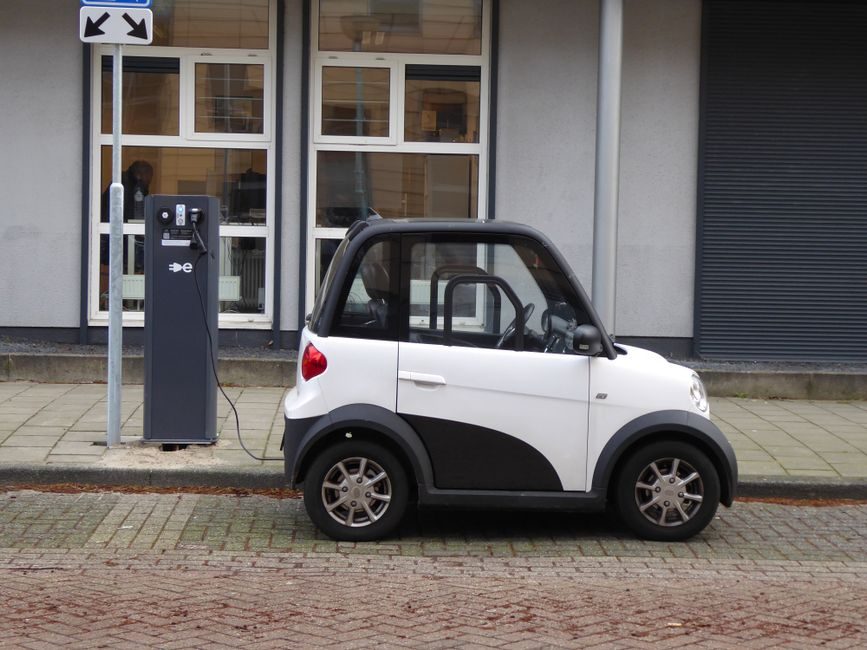
EV supply risk in 2026 is concentrated upstream, not in final assembly: IDTechEx's 2026-2036 electric-motor forecast, published 2025-10-20, frames the drive-motor as the third critical pillar alongside cells and power electronics, with rare-earth reduction, axial-flux adoption and thermal management as the principal engineering levers [S3].
The supply constraints that matter to specifiers in mid-2026 sit in four linked nodes — NdFeB magnet and heavy-rare-earth processing, copper-foil and lithium-refining throughput, 800 V SiC inverter wafer capacity, and EV battery cell gigafactory ramp — and each one feeds into EV battery supply chain 2026: mineral choke points, refining gaps, gigafactory throughput.
Where the 2026 shortage actually bites: magnet, foil, SiC, cell
IDTechEx's report covers cars, micro-EVs, buses, vans and trucks, and explicitly tracks rare-earth reduction and axial-flux motor architectures as the two technology responses to NdFeB price-and-supply volatility [S3]. Heavy-rare-earth elements such as dysprosium and terbium, used to keep NdFeB magnets stable above 150-180 °C, remain geographically concentrated in separation and refining, so a single export licensing change can move motor BOM cost by double-digit percent within a quarter.
Copper foil for current collectors and battery-grade lithium refining sit in the same risk bucket — both are capacity-led, not chemistry-led, chokepoints where the next 18 months of EV cell output is set by the next 12 months of mining-to-refining commissioning rather than by OEM demand. For plant buyers, the practical consequence is that EV Battery Upstream and Downstream Chain: Materials, Cells, and Process Equipment sourcing decisions made in H1 2026 will lock in cell cost and lead-time into 2027.
Motor, inverter and charger: the 2026 spec matrix
Across the 2026 EV stack, four sub-systems compete for the same constrained upstream inputs. The decision matrix below shows what each sub-system is competing for, and where substitution is technically credible: [S1]
Drive motor (radial-flux PM): primary input is NdFeB sintered magnet; substitution path is externally-excited synchronous or induction; thermal class typically 150-180 °C continuous. Drive motor (axial-flux PM): higher torque density, similar NdFeB exposure; favoured in premium and light-commercial segments per IDTechEx 2026-2036 outlook [S3]. 800 V SiC inverter: 1500 V-rated SiC MOSFETs, switching frequency typically 50-100 kHz, limited by 150 mm SiC wafer supply. On-board charger and DC-DC: shares the same SiC wafer queue but at lower current per unit, so 11 kW OBC modules are easier to secure than 350 kW DC fast-charging stacks.
The pattern is consistent: anything touching sintered NdFeB or 150 mm SiC wafers sits in the same constrained pool, and the engineering workaround is either to redesign around the constraint (axial-flux, external excitation, IGBT-based 400 V) or to accept a 20-40 week quoted lead-time, both of which show up in the EV Market 2026: Charger, Plastics, Motor and Range-Extender Forecasts outlook.
What 2026 sourcing actually looks like
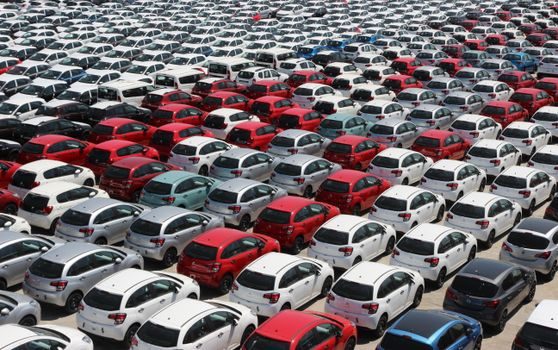
For a procurement team, the 2026 EV-supply problem is not a single SKU shortage but a layered risk model. Industrial buyers approaching EV components through general industrial channels — Womack Electric Supply's automation, power-and-motion, and back-up-power lines [S1] — and small-fleet specialists such as ePowerTrucks' road-legal electric trucks, street cleaners and tow tugs [S2] — are exposed to the same upstream queue as the OEM line, with no volume hedge.
DSV / DB Schenker's EMC2 battery-logistics practice, published 2021-11-12 and still the reference model in 2026, treats battery logistics as a regulated, mode-specific service rather than a generic freight line — the same classification governs the 2026 shortage conversation because Class 9 hazmat handling limits how fast inventory can be re-routed [S4]. Intertek's EV testing and FMVSS 108 compliance practice [S5] is the downstream counterpart: accelerated stress testing and failure analysis are how the industry is currently learning which magnet grades, SiC die attaches and cell formats survive the 2026 supply substitution wave.
Selection criteria: who can absorb the 2026 risk, and who cannot
Tier-1 OEMs with frame contracts on NdFeB and SiC wafers, locked before 2025-Q4, are insulated through roughly 2026-Q3; tier-2 and tier-3 integrators, and any small-fleet buyer running single-unit orders through ePowerTrucks-style specialists [S2], are not. The credible mitigations in 2026 are three: switch motor architecture to reduce Dy/Tb dependence, accept 400 V IGBT inverters where the duty cycle allows, and pre-commit on copper-foil and cell slots with EV Supplier and Manufacturer Directory 2026: Segments, Specs and Sourcing Map vendors that have direct refining or wafer exposure.
For buyers evaluating non-EV industrial electrification in parallel — factory DC bus, robotic cells, conveyor drives — the same upstream constraints on copper, NdFeB and SiC feed the broader dc power supply and switching power supply lead-time picture, so a sourcing decision on an EV charger stack and a decision on a plant DC bus should be reviewed against the same copper-foil and SiC-wafer calendar.
Failure modes and the constraints that don't go away in 2026
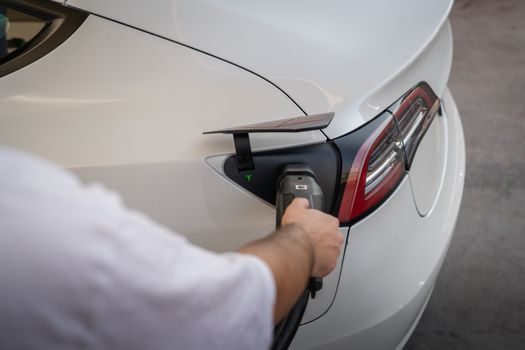
The failure modes that 2026 supply substitution will surface are well documented in accelerated stress testing work: IDTechEx's thermal-management focus [S3] and Intertek's failure-analysis methodology [S5] both point to the same pattern — substituting lower-Dy NdFeB grades raises irreversible demagnetisation risk above 150 °C; substituting 120 mm for 150 mm SiC wafers raises Rdson and shifts the thermal budget; substituting internal logistics modes for hazmat-incompatible carriers triggers DSV-style classification re-routing [S4]. None of these are 2027 problems; all of them are present in 2026-Q2.
Electric-pallet-truck and light-EV fleets covered by specialists such as ePowerTrucks [S2] sit on the same supply curve as passenger-EV drive motors, and the electric pallet truck segment is small enough that it rarely commands its own magnet allocation. The verification path for any 2026 EV-component order should therefore be: confirm magnet grade and Dy/Tb content on the motor datasheet, confirm SiC wafer generation on the inverter datasheet, confirm cell format and copper-foil source on the pack datasheet, and confirm logistics classification per the EMC2 model [S4] before signing.
Trackable signals into 2026-H2
Three signals are worth watching between 2026-06-24 and 2026-Q4: (1) IDTechEx's next motor-forecast update against the 2025-10-20 baseline [S3] for any shift in axial-flux penetration; (2) any revision to heavy-rare-earth export licensing, which historically moves NdFeB spot price inside a single trading session; (3) SiC wafer merchant capacity additions and the resulting lead-time delta on 800 V inverter quotations, which is the single best leading indicator of when the 2026 EV supply shortage will start to ease.