DC fast charger procurement in 2026 is an infrastructure decision, not a box purchase, with binding limits almost always upstream of the dispenser: transformer capacity, demand-charge exposure, and connector-protocol coverage for the next 3-5 year vehicle mix [S2].
The 2026 supply base splits into three tiers, namely global Tier-1 OEMs (ABB E-mobility, Siemens, Schneider Electric, Tesla Supercharger V4), Chinese volume manufacturers (Hardhitter, EAST Group, TELD, Star Charge, Shenzhen-based assemblers), and regional system integrators that bundle a 60 kW to 5 MW DC stack with OCPP back-office software [S3]. Made-in-China lists 649 suppliers offering 1,947 DC-charger SKUs, with pricing on the same index starting around US$153-158 for entry-level wallbox-format units and climbing past US$2,000 for liquid-cooled highway pedestals [S3].
Power-Band Tiers and What They Map To
ABB's Terra family spans 20 kW (Terra 24) to 180 kW (Terra 184), with the Terra 54 singled out as the most deployed SKU and a modular cabinet architecture that lets one enclosure serve up to three EVs simultaneously [S3]. Hardhitter Electric publishes a 60 kW to 5 MW commercial range, the upper end built around an Intelligent Power Scheduling Charging System that coordinates load across multiple dispensers and supports staged cost-down hardware swaps after initial deployment [S3].
The 150-350 kW bracket is the highway-corridor sweet spot in 2026; above 350 kW, liquid-cooled cables (ChaoJi/GB/T 27930 paths) and 800 V vehicle architectures become hard prerequisites rather than options [S3]. Compact 30 kW wall-mount DC units draw 400 V/63 A three-phase AC and target workplace top-up or small fleet depots, while 120-180 kW dual-gun stations (TUV SUD certified in one published OEM line) serve two vehicles simultaneously with dynamic power sharing, and the modular 480 kW charging hub with HPC terminals (PTB certified) supports megawatt-level scalability for the most demanding commercial applications [S5].
Connector Mix, Protocol Stack, and ISO 15118 Hardening
Every credible 2026 supplier supports CCS2 (IEC 62196-3, the EU default), with CCS1, CHAdeMO 1.2/2.0, and GB/T 27930 offered as multi-standard configurations on the same enclosure; the Terra 54 ships as a multi-standard SKU that can be ordered with any combination of CCS/CHAdeMO/GB/T cables from the factory [S3]. North American fleets planning a 10-year window should procure CCS1 and NACS at minimum, or specify a clearly defined and costed upgrade path, because a single-standard station is a stranded asset in the making [S4].
Network-side protocol is OCPP 1.6J or 2.0.1 for the back office, with ISO 15118-2 / -20 Plug & Charge riding on top of CCS for auto-authentication and value-added services such as V2G; vendors that omit ISO 15118 support are being delisted from an increasing share of European public tenders [S3]. Power-conversion inside the dispenser is typically built on IGBT or SiC MOSFET modules fed from a 400 V AC three-phase grid, with active front-end rectification and an isolated DC-DC stage, the same topology modelled in MathWorks' DC fast-charging reference example [S3].
Site Engineering Constraints and the Upstream Bottleneck

Engineers tend to over-spec power and under-spec grid-side constraints; the binding limits are almost always upstream. The minimum locked-down list: peak DC power (kW), continuous DC power at 40 °C ambient, max grid input current and any demand-response headroom, connector mix, cable length (3.5 m for parking, 5 m for pull-through, 7+ m for truck), IP/IK rating (IP54/IK10 minimum for outdoor), acoustic rating (≤65 dB is a common planning-consent line), operating-temperature window, and OCPP/ISO 15118 compliance for the target network [S3].
Buyers should separate nameplate power from usable site performance. A 180 kW DC fast charger may never deliver 180 kW in practice if the vehicle accepts less, ambient temperature forces derating, or the utility connection limits total demand; reviewing the site's electrical one-line diagram and transformer margin early can prevent costly mismatch [S2]. Confirm the required charging window, specifically 20-40 minutes for opportunity charging or 2-4 hours for scheduled depot charging with lower peak intensity, before sizing the upstream service [S2]. Sizing a new transformer or upgrading an existing one ties to our dry-type transformer selection field guide when site rebuilds are involved.
Procurement Filters That Separate Winners From Trouble
Three commercial filters consistently surface reliable vendors: (1) certified type-test reports rather than just CE/UL stickers, (2) a published MTBF and a 5-year or 10,000-cycle warranty, and (3) remote diagnostics with OTA firmware update, which EAST's Atlas explicitly markets as a maintenance differentiator [S3]. For Chinese-built units, the price-per-kilowatt gap remains substantial on a sticker basis, though total landed cost narrows once grid-connection engineering, certification, and service contracts are added [S7].
The decision tree is direct: compact DC (20-30 kW) fits workplace top-up and small depots at 400 V/63 A; 60 kW units suit fleet overnight and dealerships at 400 V/125 A; 120-180 kW dual-gun serves commercial corridors and two-vehicle simultaneous charging; 350 kW+ is reserved for highway-corridor HPC where liquid-cooled cable and 800 V vehicles are confirmed [S5]. Buyers comparing the China-sourcing pathway against domestic OEM procurement should also read the China EV charger sourcing map for cluster location, certification overlap, and tariff-era compliance notes.
Standards, Certification, and a 10-Year Lock-In
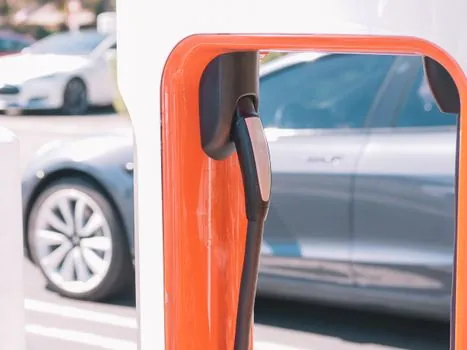
For North America, NACS (standardized as SAE J3400) has been adopted across the industry; new vehicles and new EVSE increasingly ship NACS-native, with compact adapters covering the crossover fleet, and both CCS1 and NACS carry the DC pins for fast charging [S4]. CHAdeMO is legacy in most markets and should be specified only where a confirmed vehicle mix still requires it. On the back office, OCPP 2.0.1 is the 2026 floor for any networked site, and ISO 15118-2 / -20 is the differentiator for Plug & Charge and V2G readiness [S3].
Buyers should also confirm the charger is a fit for the real application, not the ideal one. A depot with 6-12 vehicles charging overnight has very different needs from a highway-corridor site serving short dwell times; power rating, connector count, charging-curve behaviour, and simultaneous-output capability should all match the actual operating pattern, vehicle battery sizes, and turnaround targets [S2]. The dc fast charger you install today will define charging throughput, maintenance overhead, and infrastructure flexibility for the next ten years, so the procurement file should require MTBF, OTA capability, and an explicit spare-parts plan, not just unit price and lead time [S8].
Trackable signals for the next 90 days: NEVI-funded US corridor RFPs continuing to require ISO 15118-2 / -20 on CCS1, and EU public tenders tightening on the same; Chinese exporter list prices for 120-180 kW dual-gun pedestals holding near the published Made-in-China band as Hubei/Shenzhen capacity scales.
The underlying component specifications are covered under dc dc converter, linear guide, and crossed roller guide.