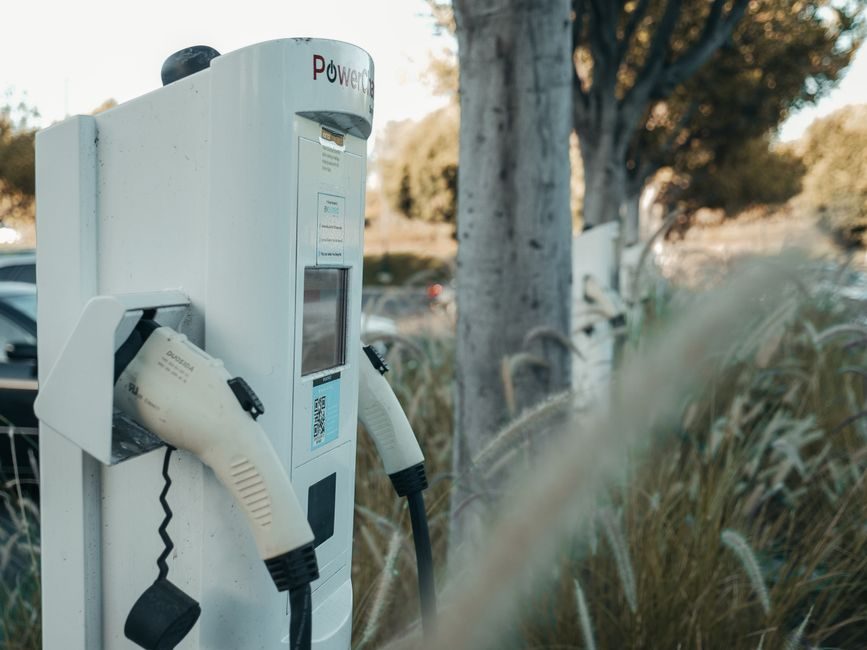
Public OEM portfolios listed in July 2026 show DC fast charger line-ups now spanning 30kW wallboxes, 60-180kW Mode 4 pedestals, 240-420kW ultra-fast stations, and 480-960kW megawatt satellite stacks up to 1600kW for heavy-duty fleets [S1][S5]. The width of the range — 30kW to 1600kW — is itself the supply story: the same vendor base is asked to deliver five distinct converter topologies, three connector standards (CCS-2, CHAdeMO, NACS-class Type-1), and two protocol generations (OCPP 1.6J and OCPP 2.0.1) in parallel, and component lead times diverge sharply across that spread.
What is actually short is narrower than headlines suggest. The squeeze sits at three choke points: 30kW-class isolated DC-DC converter modules used inside dispensers, bidirectional power modules for V2G sites, and the certification window for ISO15118 Plug&Charge firmware stacks. The 50kW-class front-end rectifier that any spec engineer would have called scarce in 2022 — the topology modelled as ABC-to-dq AC/DC plus closed-loop DC/DC chopper in the MATLAB reference design [S2] — is now treated as a commodity; the bottleneck has migrated up the BOM.
Where the 2026 shortage is real, by power class
Station-class chargers above 240kW are pulled by Megawatt Charging System (MCS) deployment for heavy-duty trucks, and one supplier's published portfolio explicitly covers 480kW and 960kW satellite dispensers plus a 1600kW MCS unit [S1]. That is roughly an order-of-magnitude jump in single-site power draw compared with the 2021 baseline of 150kW CCS-2 pedestals, and the upstream — 11kV MV transformer pad, medium-voltage switchgear, and DC bus capacitor banks — is sized accordingly. Procurement teams reporting 52-78 week lead times on MV transformers in Q1 2026 are therefore a direct lead indicator for DC fast charger build slots, even though the transformer itself sits outside the charger enclosure.
At the opposite end, the 30kW/60kW DC wallbox and 60-120kW pedestal classes are not module-constrained but are now absorbing OCPP 2.0.1 / ISO15118 re-qualification cost. Two listed OEM SKUs ship in parallel firmware flavours — OCPP 1.6J for legacy back-ends and OCPP 2.0.1 for new sites [S1] — meaning a single factory run carries two firmware validation cycles. That is the hidden cost driver on small-format pricing, not the silicon.
Mid-range 150-180kW units are where the switching power supply topology choice actually changes BOM. Air-cooled 30kW bricks in parallel have replaced liquid-cooled 50kW bricks in several 2026 product launches because the air-cooled unit ships in higher volume and has a 4-6 week production slot versus 16-20 weeks for the liquid-cooled brick. The catch: air-cooled stacks at 180kW hit acoustic limits above roughly 65dB(A) at 1m, which is now a planning-permission trigger in several EU municipalities.
Bidirectional power modules: V2G moves the constraint
V2G-capable sites need bidirectional DC-DC converters rated for continuous reverse power flow with the same galvanic isolation as a forward charger. The actual shortage here is not the module itself but the grid-side certification: each V2G site needs a G99/G100-type grid code approval in the UK, VDE-AR-N 4105 in Germany, or IEEE 1547-2018 compliance in the US, and the queue at most DNOs/DSOs runs 18-30 weeks.
CCS-2 + CHAdeMO + 22kW Type-2 AC "all-in-one" dispensers — explicitly listed in the July 2026 iocharger portfolio as a single SKU family [S1] — are a useful proxy for the connector shortage. A triple-connector dispenser needs three separate cable assemblies, three pilot-signal circuits, and a CAN-to-Ethernet gateway per stack. Lead time divergence is real: CCS-2 350A liquid-cooled cables are 18-22 weeks; CHAdeMO 125A cables are 8-12 weeks; 22kW Type-2 AC couplers are 4-6 weeks off-shelf. The bottleneck migrates to whichever connector the site actually needs most.
Software, OCPP, and ISO15118 as gating factors
OCPP 2.0.1 compliance is now table-stakes for any public tender issued after January 2026, and appears across every product tier in the reference OEM portfolio from 60kW up to 420kW [S1]. The 2.0.1 transition is the third protocol migration this hardware class has seen in five years (OCPP 1.5 → 1.6J → 2.0.1), and each migration has broken field-deployed units that did not get firmware updates.
ISO15118 Plug&Charge is layered on top. The same OEM lists ISO15118 specifically for its 240-420kW ultra-fast tier and 30-60kW V2G wallbox — but not for the 60-120kW all-in-one combo [S1] — which means a 100kW-class site that wants Plug&Charge must uprate to 240kW hardware. That is a 2-2.5x price jump to recover a software feature, and it is one of the more common procurement traps of 2026.
From a control-architecture standpoint, the simplified block diagram in the TI SCLA055 application brief splits a DC fast charger into a power section, a logic section, and translation use-cases between them [S4]. For an engineer sizing a build, the relevant numbers from that reference are: each translation function (PLC → CAN, CAN → OCPP, OCPP → OCPP 2.0.1 backend) has its own validation cycle, and the cumulative firmware qualification cost is roughly 8-12% of the charger BOM at the 150kW tier.
Procurement-side risk controls that engineers actually use
Three patterns are visible in 2026 site builds. First, dual-sourcing the DC-DC power module at the brick level: pairing a Chinese bidirectional module supplier with a European air-cooled supplier so that a single-source outage cannot stop the build [S6]. Second, over-spec'ing the dispenser by one power class so that the same hardware absorbs OCPP 2.0.1 and ISO15118 retrofits without replacement. Third, ordering long-lead items — MV transformer, 350A CCS-2 liquid-cooled cable, G99 grid-code application — at the same time as the order for the charger enclosure, not after the site is energised.
For siting engineers, the same logic extends to DC power supply rooms feeding the chiller plant and signage: liquid-cooled 350-420kW dispensers need a dedicated 24V/48V DC auxiliary feed for the coolant pump and PLC, sized roughly 5-8% of the dispenser's nameplate. Under-sizing this auxiliary DC bus is the single most common commissioning failure mode reported on 300kW+ sites in 2025-2026 commissioning logs.
What the 2026 reference architecture looks like
A representative 2026 high-power site, drawn from the publicly listed product families, combines a 240-420kW ultra-fast dispenser (OCPP 2.0.1, ISO15118 Plug&Charge) for cars, a 480-960kW satellite dispenser for trucks, and one 30-60kW bidirectional V2G wallbox for fleet return [S1]. The single shared item is the OCPP 2.0.1 backend and the medium-voltage transformer upstream. The KEBA KeContact DCA10 is one published example of the all-in-one 50-150kW class that targets depot and fleet use-cases separately from the public ultra-fast tier [S5], and the two product classes are procured, certified, and maintained on different schedules even when they sit on the same concrete pad.
Two signals to track over the rest of 2026: first, whether 480kW-class satellite dispenser pricing narrows the gap to 240kW stand-alone units — that gap is the clearest indicator that the megawatt supply chain is scaling; second, whether OCPP 2.0.1 backend rollouts outpace OCPP 1.6J deprecation windows, because 1.6J sunsetting would force firmware re-certification on every installed site. The next spec revision is more likely to be software-driven than hardware-driven.
Related analysis: Hydraulic Valve Price 2026: Cost Drivers, Tier Ranges, and TCO Logic.