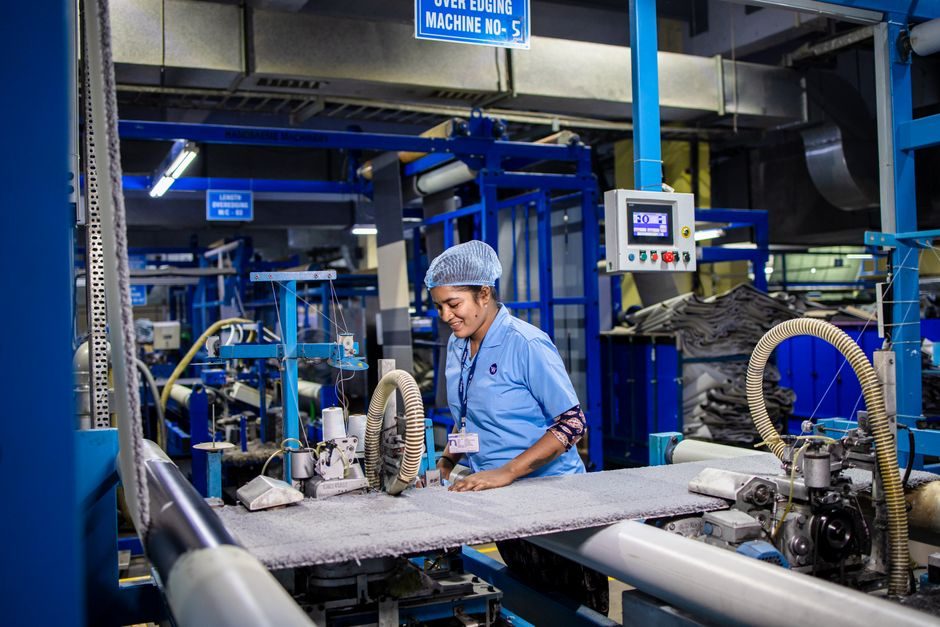
Desalination plants in the 50,000–500,000 m³/d output band now spec reverse-osmosis trains as ISA-95/88-aligned smart-manufacturing cells, with the four-layer automation stack (sensor, PLC/SCADA, MES, ERP) referenced in 2024 SME/IMTS practitioner guidance [S2].
The two dominant architectures are grid-connected seawater reverse osmosis (SWRO) and hybrid SWRO+brine-concentrate RO; both are now tendered with Ethernet-APL field-level networks, HART-7 instruments, and OPC UA Pub/Sub on the MES boundary, replacing the legacy PROFIBUS PA and Modbus RTU stacks common in plants built before 2018 [S1].
What "Smart Manufacturing" Means Inside a Desalination Plant
Smart manufacturing in a desalination context collapses to four physical layers and one data layer: Level 0 (pumps, membranes, ERDs), Level 1 (instrumentation including pressure transmitters on the high-pressure pump discharge and interstage), Level 2 (PLC + SCADA, typically redundant hot-standby), Level 3 (MES for CIP scheduling and membrane-flux trending), Level 4 (ERP for spares and energy settlement) [S1].
Core Sensing and Actuation Stack on an RO Train
Per 2024–2025 RO OEM specification sheets, a 50,000 m³/d SWRO train carries roughly 600–900 instruments: 18–24 high-pressure pressure transmitters rated to 80–120 bar, 4–6 Coriolis flow meters on permeate and concentrate, 8–12 conductivity/temperature pH sensors per rack, and 60–120 actuated smart valve positioners on CIP, brine reject, and energy-recovery-device bypass lines [S3][S4].
ISA-95/88 Implementation: What the Stack Looks Like in Practice
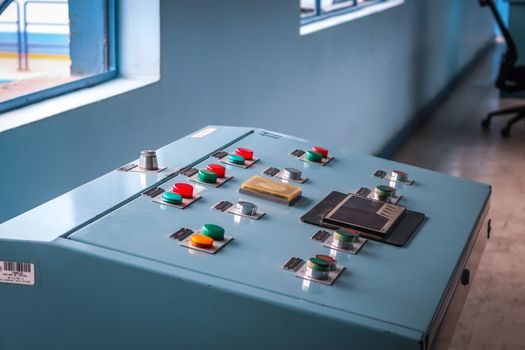
The ISA-95 functional model is implemented almost 1:1 in modern SWRO plants: Level 2 SCADA tags roll up to the Level 3 MES as production batches defined by "run length × recovery setpoint," and the MES publishes B2MML ProductionPerformance messages to the Level 4 ERP every 5–15 min for energy and water-output settlement [S1][S2].
ISA-88 batch recipes are repurposed for CIP (clean-in-place) cycles: the Phase Logic for a generic alkaline + acid CIP on an RO rack is CIP_RINSE → CIP_CAUSTIC (pH 11.5–12.0, 35 °C, 60 min) → CIP_RINSE → CIP_ACID (pH 2.0–2.5, 35 °C, 60 min) → CIP_FINAL_RINSE, with conductivity crossover thresholds around 50 µS/cm controlling phase transitions; the same recipe pattern is now used to schedule membrane preservation flushes on standby trains [S1][S2].
AI, Predictive Maintenance and the 1% Recovery Uplift
The other AI pattern that has crossed the pilot threshold is energy-recovery-device (ERD) health monitoring via vibration + temperature sensors on the ERD shaft, paired with isobaric-pressure differential across the PX or DWEER device; a deviation of 0.3–0.5 bar from baseline is now a standard alarm trip in OEM service agreements and ties directly to the OEM's remote-monitoring portal [S2][S4].
Integration Stack: Ethernet-APL, OPC UA, and Why PROFIBUS PA Is Fading
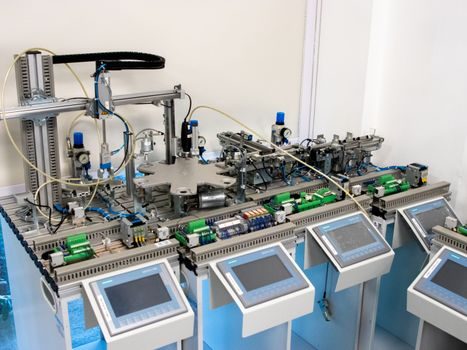
New SWRO plants built after 2023 spec Ethernet-APL (Advanced Physical Layer, 10 Mbit/s, IEC 61158 Type 25) for the field level, with 2-wire intrinsically-safe segments powering a smart valve positioner plus a pressure transmitter on the same trunk; the legacy PROFIBUS PA + FOUNDATION Fieldbus installations that dominated 2008–2018 builds are now maintained as-is, but greenfield tenders no longer accept PA for new RO trains [S1][S3].
OPC UA Pub/Sub over TSN has become the Level 2-to-Level 3 backbone in 2024–2025 builds, replacing the older OPC DA polling on a dedicated SCADA server; the published data model is the OPC UA Companion Specification for the Water and Wastewater Industry, which exposes pump curves, membrane-element serial numbers, and CIP phase state as addressable nodes rather than proprietary tag dictionaries [S2].
Who Smart-Manufacturing Desalination Is For — and Who It Is Not
The economics close on plants of 50,000 m³/d and above, where the MES/ERP integration and the redundant PLC infrastructure add roughly 8–15% to the CAPEX of the electrical and automation (E&A) package but recover that CAPEX in 3–6 years through energy, membrane-life, and CIP-chemical savings [S2][S3].
For small brackish-water RO plants under 5,000 m³/d, the same stack is over-spec: a single PLC with HART multiplexers, Modbus TCP to a local SCADA HMI, and no MES layer is still the lowest-cost-to-own configuration, and layering OPC UA Pub/Sub on a plant of that size is a documented anti-pattern in 2024 SME material [S2]. The decision gate is plant size, not geography: the same threshold holds in the Middle East, North Africa, and California.
Limitations, Failure Modes, and Sourcing Risks in 2026

Three constraints bite hardest on live plants: (1) chloride-induced stress-corrosion cracking on stainless instrument tubing above 60 °C in concentrate service, which forces super-duplex or PTFE-lined wetted materials and adds 4–8 weeks to lead time; (2) the cybersecurity overlay (IEC 62443-3-3 SL-2 minimum) on the MES boundary, which now rejects any plant that ships with default vendor passwords on the SCADA historian; and (3) the skilled-labour gap — operators trained on ISA-95/88 and OPC UA are scarcer than the hardware itself, and the ramp cost is real [S1][S2].
For the 2026 sourcing cycle, two signals to track: the first is whether ISA-95/88-aligned SWRO reference designs start appearing in the public LNG smart manufacturing 2026 ISA-95/88 cryogenic flow specs and automation levers companion-buyer format, which would let procurement run a single cross-process spec; the second is whether Ethernet-APL instrument pricing drops below the 1.3× HART premium that held through 2024, which would tip the last PROFIBUS PA retrofit tranche over to APL by 2027.