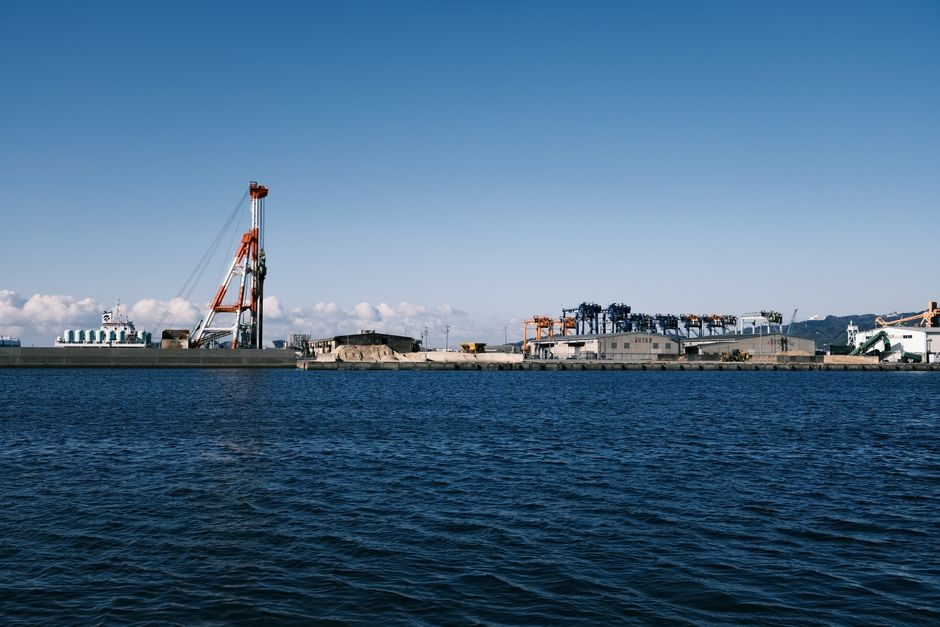
A diaphragm wall grab is the trench-excavation tool used to cut vertical panels for cast-in-place concrete retaining walls, slurry-supported shafts and cut-off barriers; in 2026 the global supplier list is dominated by rope-suspended hydraulic units matched to 9-35 t carrier excavators, with panel widths commonly 600-1500 mm and digging depths quoted at 30 m, 60 m and 100 m classes [S1][S2].
Procurement decisions are driven by three hard spec gates: carrier weight class, maximum panel depth, and panel thickness/width — once those are pinned, the chassis (rope-suspended versus kelly-bar), the grabber geometry (single-cable, double-cable, hydraulic cylinder actuated) and the price band follow. The two relevant price tiers in the 2026 wholesale market are USD 10,000-100,000 per piece for standard 30-60 m rope-suspended grabs [S2], and USD 710,000-770,000 FOB for 100 m-class deep units such as the Sg60-100m configuration [S2].
Two Chassis Formats: Rope-Suspended Hydraulic vs Kelly-Bar Mounted
The DHG series from directindustry-listed manufacturers is a rope-suspended, hydraulically operated grab matched to 9-35 t carrier weight class, the format that dominates 2026 procurement for urban metro and basement projects where the contractor already owns a mid-size hydraulic excavator [S1]. A rope-suspended grab hangs from the boom, free-rides on its own kelly frame, and uses a separate hydraulic power pack or the carrier's auxiliary hydraulics to open/close the clamshell jaws.
The alternative is the kelly-bar mounted format, in which the grab is locked onto a telescopic or rigid kelly on a purpose-built carrier such as the Sg60 100 m unit, giving higher verticality tolerance on deep panels and reducing swing-induced wall deviation [S2]. For projects above 60 m panel depth, or where tolerance on verticality is below 1/300, the kelly-bar format is the engineering default; below 40 m, rope-suspended is the lower-capex choice. The wider concept of a diaphragm wall grab as a foundation trenching tool is covered in the spec encyclopedia entry linked here.
Depth Class, Panel Width and Carrier Weight are the Three Spec Gates
Depth class is the primary cost driver: 30 m units sit in the USD 10,000-30,000 band, 60 m units cluster at USD 50,000-100,000, and 100 m units jump to USD 710,000-770,000 FOB for the Sg60 configuration, with volume breaks at 10+ pieces pulling roughly USD 60,000 off the unit price [S2][S2]. Panel width typically scales with carrier size — 600-800 mm jaws pair with 20-25 t carriers, 1000-1200 mm jaws with 30-40 t carriers, and 1500 mm jaws with 50 t+ base machines for cut-off wall and cofferdam work.
For 2026 procurement, the practical decision matrix is depth × carrier × slurry method. Slurry-supported trenches (bentonite or polymer) need a grab with a flush bottom clamshell and an integrated slurry suction port, while dry-panelled work in stable clay uses a standard clamshell. The same Chinese-language engineering literature on hydraulic grab control systems confirms that the grab's opening/closing speed and bite force are the two sub-specs that determine daily linear-metre output on a 30 m panel.
Grab Body Material, Jaw Geometry and Wear Parts
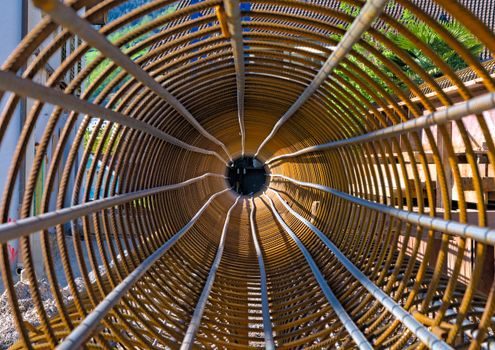
Mainframe steel is normally Q345B or equivalent 355 MPa-grade plate, 20-30 mm thick for the shell and 40-50 mm for the jaw root where bending moment peaks at full panel depth. Cutting teeth on the jaw lips use replaceable tungsten-carbide-tipped bits in the 30-60 m class, and heavier cast-manganese or NiHard inserts in the 100 m class where hard soil and weathered rock are common [S1][S2].
Wear-part lead time is a hidden procurement risk: jaw teeth, hinge pins and hydraulic cylinder seal kits for imported 100 m units typically run 8-12 weeks ex-works, while standard 30 m rope-suspended grabs ship with 2-4 week wear-part kits in the crate. Specifying the wear-part catalog number — and confirming the supplier holds 5% of contract value as recommended spares — is the cheapest insurance policy on a 2026 deep-panel contract.
Hydraulic System, Power Pack and Control
Rope-suspended grabs in the 9-35 t carrier class draw 80-160 L/min at 20-28 MPa from the carrier's auxiliary hydraulic circuit, with a dedicated power pack option (diesel or electric) for tower-crane suspended work where the carrier is decoupled from the grab. The grab's open/close cycle is normally 30-45 seconds at 60 m depth, slowing to 60-90 seconds at 100 m as line pull increases and the grab fills with muck [S1].
Control is cable-pendant or radio-remote for the standard rope-suspended format, and integrated cab control for kelly-bar units. For 2026 metro and deep-pit work, the procurement trend is toward PLC-based depth encoders and verticality telemetry — the kind of monitoring that lets the operator hold 1/300 verticality on a 60 m panel in real time. Contractors on tight urban sites will pay a 5-8% premium for this instrumentation on a 60 m class unit; on 100 m units the same telemetry is increasingly standard rather than optional.
Comparison: 30 m vs 60 m vs 100 m Class Grabs on 4 Spec Criteria
On a four-criterion comparison — carrier weight, panel width, FOB price band and typical cycle time — the three 2026 depth classes line up as follows. 30 m rope-suspended: 9-20 t carrier, 600-800 mm panel, USD 10,000-30,000, 20-30 s open/close cycle. 60 m rope-suspended: 20-35 t carrier, 800-1200 mm panel, USD 50,000-100,000, 30-45 s cycle. 100 m kelly-bar: 50 t+ dedicated carrier, 1000-1500 mm panel, USD 710,000-770,000, 60-90 s cycle [S1][S2][S2].
The price-per-cubic-metre metric at full depth tells the real procurement story: the 30 m class lands near USD 100-150/m³ of excavated panel volume, the 60 m class at USD 180-280/m³, and the 100 m class at USD 600-800/m³ — but the 100 m class replaces two stacked 50 m panels on deep metro and shaft work, which is the only way to get the project past 80 m at all. Specifying depth first, then carrier, then panel width is the sequence that keeps the equipment list coherent.
Who a 2026 Diaphragm Wall Grab is FOR — and Who it is NOT
It is FOR foundation contractors running metro station boxes, deep building basements (3-5 storeys below grade), cut-off walls for contaminated-site remediation, and shaft work for pump stations and CSO chambers; panel depths in these jobs cluster at 20-60 m, with select 80-100 m shafts for transit projects [S1][S2].
It is NOT FOR shallow trench work below 8 m (a standard backhoe or trenching bucket is faster and cheaper), nor for open-pit mining where rope-suspended or hydraulic grabs from the surface are the wrong tool class, nor for bored-pile work where a rotary rig and auger are the engineering default. Projects that look like diaphragm wall work on paper but are actually secant pile walls or sheet pile cofferdams should not be quoted on a diaphragm wall grab at all. Sourcing overlap with adjacent foundation equipment is covered in the pile driver buying guide, which lines up carrier class and CE compliance for the broader foundation-rig fleet.
Sourcing, Standards and Supplier Vetting
Third-party audit status on B2B platforms is the first filter: XCMG E-Commerce Inc. and Sinomada on Made-in-China list as Diamond Member / Audited Supplier for 2026 diaphragm wall grab lines, with FOB price ranges published directly on the product page [S2][S2]. European and Japanese OEMs (BAUER, Liebherr, Casagrande, Hitachi-Sumitomo) sell through direct sales channels with longer lead times and 15-25% price premia over Chinese-built units of equivalent depth class [S1].
For standards compliance, the relevant framework is EN 16228 for foundation drilling rigs and their attachment tools, with carrier-side CE marking under the Machinery Directive 2006/42/EC. Slurry-circuit components should be specified to API 13A for bentonite and to project-specific polymer-mix data sheets, with the recirculation diaphragm pump rated to peak grab discharge and the isolation diaphragm valves sized to the return-line solids load. Inspection at FOB should cover jaw geometry against drawing, hydraulic cylinder pressure test at 1.5× working pressure, and a 30-tonne load test on the suspension yoke. The supplier audit checklist is identical in structure to the one used for pile driver selection and translates directly between the two equipment classes.
Trackable signals for the next procurement cycle: FOB price revisions on the 100 m class Sg60 line (USD 710,000-770,000 band as of 2026-05) [S2], release of updated carrier-weight guidance for the 9-35 t DHG chassis [S1], and any shift in Diamond Member audit status on Made-in-China for the major Chinese OEMs [S2]. Adjacent deep-foundation equipment is covered in the pile driver selection guide.