
Disc coupling TCO is dominated by downtime and scheduled maintenance, not the line-item price on the PO; a 2025 USPS SPP procurement manual frames TCO as purchase + use + maintenance + support + disposal, with hidden costs often dwarfing budgeted spend [S5].
For a 100 kW / 3,600 rpm turbomachinery train specified to API 671 4th edition, the disc pack — not the hubs or spacer — is the service-limited part; a typical 20-year horizon sees 2-4 disc-pack replacements, 1-2 alignment events, and zero spacer replacement if alignment is held within 0.05 mm parallel offset.
Five Cost Drivers That Move the Number
Driver 1: Torque class and oversize factor. Specifying a coupling at nameplate torque is a false economy; API 671 and AGMA 9003 both push users toward a service factor of 1.5-2.0× motor rated torque, with high-inertia driven equipment (centrifugal compressors, fans) pushing toward 2.5×. Undersizing puts the disc pack into fatigue at start-up transients; oversizing by 2 service-factor brackets inflates coupling cost roughly 1.8-2.4× per size step. [S3]
Driver 2: Material selection. Standard hubs are 4140 or 4340 alloy steel; corrosion or sour-service environments (NACE MR0175 / ISO 15156) force 316L stainless or Inconel 718 disc packs. Going from carbon-steel disc pack to Inconel 718 multiplies material cost roughly 5-9× on the disc itself, but for offshore or wet sour service it eliminates the dominant corrosion-driven replacement mode. Material choice dominates the part-cost line; alignment discipline dominates the labor line.
Driver 3: Certification and traceability. API 671 4th ed. compliance adds documentation, witnessed FAT, and material traceability (EN 10204 3.1/3.2) — typically 8-15% adder on coupling price. Without it, the coupling cannot legally be installed on many hydrocarbon process trains; TCO math on a non-compliant coupling is meaningless.
Driver 4: Balance grade. ISO 1940-1 G2.5 at 3,600 rpm is the typical turbomachinery floor; G1.0 adds cost (closer machining, individual balancing) but pushes bearing life 1.5-3× by reducing vibration. On a 100 kW machine, that can save 2-4 unplanned bearing events across 20 years.
Driver 5: Misalignment capacity. The defining spec for a disc coupling — axial, parallel, and angular — is set by the disc pack geometry. Single-flex designs handle ~0.5-1.5° angular and 1-3 mm parallel; double-flex spacers extend parallel to 4-8 mm. Buying more misalignment capacity than the alignment crew can actually hold is wasted spend; buying less guarantees fatigue failures.
Purchase vs Lifecycle: The 20-Year Split
Springer Nature's reference chapter on TCO makes a hard point relevant here: capital hardware typically accounts for only 25% of total lifecycle cost, with the remaining 75% split across management, support, and operations [S3].
For context, the Gartner-cited five-year cost of a personal computer at $44,250 is the classic "purchase is the cheap part" reference, and the same ratio holds for industrial rotating equipment [S3]. The TCO framing in [S5] reinforces that purchase price is the visible number; the disposal, support, and use-phase costs are where savings and overruns actually live.
Who Disc Coupling TCO Is For — and Who It Is Not
Disc coupling TCO modelling is FOR: high-speed turbomachinery (3,000-25,000 rpm) where misalignment and balance dominate bearing life; API 671 process trains; API 610 pump drivers where zero-leak (no lubricant, no elastomer) is mandatory; sour-service (NACE MR0175) and offshore platforms; and cleanroom or food-grade lines where any grease leakage is unacceptable. [S5]
It is NOT for: low-speed (< 1,800 rpm), high-torque applications where a gear coupling at 60-80% the cost is a more rational pick; shock-loaded or reversing drives where jaw coupling elastomer absorption of peak torque is the actual design driver; or budget-driven general machinery where a fluid coupling or elastomeric shaft coupling hits the spec at lower installed cost.
Disc Coupling vs Elastomeric vs Gear: 20-Year Cost Trade-Off
Three coupling families compete in the misalignment-absorbing middle ground; the TCO pick depends on which cost driver you are trying to minimise. [S1]
Disc coupling: highest part cost (baseline), zero-leak (no elastomer, no lube), tolerates 1-3 mm parallel offset, disc pack is the only wear part, 20-year service life achievable with periodic pack replacement. Best where zero-leak and high speed are mandatory.
Elastomeric jaw coupling (e.g. Lovejoy, KTR Rotex): part cost 25-40% of equivalent disc, elastomer spider is the wear part (replaced every 12-24 months under continuous duty), tolerates shock and misalignment simultaneously, NOT suited for high temperatures (> 80-100°C elastomer limit) or hydrocarbon immersion. Best where shock absorption and low purchase price dominate.
Gear coupling: part cost 60-80% of equivalent disc, requires continuous lubrication, high torque density, tolerates large parallel and angular misalignment, lube failure or seal damage is the dominant failure mode. Best where torque density and large misalignment are the primary constraints, and where lube maintenance is already budgeted.
For 100 kW at 3,600 rpm with API 671 compliance and zero-leak requirement, the disc coupling wins on TCO despite the higher sticker; for 100 kW at 1,500 rpm general-purpose, the elastomeric or gear option often wins. The TCO pick is a spec-first call, not a brand call.
Maintenance and Downtime: Where TCO Is Won or Lost
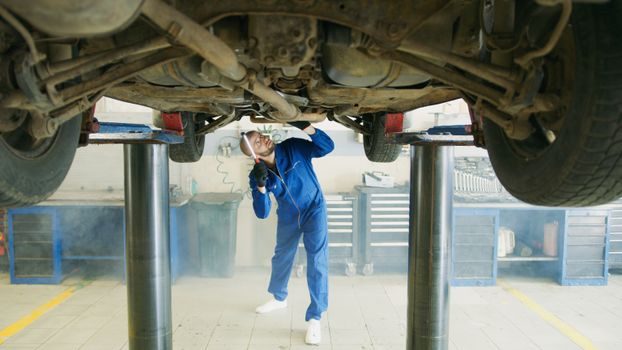
Disc-pack inspection interval is typically 4,000-8,000 operating hours, with replacement triggered by visible fatigue cracking, bolt loosening, or measured angular stiffness shift; predictive maintenance via vibration spectral analysis (bearing-frequency, 2×-running) can catch pack degradation 1-3 months before failure [S1].
Spare-parts stocking policy materially changes unplanned downtime cost. Holding one complete disc pack as a shelf spare typically costs 1-2% of the original coupling purchase but eliminates 4-12 weeks of lead-time-driven downtime if a pack fails catastrophically; the TCO math on this is one of the cleanest "spend a little, save a lot" cases in the coupling world.
Standards, Sourcing, and the Spec-First Sourcing Move
Spec discipline cuts TCO more than any single procurement lever. API 671 4th edition (couplings for general refinery and chemical service) sets the torque, balance, test, and documentation floor; AGMA 9003 covers flexible couplings more broadly; ISO 1940-1 governs balance grade; NACE MR0175/ISO 15156 is mandatory in sour service; ATEX 2014/34/EU and IECEx apply in hazardous-area zones. The disc coupling spec map and the related disc coupling trade-offs breakdown line these standards up against operating envelopes so the TCO model uses a real coupling, not a catalogue placeholder. [S2]
A 2026 spec-first sourcing move: pin the coupling spec to API 671 + ISO 1940-1 G2.5 + NACE MR0175 (if applicable) + documented service factor, ask vendors to quote against that spec sheet, and reject "equivalent" substitutes that cannot document balance grade, material traceability, or test reports. The clutch & brake TCO breakdown uses the same five-driver structure for an adjacent rotating-equipment family and is a useful cross-check.
Independently, ISO 1940-1 is under review for tighter G1.0 and G0.4 grade definitions relevant to high-speed turbomachinery. Until those land, the 4th-edition 2026 baseline holds for TCO modelling.