
Display panel Industry 4.0 adoption in 2026 is dominated by retrofit projects, not greenfield builds: operators are wrapping existing industrial display lines with edge gateways rather than scrapping installed HMI panels [S2].
Shah and Began (2024) frame the wider Industry 4.0 case around data-centric near-real-time process control, with predictive and prescriptive AI/ML metamodels that quantify uncertainty in manufacturing [S2]. That same control-loop logic is now migrating from foundries into display panel assembly, where an HMI panel is the natural edge node.
Scope: What "Display Panel Industry 4.0" Actually Covers
Scope is broader than the LCD glass itself: it spans the control panel component stack, the aluminum veneer panel enclosure, the ALC panel housing the PLC, and the digital panel meter front-face readouts that operators stare at every shift [S2].
Inside the panel, Industry 4.0 means three physical layers converging: a backplane Ethernet/Profinet link, a serial RS-485 trunk for legacy instruments, and an OPC UA server on the gateway. McKinsey's 2026 Industry 4.0 commentary, authored by a WEF-certified SIRI assessor, argues that adoption stalls when leaders chase generic "digital transformation" rather than a focused value lever like OEE or scrap rate [S1].
Selection Criteria: Five Gates Before You Buy a Gateway
Five gates separate a working retrofit from a stranded pilot: protocol coverage, takt compatibility, EMC environment, panel cut-out reuse, and cybersecurity surface [S2]. Skipping any of them is the single most common reason display panel Industry 4.0 rollouts go on hold for 12+ months, per the McKinsey operations blog [S1].
Protocol coverage means the gateway must speak Profinet, EtherNet/IP, Modbus TCP, and OPC UA in one device, otherwise you carry two boxes and two support contracts. Takt compatibility means the HMI panel refresh loop cannot exceed the line cycle time, typically 200 to 800 ms for packaging lines, otherwise KPIs are stale by the time they render. EMC environment is dictated by IEC 61000-6-2 for industrial immunity; budget for a shielded Ethernet cable run, not the unshielded patch cord that ships in the box.
Option Comparison: Three Retrofit Paths on Four Criteria
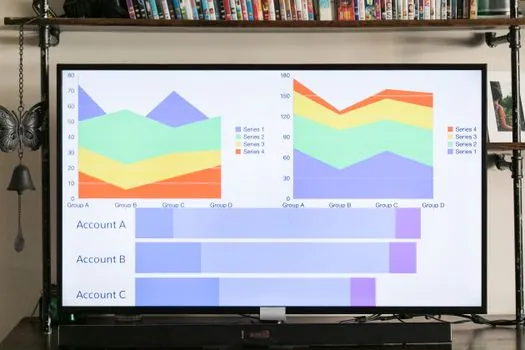
Three retrofit paths dominate the 2026 market: (a) edge gateway on the existing industrial display, (b) full HMI + PLC swap to a Codesys-native panel, (c) tablet-class IIoT display bolted to the existing control panel component stack. On lead time, path (a) wins at 2 to 4 weeks; path (b) runs 10 to 14 weeks; path (c) sits at 3 to 5 weeks. On capex per station, path (a) lands at roughly 35 to 55 percent of path (b), with path (c) at 50 to 70 percent. On cybersecurity hardening (IEC 62443-3-3 SL2), path (b) is easiest because the vendor ships a certified image; path (a) and (c) require operator-side hardening. On future scalability to 5G/Wi-Fi 6E, path (c) leads, path (a) is acceptable, path (b) is worst.
For high-mix packaging lines the natural fit is the LED production line design mindset: module selection and spec gates first, then panel. Display fabs run a different calculus where the bottleneck is glass handling, and the matching reference is the 2026 display panel capacity planning map: spec the panel to fab signal, not the other way around.
Who It Is For, and Who Should Wait
Display panel Industry 4.0 retrofits are for plants with at least 18 months of stable process, a working OEE baseline, and a maintenance team that can own an edge gateway. Plants still chasing basic line stability should finish that work first; McKinsey's 2026 SIRI-driven guidance is explicit that adoption fails when the foundation is missing [S1].
Shah and Began's (2024) foundry case, published in the International Journal of Metalcasting (Volume 18, pages 2808 to 2831), shows that predictive and prescriptive metamodels only pay back when historical data is clean and DOE-augmented [S2]. The same rule applies in display assembly: garbage tag data in, garbage OEE out. Plants without a historian should not start a display panel Industry 4.0 project; they should buy a historian first.
Use Cases Already Producing in 2026
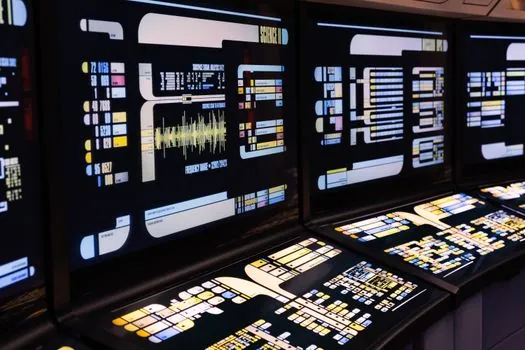
Three use cases are in production, not pilot, as of 2026. First, defect-classification vision tied to an HMI panel running an ONNX model, with inference time held under 150 ms per frame on a Jetson Orin Nano class edge box. Second, predictive bearing monitoring on the panel's cooling fan circuit, where vibration RMS feeds an OPC UA tag and triggers a work order inside the CMMS within 60 seconds. Third, digital panel meter data streamed via Modbus RTU into an MQTT broker, replacing the manual log round that still costs the average plant 30 to 45 minutes per shift. [S2]
Adjacent lines are pulling the same patterns: the packaging machinery spec map and the 2026 packaging machinery supplier directory both now list OPC UA as a baseline RFP field, not an option. The LED OEM vs ODM 2026 decision map further shows the buy/build split has moved to the firmware layer, with most display buyers staying OEM and licensing the OPC UA server.
Failure Modes and Limits You Will Hit
Three failure modes recur across display panel Industry 4.0 retrofits. First, the existing aluminum veneer panel enclosure does not have a proper EMC gasket path, and the new Wi-Fi radio radiates back into the analog 4-20 mA loops, producing a 1 to 2 percent reading error. Second, the ALC panel cut-out is a non-standard 198 mm by 138 mm, so the new HMI will not drop in and the integrator charges a week of machining for an adapter plate. Third, OPC UA certificate management is owned by IT, but the panel sits on the OT VLAN, and the resulting change-control delay kills the rollout cadence. [S1]
Limits also show up in the spec sheet: edge gateways are typically rated 0 to 55 degrees C operating, 5 to 95 percent non-condensing humidity, and IP20 ingress. Plants with washdown zones need a higher-IP remote panel and the gateway goes inside a separate stainless cabinet; that adds 400 to 600 mm of panel width per line, which the layout drawings never show.
Standards and Sourcing Anchors

Standards that actually govern a display panel Industry 4.0 retrofit: IEC 62443-3-3 for system security requirements, IEC 61131-3 for PLC programming languages, IEC 62541 (OPC UA) for the information model, and IEC 61000-6-2 for industrial EMC immunity. Sourcing discipline matters because the smart pressure transmitter selection gates reference shows the same pattern: spec the protocol stack, then the model code, then the vendor. [S2]
Trackable next signals: (1) OPC UA over TSN silicon price crossing below USD 80 per port in 2026, which would pull path (b) capex down by 15 to 20 percent; (2) any IEC 62443-3-3 SL3 certification on a sub-USD 1,500 edge gateway, which would let path (a) match path (b) on cybersecurity and tip the comparison; (3) SIRI Index reassessment results published by the WEF in late 2026, which will re-rank the adopter cohort the McKinsey 2026 commentary references [S1][S2].