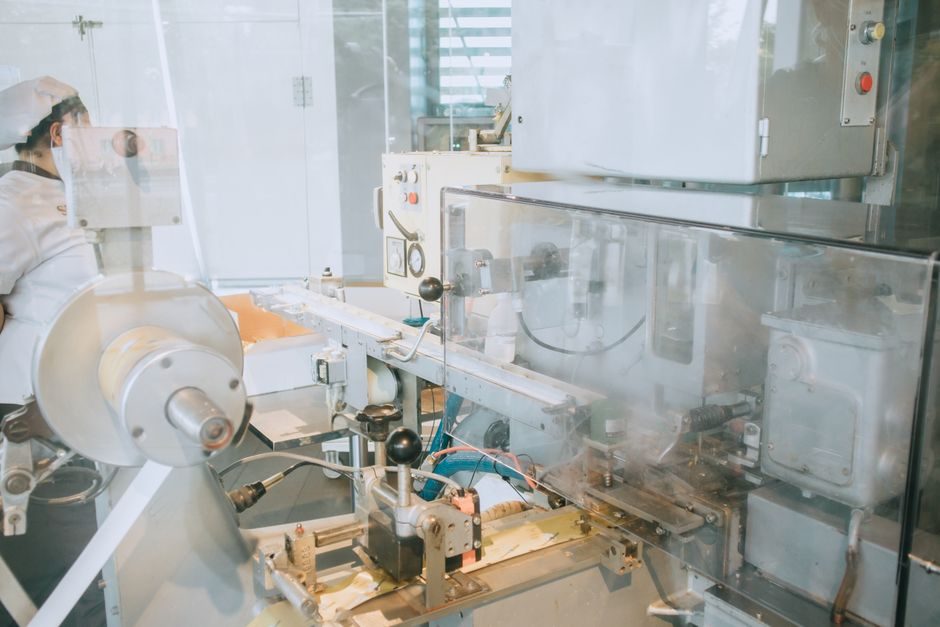
Display panel smart manufacturing is being reshaped by the LCD-to-OLED substrate migration, with plastic-film flexible stacks replacing glass in new fab capacity and laser-based heterogeneous-film patterning installed as a baseline process step on those lines [S5]. Parallel LED-display assembly has consolidated around Guangdong and Jiangsu OEM/ODM clusters offering indoor, outdoor, rental, transparent, and flexible LED panels, with 15-year imaging-vendor expertise now feeding industrial-camera and 4K visualizer integration into display QA cells [S1][S3][S6].
Process-engineering buyers evaluating 2026 line builds are weighting three concrete levers — substrate material choice (glass vs flexible plastic multilayer stack), laser ablation versus mechanical scribe for organic film patterning, and the depth of automation from SMT pick-and-place through final optical inspection — against unit-cost targets that remain tightly coupled to LED-bin yield and OLED evaporation-tool uptime [S5].
Substrate Migration: Glass to Flexible Plastic and Heterogeneous Film Stack
OLED technology is moving substrate materials from glass to flexible plastics to create lighter, thinner, and more durable displays, with flexible OLED structures consisting of a multilayer stack of functional organic films that must be patterned and cut with high quality and accuracy [S5]. This shift is the single most disruptive process change on display panel lines in 2026, because every downstream step — laser wavelength selection, encapsulation, handling, and inspection — has to be re-validated for the plastic film. Compared with rigid glass, flexible multilayer stacks tolerate far less thermal budget, which is why laser patterning (rather than mechanical scribing) is now specified for the heterogeneous organic layers [S5].
For a process engineer scoping a greenfield OLED line, the practical implication is that the laser station is no longer a single tool but a process module with multiple wavelengths, beam-shaping optics, and in-line vision — a footprint and capex line item that rivals the evaporation cluster it feeds [S5].
Laser Patterning as a Baseline Process Step for Heterogeneous Films
Within OLED manufacturing, laser patterning and cutting of heterogeneous materials — comprising multiple organic material films — is needed with high quality and accuracy, and the substrate flexibility trend reinforces this requirement rather than relaxing it [S5]. The hetero-material stack is what enables the optical and barrier functions of the panel, but it is also what makes conventional scribing unreliable: delamination, thermal damage to adjacent organic layers, and particulate generation are recurring failure modes when mechanical tools are used on multilayer organic stacks [S5].
Buyers should treat the laser-patterning station as a critical process node with its own SPC, not as auxiliary equipment — wavelength stability, pulse energy drift, and beam-profile uniformity are first-tier CTQs that drive OLED yield as directly as evaporation chamber pressure does [S5].
LED Display OEM/ODM Landscape: Guangdong and Jiangsu Cluster Capabilities
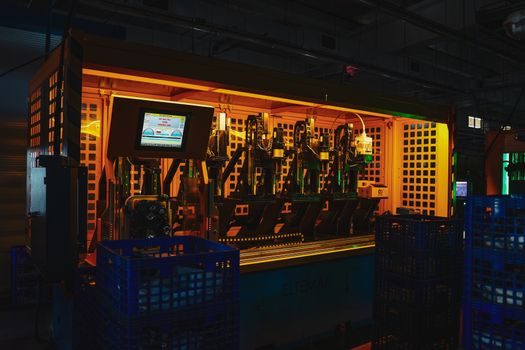
Mainland-China LED display OEM/ODM supply is concentrated in two regional clusters, with Guangdong-based stage-panel and dual-touch-panel factories offering full-color, rental, SMD/DIP outdoor, transparent, and single-color modules, and Jiangsu-based factories adding flexible, transparent, LCD, and rental variants plus interactive P3.91 stage dance-floor tile panels for the bar and club segment [S1][S3]. Touch-panel builders in the same Guangdong cluster cover 55-inch to 110-inch all-in-one interactive displays using both infrared touch and capacitive P-cap touch technology, with OPS mini-PC integration for education and conference room SKUs [S4].
Smart-manufacturing buyers comparing OEM/ODM partners on capability depth can use the table below to score candidates against four decision criteria drawn from the public factory profiles [S1][S3][S4][S6]:
Capability comparison — Guangdong/Jiangsu LED & touch-panel OEM/ODM factories (2026):
Stage-Panel (Guangdong) — full-color / rental / outdoor SMD+DIP / transparent LED; since 2013; ODM service; sample service. Strength: broad commercial-display SKU spread. Limit: no public interactive-touch capability statement [S1].
LED Bar Screen (Jiangsu) — flexible / transparent / LCD / rental LED; OEM+ODM; sample available; P3.91 interactive dance-floor tile. Strength: flexible and floor-tile form factors. Limit: profile lists audio-video integration rather than fab automation depth [S3].
Dual Touch Panel (Guangdong) — interactive flat panel / smart board / blackboard 55–110 in; infrared + P-cap touch; OPS mini-PC; OEM/ODM. Strength: dual touch technology, education/conference channel. Limit: panel-grade LCD sourcing not disclosed [S4].
Smart Visual Presenter (Zhejiang-region profile) — 4K document camera / industrial camera / microscope camera / monitor / visualizer; 15+ years electronic imaging. Strength: vision-system stack for QA cells. Limit: not a panel fab, but a vision integration partner for smart lines [S6].
Automation Stack: From SMT Pick-and-Place to AI Vision QA
Smart-manufacturing line architecture for display panels is converging on a layered automation stack: SMT for driver-IC and LED placement, robotic handling for substrate transfer between laser, evaporation, and lamination modules, and AI-assisted machine vision for sub-pixel defect classification and Mura detection at final test. The vision layer is increasingly sourced from 4K industrial-camera and microscope-camera OEMs that have shipped imaging hardware for more than 15 years, since the optical resolution and frame-rate headroom they offer directly determines the smallest defect size a line can reliably screen out [S6].
For LED lines specifically, the cobot-and-mobile-robot cell pattern documented across Chinese smart-factory case studies is now being applied to display-panel back-end assembly, with LED smart-manufacturing line architectures running AI control loops that close the loop between optical-inspection results and upstream pick-and-place offsets in near real time. The same automation-stack logic — fixed scanners, cobot tending, MES trace-back per panel serial — appears across adjacent electronics verticals, and buyers can leverage those reference architectures rather than design from a blank sheet [S1][S3][S6].
Selection Criteria: Who Smart-Manufacturing Display Panel Buys Are For and Not For
Buyers who benefit from the 2026 display-panel smart-manufacturing stack are those running high-mix OLED lines (smartphone, foldable, automotive display), high-volume LED module lines (rental, outdoor, transparent, flexible), and education/conference interactive-display OEMs needing 55–110-inch all-in-one touch integration with OPS mini-PC options [S1][S3][S4][S5]. A typical power grid smart-manufacturing automation stack shares the same MES, traceability, and cobot-cell primitives, so a buyer already running that stack can re-use the control plane on a new display-panel line with limited incremental integration cost.
This stack is NOT a fit for buyers sourcing commodity LCD monitors in low volumes (where distributor channels beat OEM/ODM MOQs), for buyers who need glass-substrate lines rather than flexible plastic (the laser-patterning process module above is specifically designed for heterogeneous organic films, not for legacy a-Si LCD glass handling) [S5], or for buyers whose end product is not subject to sub-pixel QA — without optical inspection at panel-grade resolution, the AI control loop cannot close and the cobot cell reverts to a manual-tending station with no yield uplift [S6].
Standards, Sourcing Constraints and Failure Modes
The dominant process constraint is not a single named standard but a chain of material-handling and process-window limits: the organic multilayer stack tolerates only a narrow thermal budget, which forces laser wavelength and pulse-energy choices; the plastic flexible substrate forces handling redesign at every transfer station; and the LED-bin distribution forces SMT placement strategy to be re-optimised per panel SKU [S1][S3][S5]. A practical failure mode to plan for is OLED encapsulation failure driven by laser-patterning debris — mitigated by in-line plasma clean and by beam-shaping optics that keep the heat-affected zone inside the ablation kerf [S5].
For LED lines, the equivalent failure mode is colour-bin drift across rental-fleet panels, which is why transparent and flexible LED SKUs from Jiangsu factories carry explicit sample-service and OEM/ODM service flags — buyers should treat those flags as evidence that the factory runs a controlled bin-matching process, not as generic marketing [S3]. Hanging and mounting hardware for finished displays is a parallel sourcing line that buyers often underestimate; cable-suspension and standoff systems for signage are sourced as separate OEM/ODM SKUs and must clear their own load and corrosion ratings independent of the panel spec [S2].
Trackable Signals to Watch Through 2026
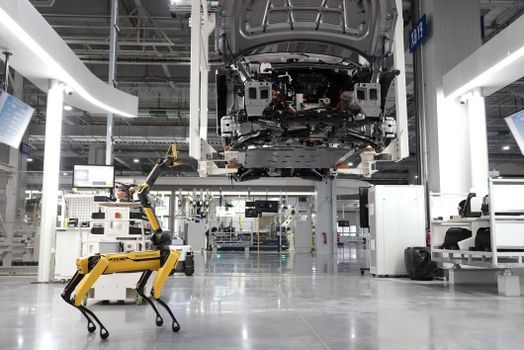
Two verifiable signals will indicate whether the 2026 display-panel smart-manufacturing stack is maturing on the trajectories above. First, the share of OEM/ODM LED factories in Guangdong and Jiangsu that publish explicit sample-service plus OEM/ODM flags on flexible, transparent, and interactive-tile SKUs — that count has been rising across 2025–2026 supplier profiles and is a leading indicator of bin-matching process maturity [S1][S3]. Second, the publication of new laser-patterning tool generations sized specifically for plastic-substrate heterogeneous OLED stacks; tool makers are expected to disclose wavelength, pulse-energy, and beam-shaping specifications tuned to multilayer organic films as flexible-OLED capacity comes online [S5].
For component-level specifications, see industrial display, additive manufacturing material, and smart camera.