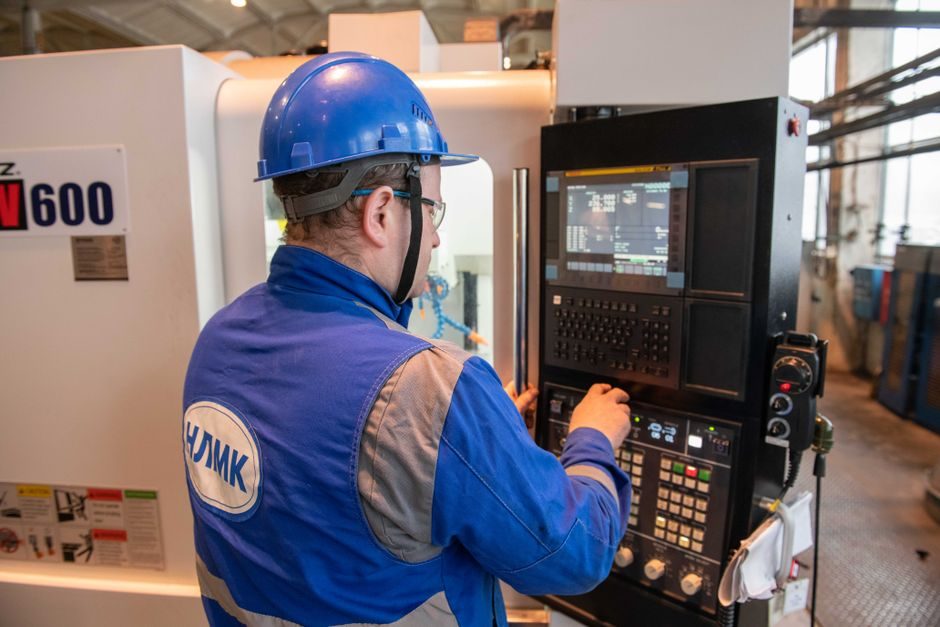
China's display panel industry is structured as a three-tier chain where upstream suppliers deliver coating, evaporation and substrate equipment plus key materials, midstream fabs run LCD and OLED lines, and downstream OEMs integrate panels into TVs, monitors, smartphones, industrial HMI displays and digital signage [S1].
Omdia projects global AMOLED display panel demand, measured by area, to grow at an 11.6% CAGR between 2021 and 2028, with Chinese panel makers scaling Gen 6 and Gen 8.5 lines to capture share in TVs, notebooks and automotive cockpits [S3][S5].
Upstream Layer: Equipment, Materials and Substrates
The upstream segment covers the machines, chemicals and substrates that feed a fab's front- and back-end. For OLED, the high-precision slot-die coater is one of the most watched tool sets because it controls the organic functional-layer thickness uniformity that determines luminance yield. Domestic Chinese coating-head and full coater suppliers (Manst, for one) recorded successive orders through 2024 covering coating heads, R&D coaters and mass-production coaters, with a mass-production precision coater awarded to a top-tier OLED customer in late 2024, breaking long-standing import dependence on this equipment class [S5].
Inside an OLED fab the process chain is conventionally broken into backplane (BP) engineering, evaporation (蒸镀) engineering, and module/encapsulation stages. Equipment cost dominates the build-out: tooling typically represents roughly 80% of total OLED line capex, and a 6-generation OLED line carries a build cost on the order of KRW 20 trillion (around RMB 10.54 billion) [S5]. Domestic substitution on the front- and mid-end equipment remains low, leaving the upstream an oligopoly with high technical barriers.
Upstream materials stack includes glass substrates (often aluminosilicate for flexible OLED), polarizers, color filters, photoresist, organic emissive materials, driver ICs and target materials for sputtering. A spec-driven buyer should treat the industrial display substrate supply as a parallel reference point, because aluminosilicate and cover-glass choices cascade into impact and thermal performance downstream.
Midstream Layer: LCD vs OLED Cell Makers
Midstream is dominated by cell makers that convert substrates, backplanes and organic stacks into finished LCD or OLED panels. LCD still leads in volume and cost per area, but OLED — including AMOLED and the transparent OLED variants shown at expos — is the new growth engine, with Chinese makers expanding capacity aggressively through 2024-2025 to take share in TV, notebook and automotive cockpit modules [S3].
Technology choice drives a different upstream BOM. LCD relies on liquid crystal materials, glass substrates, polarizers and backlights, while OLED uses organic compound-based thin-film light-emitting technology and is produced through backplane (BP) and evaporation engineering. An HMI panel buyer writing a 2026 BOM needs to map these layers onto long-term availability, because OLED encapsulation and driver IC supply are tighter than mature LCD polarizer supply.
Key midstream performance metrics: pixel density (PPI), luminance (nits), color gamut (NTSC %), refresh rate (Hz), response time (ms), and lifetime (hours to LT50/LT95). For industrial HMI and panel-meter applications, lifetime under high temperature and constant-on duty is usually the dominant gate, which is why mid-tier LCD remains entrenched in digital panel meters and many factory-floor HMIs even as OLED scales in consumer TV and mobile.
Downstream Layer: Application Sectors and OEM Integration
Downstream demand pulls the chain. The biggest pull is consumer TV, followed by smartphone, notebook/tablet, monitor, and a fast-rising industrial and automotive segment that includes HMIs, digital panel meters, cockpit displays and on-shelf retail signage. China Daily's January 2025 reporting frames OLED as the new growth engine for Chinese display panel makers precisely because mid-size OLED opens automotive, notebook and transparent showcase use-cases where LCD cannot deliver the form factor [S3].
Industrial B2B buyers operate a different value chain than consumer OEMs. Spec gates for a lightweight partition panel integrator or an aluminum veneer panel facade builder that also ships HMI kiosks are EMC/ESD immunity, operating temperature (often −20 °C to +70 °C or −40 °C to +85 °C for outdoor), ingress protection of the front face, and MTBF under 24/7 duty. LED-backlit LCD still wins most cost-sensitive industrial slots for that reason, while OLED appears in premium transparent showcase and curved automotive cockpit modules where its self-emissive advantage pays back.
For sourcing context, the same factory-cluster logic that defines China LED suppliers 2026 applies to panel integrators: verified clusters in the Pearl River Delta and the Yangtze River Delta concentrate upstream material, midstream cell and downstream module assembly within short trucking radius, which compresses MOQ and lead time. Engineering buyers running a 2026 sourcing plan should also cross-check the supply chain against a similar mapping exercise for HVAC equipment, since the heat pump upstream and downstream industries map shows the same risk of single-source compressor or inverter dependencies that OLED faces on FMM evaporation and encapsulation tooling.
Comparison: LCD vs OLED vs MicroLED Across Selection Criteria
LCD, OLED and MicroLED are the three panel types a 2026 spec writer must rank against the same decision criteria. On cost per area, LCD remains lowest; OLED sits in the mid-to-high bracket with falling premium; MicroLED is highest at present due to mass-transfer yield issues. On luminance, mainstream OLED TV panels reach 1000-2000 nits peak while industrial LCD HMI typically runs 400-1000 nits; MicroLED scales higher but is not yet volume-priced. On lifetime to LT50, industrial-grade LCD HMI commonly exceeds 50,000 hours, OLED lifetime has improved to a comparable 50,000-100,000 hours range for non-white-dominated content, and MicroLED lifetime targets are far higher but unproven at scale. On viewing angle and contrast, OLED and MicroLED both beat LCD because they are self-emissive. [S1]
For a spec gate, write: panel type, diagonal (in), resolution, luminance (nits), contrast ratio, color gamut (% NTSC or % DCI-P3), response time (ms), interface (LVDS / eDP / MIPI / RGB), operating temperature range, storage temperature, surface hardness, cover glass treatment, certifications (CE / FCC / RoHS / REACH / UL) and lifetime to LT50. Buyers that pin these fields up-front move from price-shopping to spec-shopping and avoid the trap of substituting a consumer OLED into an industrial HMI slot where burn-in risk on static UI is unmitigated.
Risks, Failure Modes and Sourcing Constraints

Three failure modes dominate the 2026 risk register. First, OLED burn-in under static UI elements, which limits OLED penetration in industrial HMIs and panel meters that hold fixed icons for years; LCD is still the default for that reason. Second, supply concentration: a small number of FMM evaporation tool makers, encapsulation coaters, and OLED driver-IC suppliers sit at single points of failure — a single fab downtime event ripples into smartphone and TV panel lead times [S5]. Third, geopolitical export controls on deposition and lithography tools, which can lengthen capex cycles for new Gen 8.5 OLED lines.
From a sourcing perspective, the 80% capex share that equipment takes on an OLED line means any new fab schedule slips when a single tool delivery slips [S5]. For B2B buyers, the practical hedge is dual-source qualification for any HMI panel program and a written obsolescence/EOL policy with the cell maker, plus a 12-24 month safety stock on driver ICs and touch controllers. The same hedging logic shows up in adjacent component supply chains, including the supply risk mapped for heat pumps in 2026 and the component selection logic used for stepper drives where bus and feedback options change the bill of risk.
Standards, Spec Gates and Buyer Checklist
No single IEC or ISO number governs the full display panel BOM, so buyers stitch a stack: IEC 61215-style environmental and endurance tests for the panel module, IEC 60079-series for hazardous-area industrial sites, ISO 16750 for automotive electrical and environmental, UL 60950-1 / IEC 62368-1 for product safety, and the RoHS / REACH chemistry regime. For LCD optical performance, reference VESA flat-panel display measurement standards; for EMI/ESD, EN 55032 / EN 55035 and IEC 61000-4-2 are common gates. The buyer checklist should still resolve to a small set of data fields on the datasheet: resolution, active area, luminance, contrast, response time, interface, operating temperature, storage temperature, humidity, surface treatment, lifetime to LT50, and the certifications above. [S2]
Trackable signals for the next 6-12 months: Gen 8.6 OLED line ramp announcements from Chinese cell makers, mass-production shipments of domestic precision coaters replacing imported equivalents, and the first commercial MicroLED TV/monitor SKUs from Chinese makers. Also watch whether flexible OLED substrate capacity (polyimide and ultra-thin glass) tightens, because that cascade will hit both foldable smartphone panels and flexible industrial display module supply.