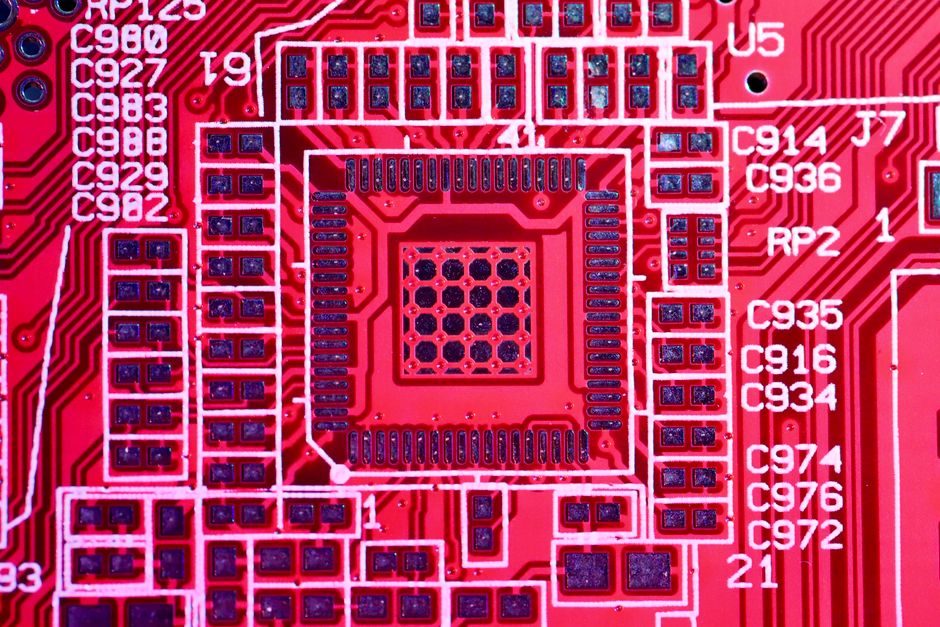
Stepper drive procurement in 2026 is a four-axis decision: bus voltage, phase current, microstep count, and whether the unit stays open-loop or closes the loop with an encoder. AutomationDirect's SureStep STP-DRV-4850 ships as a DC open-loop advanced microstepping drive rated 5 A per phase on 24-48 VDC with a resolution range of 200 to 51,200 steps per revolution [S4]. On the AC side, R.T.A.'s X-PLUS B4.1 takes 110-230 VAC mains directly and targets high-precision applications where low acoustic noise and low vibration are mandatory [S1].
The 2026 catalog split is now sharp: a buyer at 24-80 VDC and under ~7 A picks a DC switching drive; above that, the AC-direct class absorbs the rectifier inside the chassis and saves panel space. Applied Motion Products' STF series keeps the 2-phase programmable slot alive for integrators who need 0.1-10 A range with anti-resonance and torque-ripple smoothing firmware built in [S2]. Specs for all three classes, plus a stepper drive fundamentals refresher, sit inside the same electrical envelope: coil current, bus voltage, step mode, and isolation.
Bus Voltage and Topology: DC Switching vs AC-Direct
24-48 VDC remains the workhorse band for OEM machines, instrumentation, and lab automation, where a single 48 V supply already feeds sensors, valves, and I/O alongside the drive. The STP-DRV-4850 is a clean representative of that band: bipolar 2-phase output, 5 A per phase, 24-48 VDC input, velocity and position modes [S4]. Below 24 V the torque curve collapses fast; above ~80 VDC the diminishing returns on high-speed torque rarely justify the extra PSU cost in compact machines.
AC-direct drives such as the X-PLUS B4.1 take 110-230 VAC mains and rebuild an internal DC bus, which lets them push 2-phase bipolar microstep output at higher continuous current without an external transformer [S1]. The trade is panel volume, RFI filtering, and the need for a fused mains feed. A useful first gate is mechanical envelope: if the cabinet has no room for a 24 VDC power supply rated for the drive's peak current, AC-direct is the cheaper path. For a deeper look at the upstream actuator, the stepper motor basics encyclopedia entry covers the torque/speed curves these drives must support.
Phase Current, Microstep Resolution, and Torque Quality
Phase current sets continuous torque, while microstep count sets positional smoothness and audible noise. The STF programmable drive exposes 0.1 A minimum to 10 A maximum phase current with an anti-resonance algorithm designed to maximize torque over a wide speed range and torque-ripple smoothing for low-noise rotation [S2]. That firmware combination is what separates a generic chopper drive from a 2026-spec unit: plain full-step operation at low rpm produces the audible resonance that gets drives rejected on noise-sensitive lines such as medical or semiconductor front-end equipment.
Microstepping choices also matter for repeatability. The STP-DRV-4850 spans 200 (full step on a 1.8° motor) to 51,200 steps per revolution [S4], a 256x subdivision that effectively removes the staircase artefacts visible in a 1/16 or 1/32 setting on a high-resolution camera inspection axis. Buyers who only need point-to-point index moves rarely need to leave 1/8 or 1/16; buyers driving linear stages with linear guide carriages at sub-5 µm repeatability will pay the firmware cost of high subdivision. As a rule of thumb, the smoother the motion profile, the higher the microstep count that earns its keep.
Open-Loop vs Closed-Loop and When Feedback Pays for Itself
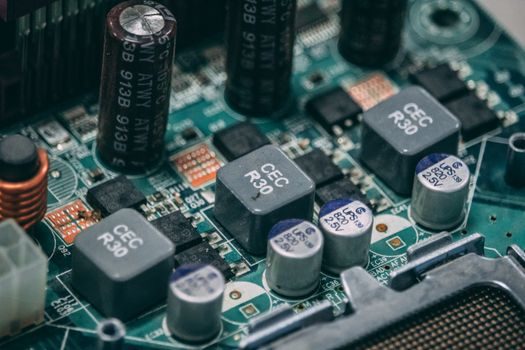
Open-loop stepper drives are cheaper and simpler because the drive trusts the pulse train: send N pulses, expect N steps, hold position by detent torque. The STP-DRV-4850 is sold specifically as a DC open-loop advanced microstepping drive [S4], and the X-PLUS B4.1 ships with no encoder port in the standard datasheet [S1]. The 2026 caveat is that "open-loop" is no longer a synonym for "no encoder possible" — most modern programmable drives accept an optional incremental encoder input and switch to closed-loop torque mode when the encoder is wired, with a hot fallback to open-loop microstep on encoder fault.
Closed-loop stepper (often branded as "step servo" or "closed-loop stepper") makes sense when the load can stall: vertical Z axes, press feeders, conveyor heads under variable friction, and any application where a lost step means scrap or a safety trip. Applied Motion's STF series targets that programmable class with multiple communication options on top of step/direction, so the same drive can run from a PLC pulse train, Modbus RTU, or Ethernet in the same build [S2]. The decision gate is simple: if the cost of one missed step in production exceeds the drive price delta, spec closed-loop. If not, open-loop keeps the BOM small and the cabinet cool.
Communication, Programming, and Integration Footprint
Pulse-and-direction remains the universal handshake, but the 2026 spec sheet that wins tenders usually adds at least one of: RS-485 Modbus RTU, RS-232, CANopen, or EtherNet/IP. The STF series lists "multiple communication options" alongside its programmable anti-resonance firmware [S2]; lower-cost DC drives such as the STP-DRV-4850 stay with step/direction plus analogue torque/velocity reference and a USB config port [S4]. For a PLC-centric line, the question is whether the drive accepts the controller's native fieldbus natively or whether a separate gateway module is needed.
Programmability covers stored motion profiles, I/O mapping, and fault behaviour. The STF exposes programmable current control for optimal open-loop performance and torque-ripple smoothing as a tunable parameter [S2], which means a process engineer can trim the curve on the line instead of returning to a stock parameter file. This is a concrete 2026 selection lever: if the machine is one-of-a-kind, pay the firmware tax. If it is a 500-unit run, the stock profile from the drive's non-volatile memory is enough and a pulse-command drive is fine. The wider stepper motor vs stepper drive spec cut walks through how the actuator and the drive have to be co-specified rather than picked independently.
Selection Criteria: A Side-by-Side Comparison
The three representative 2026 drives line up as follows against four buying criteria: bus voltage class, phase current range, microstep ceiling, and loop architecture. R.T.A. X-PLUS B4.1 sits in the AC-direct class (110-230 VAC), with high current capability aimed at low-noise, low-vibration industrial lines, factory-configured microstepping and a 2-phase bipolar output [S1]. Applied Motion STF is the DC programmable class at 0.1-10 A, with anti-resonance and ripple-smoothing firmware and a choice of open-loop or closed-loop with encoder feedback [S2]. AutomationDirect STP-DRV-4850 is the DC open-loop class at 24-48 VDC, 5 A per phase, 200-51,200 steps/rev, in a compact OEM form factor with the option to mount in tight cabinets [S4].
Decision matrix in one line: AC-direct if the cabinet has no 48 V supply and noise is critical; DC programmable if you need fieldbus, encoder feedback, or stored motion profiles; DC open-loop if the build is high-volume, cost-driven, and the load never stalls. The same derating logic applies to upstream crossed-roller guide stages, which are the usual mechanical partner for high-resolution open-loop builds.
Failure Modes, Protections, and What the Datasheet Often Hides
Common 2026 stepper drive failure modes are overcurrent on the phase output, undervoltage on the DC bus, over-temperature on the FET heatsink, and command pulse loss on long step/direction cables. The STF series calls out "advanced current control" specifically to keep the drive out of the overcurrent trip during low-inductance high-rpm operation [S2]. The STP-DRV-4850's 24-48 VDC window means an undervoltage lockout is a real concern on a 24 V supply that sags under regen braking; a 48 V supply is the safer default for any axis that decelerates a meaningful inertia [S4].
Wiring-induced faults are easier to prevent than to debug. Use twisted-pair for the A+/A- and B+/B- phase leads, keep encoder cables in a separate shielded conduit if the drive is closed-loop, and add a flyback diode or regen clamp on any DC bus that can be back-driven by a vertical load. Most 2026 datasheets do not state a regen resistor value, so the practical rule is to size the internal regen resistor to 5-10% of the drive's continuous power rating, then verify with an oscilloscope on the bus rail. EMC behaviour is governed by the wider cabinet's CE/UL conformity, not the drive alone, so the drive datasheet's emission class is only one input.
Who a 2026 Stepper Drive Is For (and Who It Is Not)

Stepper drives in 2026 are the right answer for: point-to-point indexing, low-velocity constant-torque axes, vertical Z axes with closed-loop feedback, lab automation, dispensers, and any build where the drive cost must stay under roughly half the axis cost. They are the wrong answer for: high-velocity continuous rotation above ~3,000 rpm, axes that need sub-arcminute following error under a continuously varying load, and applications where the only available supply is single-phase 115 VAC without a neutral, in which case a dedicated servo drive on a small frame size often wins on price once the gearbox and brake are added in. [S1]
Buyers who should not specify a stepper drive at all in 2026 are those chasing high-throughput packaging lines above 200 cycles per minute, or any application that cannot tolerate a single lost step even with closed-loop feedback. A practical gate: if the cycle time calculation shows the axis must run at over 1,500 rpm continuous, spec a servo drive and a slewing drive where the mechanical ratio allows it, then revisit only if the budget fails the comparison. For everyone else, the stepper drive in one of the three classes above will close the engineering gap without paying for a servo stack.
What to Verify in the PO and on Receipt
Three checks keep returns down. First, confirm the bus voltage window in writing: an X-PLUS B4.1 datasheet says 110-230 VAC [S1], an STF datasheet typically lists a DC voltage window with explicit min/max [S2], and the STP-DRV-4850 is explicitly 24-48 VDC [S4]. Mixing the three up is the single most common commissioning fault on a stepper drive build. Second, verify phase current against the motor nameplate, not the drive's marketing maximum: a 5 A drive on a 6 A motor stalls within minutes even with anti-resonance engaged. Third, request the firmware version and the parameter file format in the PO; a 2026 drive whose firmware cannot be cloned between units will cost hours on every service call.
Trackable signals for the next sourcing window: watch for AC-direct microstepping units pushing phase current above the 10 A class in the same chassis, and watch for DC open-loop drives shipping with 100,000+ steps/rev firmware. Either move would change the cost-per-axis calculation for high-volume OEM lines. For buyers comparing the stepper option against a soft-starter-driven asynchronous motor build, the soft starter selection criteria breakdown is the relevant reference on the AC side of the same cabinet.