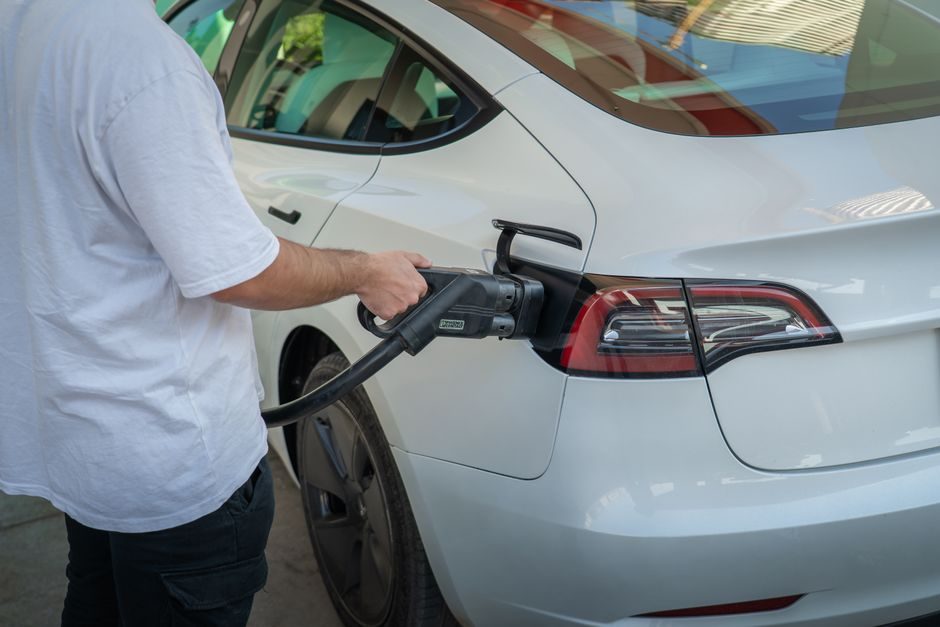
Sino Energy, Qingdao Penoda, Bluesky and LANGCHI each operate OEM/ODM EV-charger production lines in China, running AC chargers, DC fast stations and portable units through in-house PCBA, burn-in and OCPP 1.6/2.0.1 protocol docking stations; the global EVSE market is sized at USD 38.55B in 2026, projected to reach USD 120.85B by 2033 per MarketsandMarkets [S2][S4][S5][S6][S8].
System integrators such as Electrocon layer building-automation and EVSE on the same BACnet/Modbus trunk for residential and commercial sites in India, reflecting the convergence of BMS, IoT and charger control in one cabinet [S1].
Scope of the 2026 Smart-Manufacturing Stack
EV-charger smart manufacturing in 2026 covers three product lanes: AC chargers (3.7–22 kW, single/three-phase), DC fast and ultra-fast stations (30 kW to 350 kW+), and portable EVSE; liquid-cooled DC cabinets are now a default SKU on most Chinese OEM lines, with Sino Energy, Penoda and Bluesky all quoting a PV+ESS+EVSE integrated solution plus white-label CSMS mobile apps for Android and iOS [S2][S4][S8].
Certification scope on these lines is broad: TUV, CE, RoHS, CB, Nemko, SAA, VDE, KC, BIS and CCC are commonly listed, with UL pending for several vendors; that determines which inverter/connector SKUs ship to North America versus the EU 80-country footprint some suppliers now claim [S2][S4].
At the cell level, AC charger PCBs typically use solid-state relays, SCR regulators and switching power supplies sourced from Zhejiang OEM clusters, with bridge rectifiers, temperature controllers and sensors co-located on the same SMT line so that one fixture handles both the control board and the contactor stack [S7].
Line Architecture: PCBA, Burn-In, OCPP Docking
Penoda runs a four-stage line layout: SMT placement for the control and metering boards, hand-plug assembly for the 30 mA AC residual-current device and surge protective device, a 48 h burn-in chamber at rated output, and a final OCPP 1.6/2.0.1 protocol docking test against a CSMS simulator; the liquid-cooled DC variant adds a coolant-leak test fixture and a 150 kW partial-load endurance step before shipment [S4].
Sino Energy's published throughput data point to 157 invention patents supporting 80+ country deployments, with separate production cells for AC EV chargers, DC fast stations and portable units, each routed through an MES that prints serial, firmware hash and OCPP endpoint URL onto a unit-level QR for traceability [S2].
Bluesky emphasises 20 years of R&D experience and a mobile-app back end that can white-label the same charger hardware, which means the manufacturing line is decoupled from the operator's CSMS — a useful pattern when the same cabinet ships to multiple CPO brands across different OCPP backends [S8].
Selection Criteria for OEM/ODM Buyers
Buyers evaluating an EV-charger OEM partner in 2026 should score lines on four criteria: certification coverage (TUV/CE/UL/CCC/KC), OCPP 1.6 JSON and OCPP 2.0.1 conformance, liquid-cooled DC capability above 150 kW, and white-label CSMS app support with ISO 15118 readiness for Plug & Charge [S2][S4].
Capex/opex project models are common at the system-integrator tier: Electrocon offers residential and commercial EVSE on capex or opex with installation, operation and maintenance bundled, useful for CHS societies, CWC warehouses and Indian Railways depot rollouts that cannot carry large upfront costs [S1].
For PCBA-heavy AC lines, look for the ability to swap solid-state relay and SCR power regulator SKUs without re-tooling, and confirm a single MES routes both the AC and DC SKUs so firmware versioning stays consistent across the fleet [S4][S7].
Comparison of Main Manufacturing Options
Three options dominate the 2026 build-out. Sino Energy suits buyers needing 80+ country reach with OCPP 2.0.1 and 157 invention patents backing the design. Qingdao Penoda fits integrators wanting a white-label CSMS, Android/iOS app and PV+ESS+EVSE skid in one shipment. Bluesky targets operators prioritising mobile-app UX and a decoupled CSMS/charger architecture for fast rebranding [S2][S4][S8].
System integrators such as Electrocon are the right choice when the EVSE must share a BACnet/Modbus trunk with a BMS and IoT sensor stack on a building or depot; pure-play charger OEMs are the wrong choice if the deliverable is a turnkey capex/opex building project [S1].
For DC fast above 150 kW, the liquid-cooled variant from Penoda or Sino Energy is the practical pick; for AC home/business below 22 kW, the OEM/ODM lines from Bluesky and LANGCHI are the lower-cost path with shorter lead times [S2][S4][S6][S8].
Failure Modes and Integration Constraints
The most common field failures on 2025-vintage AC chargers were contactor welding under high inrush, OCPP heartbeat loss over weak cellular links, and RCD nuisance trips during PV back-feed; the 2026 OEM lines have responded with pre-charge resistor networks, dual-SIM LTE/CAT-M modems and 30 mA Type-A RCDs that coexist with Type-B DC fault monitoring on the DC SKUs [S2][S4].
Integration-side constraints remain: BACnet/Modbus gateways are still required where the charger must report to a BMS or SCADA, and ISO 15118 Plug & Charge is not yet on every Chinese OEM's roadmap — buyers should treat Plug & Charge as a roadmap checkbox, not a 2026 line feature, on most AC SKUs [S1][S4].
Liquid-cooled DC stations introduce coolant-leak and pump-failure failure modes that do not exist on air-cooled units, so any maintenance contract must cover the chiller loop, not just the power electronics; this is consistent with battery separator and BMS manufacturing lines, where wet/dry process control drives the QA spec the same way coolant loop QA drives DC-charger acceptance [S2][S4].
Standards, Sourcing and QA
Compliance on these lines stacks IEC 61851-1 for conductive AC/DC charging, IEC 62196-2 for the Type 2 connector, OCPP 1.6/2.0.1 for the CSMS link, ISO 15118 for Plug & Charge where supported, and regional marks (CE, TUV, UL, CCC, KC, BIS) layered on top; buyers should request the certificate numbers per SKU rather than per factory [S2][S4][S6][S8].
Electronics component sourcing for the AC SKU largely traces to Zhejiang OEM clusters producing solid-state relays, SCR power regulators, switching power supplies, bridge rectifiers and temperature controllers on shared SMT lines; sensor and filter paper SKUs ride the same fixtures so a single reel change handles both contactor and metering boards [S7].
Inline QA on a 2026 line should include ICT on the control board, a hipot test on the AC input, a partial-load burn-in at the rated kW, an OCPP transaction-end test against a CSMS simulator, and a unit-level QR trace that ties serial, firmware hash and OCPP endpoint to the MES record [S2][S4].
Where the 2026 Build-Out Is Heading
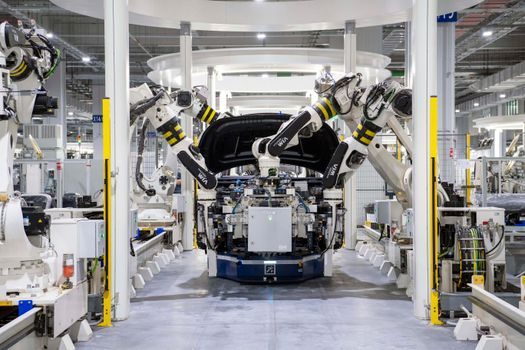
The 2026 build-out is shifting from pure charger hardware to integrated PV+ESS+EVSE skids shipped as one cabinet, mirroring the EV traction motor and cathode material trends where upstream process steps are co-located with the final assembly to cut logistics cost and lead time [S4][S6].
Buyers should track three signals in the next 6–12 months: UL certification closure for Sino Energy and Penoda, broader ISO 15118 Plug & Charge rollout on Chinese OEM AC SKUs, and the first depot-scale capex/opex contracts from Indian system integrators bundling BMS, IoT and EVSE on one BACnet trunk [S1][S2][S4].
For component-level specifications, see additive manufacturing material, smart camera, and smart meter.