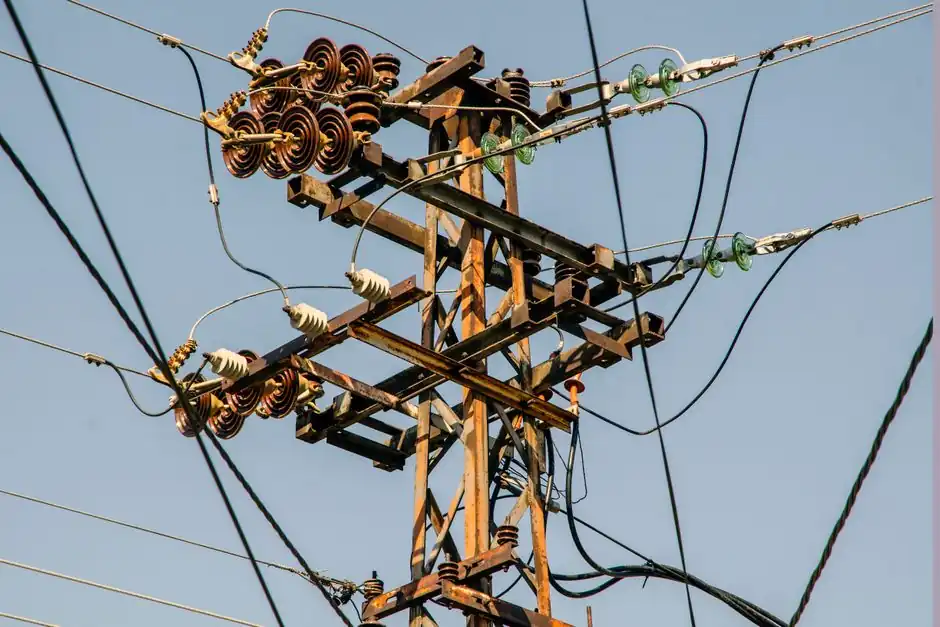
Distribution transformer price per kVA in 2026 sits in a wide band: a 100 kVA oil-immersed unit runs about $22.0/kVA, while a 1,600 kVA unit falls to roughly $7.2/kVA, a 3× spread driven by kVA tier rather than by margin [S2]. On a real Texas utility bid, three quotes for the same 1,500 kVA pad-mount diverged by 31% with mismatched test scopes [S1].
The market is not soft: LME copper closed near $14,185/ton (about $6.43/lb) on 2026-08-23, up roughly 47% year-on-year, and the U.S. has carried a 50% tariff on imported electrical-steel articles since August 2025 [S1][S4]. Combined with DOE's 2024 distribution-transformer efficiency rule phasing in from April 2026, those forces push the per-kVA number in one direction only [S1].
Where the per-kVA curve actually sits in 2026
FOB Qingdao reference prices for S13-M oil-immersed, 10/0.4 kV, Dyn11, copper-wound units scale as follows: 100 kVA at $1,518–$1,781; 200 kVA at $2,530–$2,970; 315 kVA at $3,542–$4,158; 500 kVA at $4,968–$5,832; 630 kVA at $6,072–$7,128; 800 kVA at $7,084–$8,316; 1,000 kVA at $8,372–$9,828; 1,600 kVA at $11,868–$13,932; 2,000 kVA at $13,984–$16,416 [S4]. Anchored LME copper of $14,185/ton (2026-08-23) shifts copper-wound prices by ±3% per $1,000/ton move, so the same model number can move 6% in either direction before any engineering change [S4].
Dry-type SCB13 equivalents carry a 20–40% premium: a 500 kVA oil-immersed S13-M runs about $11.8/kVA, while the same rating in cast-resin dry-type climbs to roughly $15–$21/kVA [S2][S4]. The 100 kVA SCB13-100/10/0.4 dry-type band sits at $2,676–$3,141, the 200 kVA at $4,600–$5,400, the 315 kVA at $6,532–$7,668, and the 500 kVA range runs from the mid-$7,000s to above $10,000 [S4].
On the upper end, data-center grade distribution units land between $40,000 and $150,000 per unit depending on kVA and voltage class, and pad-mount three-phase lead times have stretched past 50 weeks from legacy vendors in 2026 [S5]. For comparison, larger power-transformer spend runs $150,000 to over $2,000,000 per unit, and dry-type distribution in the 150–750 kVA window clusters around $55–$95 per kVA as a 2026 baseline [S5][S6].
Cost drivers ranked, and how each moves the price
Direct material cost runs roughly 90% of the total factory cost, with copper and electrical steel together at about 80% of material spend; on a liquid-filled unit, copper alone can hit 25–35% of factory cost [S1][S2]. Copper is trading near record levels, peaking around $6.83/lb in August 2026, which alone explains 10–15% price volatility in a single quarter [S1][S2].
Efficiency tier is the second-largest lever. S13-M (IE2 equivalent) is the 2026 baseline; S20 and amorphous-core designs add 8–15% to base pricing but cut no-load losses sharply [S2]. The DOE 2024 final rule on distribution-transformer efficiency began phasing in during April 2026 with a second step scheduled for April 2029, and DOE projected more than $14 billion in energy savings over 30 years, savings that are paid upstream as larger cores and more copper per kVA [S1].
Winding material choice (copper vs aluminum), tank and cooling configuration, and insulation class each move the line item independently. Tariffs and freight round out the landed cost: U.S. Section 301 duties on Chinese transformers can reach 25%, and the 50% electrical-steel tariff in place since August 2025 has not been removed [S1][S2].
kVA tier non-linearity: the 3× spread that catches buyers
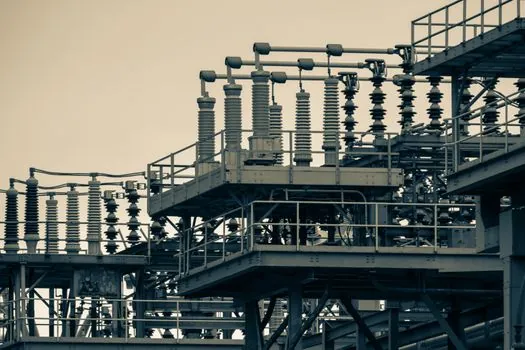
Per-kVA cost drops sharply from 50 kVA to about 315 kVA, then plateaus: 100 kVA at $22.0/kVA, 200 kVA at $17.0/kVA, 315 kVA at $13.7/kVA, 500 kVA at $11.8/kVA, 800 kVA at $10.9/kVA, 1,000 kVA at $10.0/kVA, and 1,600 kVA at $7.2/kVA [S2]. Sizing one kVA tier up is often cheaper per kVA than negotiating the same unit down, so load-profile right-sizing routinely saves more than vendor haggling [S2].
Selection guidance per IEC 60076 and the Dyn11 vector group should anchor any quote review; comparing two quotes without a matched impedance (typically 4–6% in this kVA range) and matched test scope is not a real comparison [S4]. For broader distribution cabinet and power distribution system budgeting, the same copper and GOES pressure shows up in switchgear and busway pricing, though the per-unit kVA economics differ.
Quote comparison checklist: why the same kVA carries two prices
The 31% spread on the Texas 1,500 kVA bid in September 2026 came down to scope, not vendor margin [S1]. A reliable quote comparison lines up loss level and core grade (amorphous or high-grade GOES vs standard GOES), winding material and size, impedance percentage, tap-changer type, dielectric fluid, enclosure rating, and test scope (routine, type, and special) before price is even discussed [S1][S4].
A stripped quote with a nameplate that will not survive a utility audit is not the same product as a compliant, fully tested unit built for a 65 °C average winding-temperature rise at 40 °C ambient, even at the same kVA rating [S1]. U.S. three-phase pad-mount lead times past 50 weeks mean last-minute spec changes usually cost more than the original engineering compromise, so locking the spec at RFQ is the single biggest cost-control move a buyer can make [S5]. For pad-mount and cable distribution cabinet packages, the same lead-time logic applies to the switchgear side.
Total cost of ownership: purchase price is the smallest number on a 20-year sheet

Dry-type and cast-resin units cost 20–40% more up front, but 20-year TCO often flips the ranking: $15,000–$30,000 per unit is saved across energy and maintenance versus a low-bid oil-immersed unit, per the S13-M reference dataset [S2]. No-load loss is the dominant TCO driver because a transformer is energized 24/7, so a 30% lower no-load loss pays back the efficiency premium inside 5–8 years at typical industrial load factors [S1][S2].
Oil-immersed S11/S13 units at 100–1,000 kVA are the workhorses for outdoor power distribution box and substation service where fire risk is manageable; dry-type SCB13 is the default for indoor explosion-proof distribution rooms, data-center white space, and sites with restricted oil handling [S2][S4]. Copper price timing around LME dips is the one negotiation lever that reliably moves the number 10–15%, while direct-from-OEM purchasing typically removes 10–25% of distributor markup without changing warranty terms [S2].
Standards, certification, and what the rule change actually means
All reference prices above are quoted to IEC 60076 with Dyn11 vector group and 10/0.4 kV primary/secondary; S13 efficiency maps to IE2, and S20 to IE3-equivalent performance [S2][S4]. The DOE 2024 distribution-transformer efficiency rule is the binding U.S. compliance event in this cycle, with phase-in starting April 2026 and a tighter step in April 2029 [S1]. U.S. buyers should also verify UL listing for the assembled unit and IEEE C57 series for oil-immersed designs, where applicable.
For hazardous-area indoor sites, the relevant certification path is explosion-proof distribution enclosure ratings under the IEC 60079 series and ATEX 2014/34/EU where Europe-bound; the enclosure and thermal-class spec, not the kVA rating, is what moves the price most in that segment. Single-phase pole-top units follow a different cost curve again, with material, design standard, and automation level cited as the 2026 main drivers and 2026 starting prices in the low thousands of USD for small ratings [S8].
Market size and where the cycle is heading
The global distribution-transformers market is projected to grow from USD 16,782.1 million in 2026 to USD 26,711.7 million by 2035, a CAGR in the mid-single digits, with the data-center, EV charging, and grid-renewal segments pulling the demand side [S9]. Roughly half of U.S. distribution transformers are over 33 years old, and U.S. transformer lead times have tripled since 2020, which is the structural reason behind the 40% real-terms price rise between 2020 and 2024 documented in the Congressional Research Service report on distribution-transformer supply, tariffs, and policy options [S1][S5].
Trackable signals for the next buying window: the LME copper anchor published at the top of any copper-linked pricing engine (it updated to $14,185/ton on 2026-08-23) [S4]; the second DOE compliance step in April 2029 that will re-price the S13-M-to-S20 transition [S1]; and U.S. lead-time reports from legacy three-phase pad-mount vendors, still above 50 weeks in 2026 [S5]. Spec-locked RFQs against a copper-anchored vendor model, paired with right-sized kVA tiers, remain the cleanest cost control in this market.
Related analysis: MCC section width vs starter bucket count: a 2026 sizing reference.