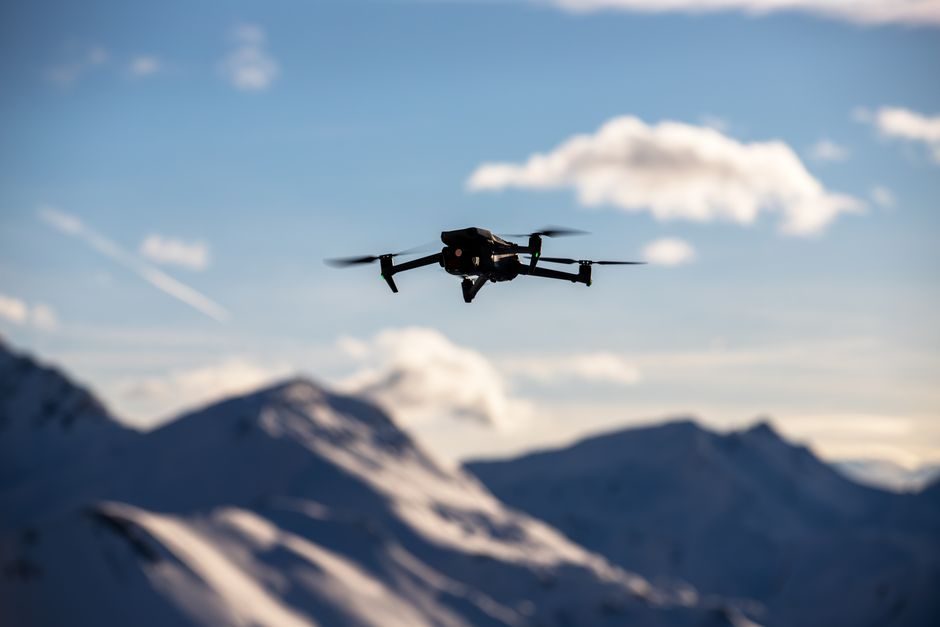
Industrial drone manufacturing in 2026 is a five-layer stack: composite airframe, propulsion + power, flight-control + datalink, payload/sensor integration, and ground infrastructure (docks, charging, BVLOS software). GDU Technology's 2026 product tree lists the P300 quadcopter, S200 series UAVs, S400E UAV Docking Station K01–K05, and a payload line that includes the PQL02 quad-sensor camera, PWG01 penta-gimbal, and PLI01 LiDAR — a structure typical of the new industrial segment [S4].
The production-technology theme cuts across the supply chain: airframe layup, ESC tuning, GNSS + IMU calibration, gimbals, and 4G/dock telemetry. Below is the spec-driven cut that buyers and process engineers need to evaluate platforms, the same way a buyer would line up an industrial valve by body, DN and actuator class.
Airframe: composite layup, payload class and folding geometry
The dominant airframe process for sub-25 kg industrial quadcopters and VTOLs is carbon-fiber-reinforced polymer (CFRP) with CNC-machined aluminum or injection-molded plastic sub-frames; rotor-to-rotor diagonal on a prosumer/industrial quadcopter is typically 350–900 mm. GDU's P300 lists a compact quadcopter form factor; the S200 series expands to a quick-deploy industrial airframe; the S400E is a docking-station-compatible platform sized for automated missions [S4].
Folding-arm geometry and quick-release props are now baseline — they are what makes a sub-7 kg UAV backpack-portable for survey crews and supports the same modular philosophy buyers expect from a modern pressure transmitter line. The Institute for Drone Technology markets the Parrot ANAFI UKR platform, illustrating the trend toward ruggedized, secure-data folding quadcopters for security and inspection work [S1].
Propulsion: BLDC motors, ESC, prop diameter and battery pack
Industrial drone propulsion is a brushless DC (BLDC) outrunner + electronic speed controller (ESC) stack driving a 13–30 inch CFRP or polymer prop. Battery packs are almost universally lithium-polymer (LiPo) 6S 22.2 V at the prosumer/industrial tier, with capacities from ~3000 mAh (sub-2 kg airframes) to 20,000+ mAh (10–25 kg VTOLs). GDU's product tree groups batteries and "more accessories" under dedicated SKUs, mirroring the modular accessory catalog common in industrial-grade product lines [S4].
Power-to-weight is the governing spec: a 6S platform with a 25–30 A continuous ESC sustains roughly 1.5–2.5 kg of payload at 20–25 minutes of hover. Buyers comparing endurance claims should discount numbers taken at sea level, no wind, no payload — a discipline that parallels the rated-flow caveats that come with any flow meter datasheet.
Flight control: GNSS+IMU, datalink, and 4G/BVLOS
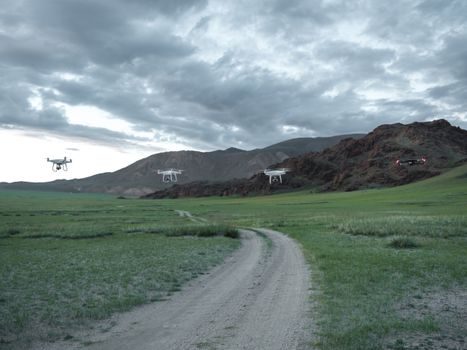
The flight-control stack on 2026 industrial drones is a triple-redundant or dual-redundant IMU (gyro + accelerometer + magnetometer) plus a multi-constellation GNSS receiver (GPS L1/L2 + GLONASS + Galileo + BeiDou), feeding a Cortex-class or equivalent SoC running PX4, ArduPilot, or a vendor-proprietary stack. The S400E platform from GDU is shipped with an A4G-400 4G module, which is what enables true beyond-visual-line-of-sight (BVLOS) operation through cellular backhaul rather than point-to-point radio [S4].
Software-defined flight modes (auto-takeoff, waypoint, survey grid, orbit, return-to-home on link loss) are now table stakes, and drone-show operators add a separate swarm-dock + RTK positioning layer. Drone Studios in California holds Part 107 certification plus specific FAA authorizations for night, urban and drone-show operations — a regulatory scope that the 4G-equipped platforms like the S400E support natively [S2].
Payloads: cameras, gimbals, LiDAR and multispectral
Payload integration is where industrial drone production diverges from prosumer builds. GDU's payload catalog includes the PQL02 compact quad-sensor camera (likely RGB + thermal + low-light + rangefinder in a single housing), the PWG01 penta smart-camera gimbal (5-axis stabilized RGB/zoom combo), and the PLI01 LiDAR for point-cloud survey [S4]. The AGA01 payload adapter is a standard quick-release mount — analogous to a quick-disconnect on a pressure sensor head that lets the same body accept different measurement modules.
For precision agriculture, the payload story overlaps with the production technology itself: drones apply fertilizer and pesticide in a need-based pattern, lifting input-use efficiency and lowering chemical cost per hectare — a benefit documented for sugarcane and other row crops in the agronomy press [S5]. Drone Technology Centre in Botswana explicitly markets agricultural rental, tying the same airframe into spray and survey roles [S3].
Ground infrastructure: docking, charging, 4G and autonomy
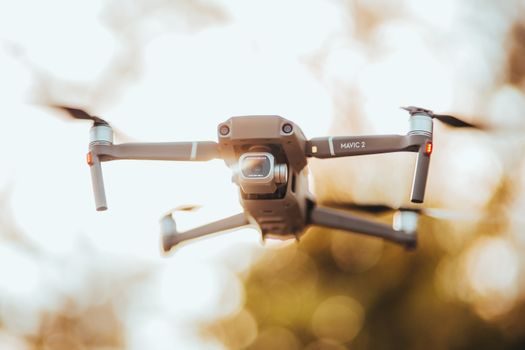
The S400E UAV Docking Station is the headline ground-system spec for 2026: a weatherproof enclosure that charges the airframe, swaps batteries (in K02/K05-class docks), shelters the platform, and uplinks via 4G or wired Ethernet. GDU's K01–K05 line covers the dock family, with K02, K03 and K05 marked as new for 2026, and the AGA01 adapter plus FPV01 / ANL01 navigation-light accessories round out the in-field kit [S4].
Docks convert drone production into a recurring service: a single K-class dock can run 4–8 sorties/day on autonomous schedule, which is what enables utility-patrol, perimeter-security and pipeline-inspection business models. For a process engineer, the dock is the closest analogue to a PLC — a fixed, deterministic node that orchestrates a mobile asset over a defined I/O ladder.
Standards, certification and the regulatory gate
Commercial drone production is gated by airworthiness and operator rules, not by a single product standard: in the US, Part 107 is the operator path and Section 44807 grants beyond-category waivers; the EU applies CE-marked classes C0–C6 under the 2019/945 and 2019/947 regulations. FAA Part 107 plus the specific authorizations held by operators such as Drone Studios — downtown San Diego, San Francisco, delta airspace, night, drone shows — define the legal envelope within which a given airframe is actually deployable [S2].
Radio and EMC compliance (FCC Part 15 in the US, Radio Equipment Directive 2014/53/EU in the EU) apply to the datalink and 4G module; the A4G-400 4G module on the S400E is exactly the kind of sub-assembly that has to clear those rules before it ships with the airframe [S4]. For an integrator, the practical implication is that a platform without an FCC/CE/IC radio declaration is non-deployable in commercial inspection work.
Selection criteria: airframe vs payload vs dock
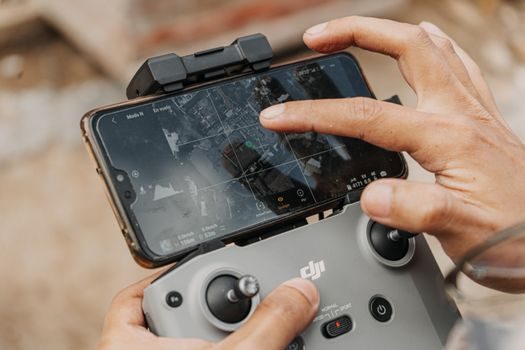
Three decision axes govern which 2026 platform fits a use case: (1) payload mass and type — RGB only, RGB+thermal, LiDAR point cloud, or spray-tank; (2) endurance and BVLOS reach — 4G/Cellular BVLOS via the A4G-400 module vs radio-link only; (3) dock-based autonomy vs hand-launch — a K01–K05 dock enables scheduled missions, while a P300-class hand-launch quadcopter is field-crew portable. GDU's 2026 catalog lines up against these axes cleanly: P300 for portable survey, S200 series for industrial quick-deploy, S400E for docked, cellular-BVLOS patrol [S4].
For a security/inspection buyer, the Parrot ANAFI UKR through the Institute for Drone Technology targets the ruggedized, secure-data end of the market [S1]; for a media production buyer, FAA Part 107 + night/urban/show authorizations are the gating spec, as held by Drone Studios and Taylorvisions [S2][S6]. For a precision-agriculture buyer, the deciding factor is spray-tank capacity and the agronomic evidence base — not the airframe, as the AgroPages coverage on sugarcane shows [S5].
Production economics and where the value moves
Cost of goods in 2026 industrial drone production is dominated by sensors, the flight controller + GNSS module, and the BLDC/ESC stack — not the airframe plastic or carbon shell. Quick-release payloads (AGA01 adapter on GDU's line) and quick-release props shift value from airframe to payload SKUs, which is why a vendor's payload catalog length is a reasonable proxy for how industrialized the platform is [S4].
Two trackable signals through the rest of 2026: (a) dock-class SKUs (K02/K03/K05 are new) ramping into utility and security fleets [S4]; (b) expansion of specialized Part 107 waivers — night, urban, swarm/show — which materially expand the addressable mission set for any S400E-class platform [S2]. For comparison, similar value-chain shifts are visible in industrial pump sourcing, where spec levers now outweigh brand (pump market 2026), and in additive manufacturing, where powder and process spec cuts drive the buy (AM vs metal powder 2026).