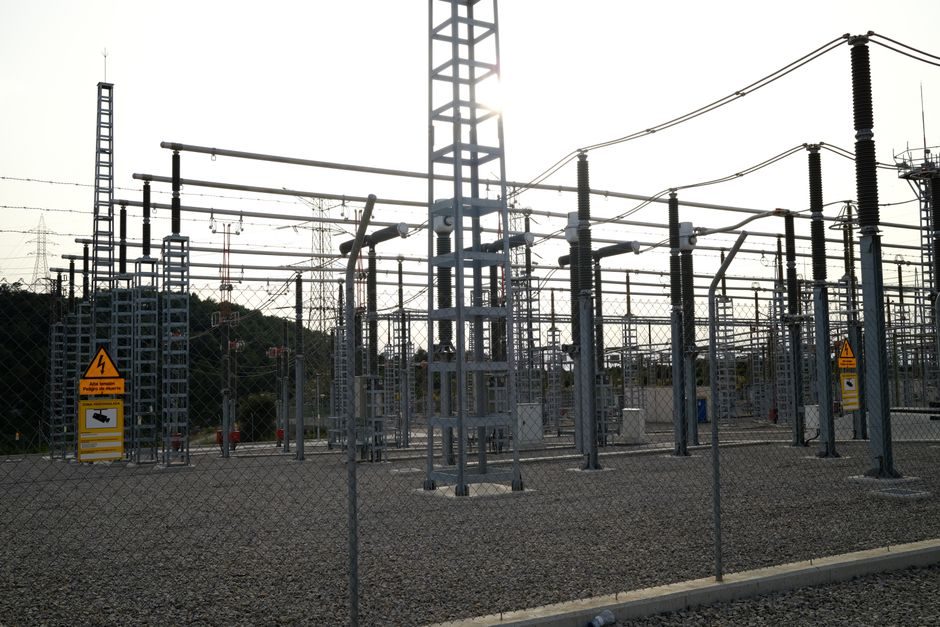
Dry-type transformers cover the 30-2500 kVA three-phase range (SCB10 series example, Sui On / Made-in-China listings) and are specified where oil-immersed units are banned by fire code or landlord policy [S3][S2].
Selection is driven by five hard constraints: kVA load, voltage class (≤35 kV typical for cast-resin), impedance (%Z, usually 4-6% for distribution sizes), short-circuit withstand (typically 25 kA/2 s), and ambient plus altitude derating [S1][S4].
Core Construction and Insulation Systems
Cast-resin dry-type transformers use vacuum-cast epoxy coils with glass-fiber reinforcement, while VPI (vacuum pressure impregnated) units use Class H NOMEX® 410 paper and solventless varnish [S1][S2]. The dry-type transformer consists of core, coil, clamp, temperature controller, fan, tap switch, and the coil is cast in one piece, with the core and coil not immersed in insulating oil [S1].
Insulation class governs hot-spot limit: Class F = 155 °C, Class H = 180 °C. For Class F cast-resin, average winding temperature rise is limited to 100 K (145 K hot-spot); Class H allows 125 K average rise (175 K hot-spot), per typical IEC 60076-11 frame used by Chinese and EU OEMs [S2][S3]. DuPont NOMEX®, KAPTON®, MYLAR®, and Roechling Durostone® are the workhorse insulation materials across conductor wrap, layer insulation, and barrier insulation cylinders [S2].
Loss Model and Efficiency
No-load loss (P0) and load loss (Pk) at 75 °C define efficiency. For SCB10-30 to 2500 kVA cast-resin units, P0 typically runs 0.13-2.40 kW and Pk 0.63-14.50 kW depending on kVA and impedance target, with EU Tier 2 (EU 548/2014, 2021 amendment) demanding roughly 10-15% lower Pk than legacy designs [S3].
The 2024 paper "Analysis of Comprehensive Loss Model of Dry-type Transformer Base" (Advances in Electrical and Computer Engineering, doi:10.4316/AECE.2024.03005) treats the magnetic base and structural frame as a distributed loss path that can add 3-8% to no-load loss if not modelled explicitly, which is a common cause of failed factory acceptance tests [S4].
Comparison: Cast-Resin vs VPI vs Open Winding
Cast-resin (SCB / SCR series) suits indoor IP20 or IP23 enclosures, 6-35 kV primary, 25 kA short-circuit withstand, and is the default for hospitals, data centres, and metro substations [S1][S8]. VPI (often designated SG / SGB) tolerates higher humidity and modest pollution, runs cooler under harmonic load, and is the right pick for chemical plants and coastal sites [S2][S5]. Open-winding (non-encapsulated) dry types with air-cooling fans are the cheapest but demand a clean, dry indoor room and rarely specified below 800 kVA.
On four decision criteria, cast-resin wins on moisture resistance and mechanical short-circuit strength, VPI wins on harmonic tolerance and partial-discharge performance, and open-winding only wins on first cost where the room is already IP-54 clean [S2][S5][S8].
Protection, Cooling, and Monitoring
Standard kit includes PT100 thermistors embedded in each LV winding, a temperature controller (Bimetek, Hawke, or OEM equivalent) tripping at 130 °C alarm / 150 °C trip on Class F, and an axial fan pack that lifts output by 40% (typical AF / ANF rating) for 30-2500 kVA frames [S1][S3]. IP20 enclosure (finger-proof) is the default for indoor switchrooms; IP23 (drip-proof) and IP54 (dust/splash) are step-ups for plant rooms with wash-down or coal-dust exposure [S5][S6].
Mining flameproof dry-type units on the Made-in-China trade listings (2026-07-23 snapshot) carry FOB pricing from US $3,999/piece to US $26,800/set, with separate-winding and two-winding topologies offered, three-phase, and ISO 9001 / CCC / CE certification common across the segment [S6].
Duty Match: Where Each Variant Fits
Data centres, hospitals, and metro substations with strict fire-load limits point to cast-resin Class F dry-type transformers, which are characterized by nonflammable insulation material and use in places with high fire-proof and safety requirements such as the power distribution in communities of the State Power Grid, factory & mining enterprises, hospitals, cloud computing centers, urban railway system, subway, light rail projects and new-energy power generation projects [S8]. Wind turbine nacelles (cabin-integrated dry-type units) run a tightly modelled thermal envelope, as the 2010 hanspub simulation study of nacelle dry-type units showed, with both top and bottom fans contributing to hotspot control [S7].
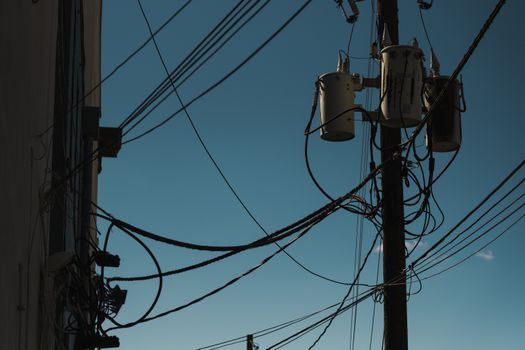
For the wider electrical chain, a power transformer upstream at the MV substation typically feeds the cast-resin distribution unit, and the dry-type transformer you select feeds low-voltage switchgear, drives, and building loads. Buyers who need ingress ratings for outdoor pad-mount should look at oil-immersed or hermetically sealed designs instead — dry-type is fundamentally an indoor or sheltered solution, and pushing it into a wet outdoor environment without a purpose-built kiosk usually voids the partial-discharge guarantee.
Sourcing, Standards, and Audit Cues
Audit cues on a 2026 supplier shortlist: ISO 9001 quality system, CCC for the Chinese domestic market, CE for EU export, and a type-test report per IEC 60076-11 covering temperature-rise, short-circuit, and noise (typically ≤55 dB(A) at 1 m for 1000 kVA and below) [S1][S3][S6]. For harmonic-rich sites (data-centre UPS, VFD buses, EV chargers), confirm K-factor rating (K-4 / K-13 / K-20) rather than assuming a standard 60 Hz sinusoidal design, as derating a standard unit against K-13 is more expensive than specifying it at the quote [S2][S5].
For a wider process-engineering view on adjacent MV/LV equipment, see power quality analyzer selection: a working engineer's spec map.
Spec-level background on the components involved: linear guide.