Down-the-hole (DTH) drilling rigs place a pneumatically or hydraulically driven hammer immediately behind the bit, so impact energy is delivered at the hole bottom rather than travelling through a long drill string, which is why the method is the default for medium-hard to hard rock blastholes in open-pit mining, quarrying, and aggregate production [S3]. Common sub-types named across the 2024-2026 manufacturer literature include crawler-mounted hydraulic DTH, integrated (compressor-on-board) hydraulic DTH, top hammer, and reverse circulation drill rigs, each with a distinct working envelope and a different set of support machines [S3][S9].
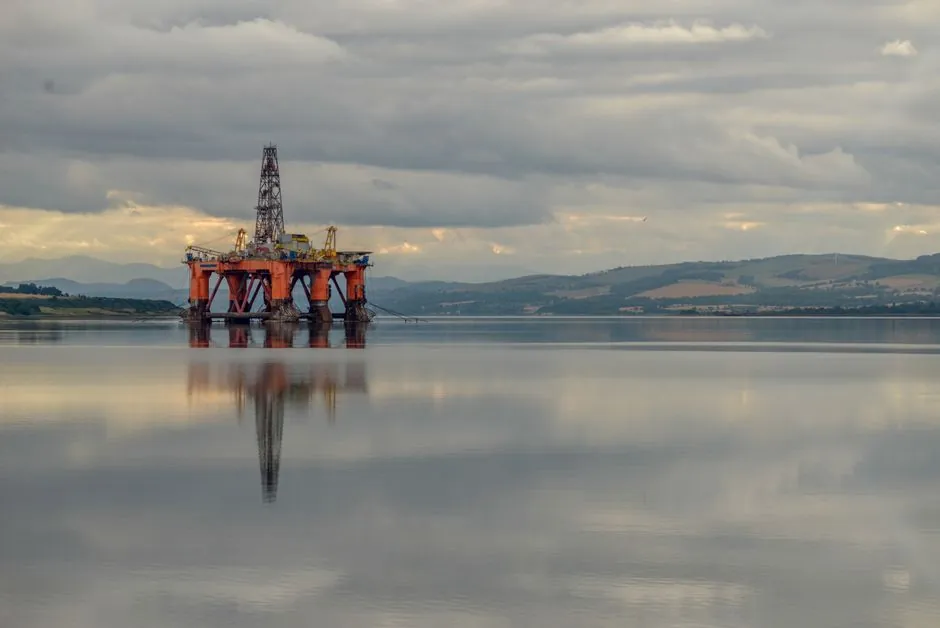
Offshore, the same DTH principle is embedded inside much larger ultra-deepwater and harsh-environment drilling packages, with current Transocean ultra-deepwater rigs rated for 7,500-12,000 ft max water depth and 30,000-40,000 ft max drilling depth across 20 units, 26 of which carry dual-activity capability and dynamic positioning stationkeeping [S5]. On the construction side, DTH platform rigs are also used for rock anchor holes, anchor holes, blasting holes, and grouting holes in urban, railway, highway, river, and hydropower projects [S4].
Crawler hydraulic DTH rigs: the workhorse for surface blast-hole drilling
Hydraulic DTH drilling rigs use a down-the-hole hammer that operates close to the drill bit at the bottom of the borehole, applying impact energy at the drilling point instead of transmitting it through a long drill string, which is the core reason the method dominates hard-rock surface drilling [S3]. A crawler-mounted hydraulic DTH rig is normally paired with an external air compressor, drill rods, DTH hammers, and drill bits, and is widely used for open-pit mining blast holes, quarry production drilling, aggregate and stone mining, road cutting and rock excavation, hydropower construction, slope treatment, and infrastructure drilling in medium-hard to hard rock [S3]. Crawler tracks give stable movement across quarry benches, mine roads, and uneven construction sites where a wheeled carrier would lose traction.
Compared with top hammer rigs, a hydraulic DTH rig carries the impact mechanism to the bottom of the hole, so energy losses down the drill string are lower; this advantage grows as hole diameter and depth increase, which is why DTH is preferred once blasthole diameters move into the larger ranges common in metal mining and large quarries [S2][S3]. The trade-off is logistics: an external compressor and rod-handling cycle are required, which is the pain point the integrated variant was designed to remove.
Integrated hydraulic DTH rigs: one crawler, one compressor, one operator cabin
An integrated hydraulic DTH drilling rig combines the drilling rig, diesel engine, air compressor, and other working systems on a single crawler-mounted platform, with some models adding an automatic rod changer, an enclosed operator cabin, and a dust collection system [S3]. The unit is normally selected when a contractor wants to cut the number of separate machines working around a drill bench, replacing the need to coordinate a standalone drilling rig and an external compressor with a single self-contained package [S3].
Typical deployment envelopes are quarry benches with repeated blast-hole patterns, open-pit mining production drilling, aggregate production sites, road and hydropower excavation projects, sites with limited space for separate equipment, and contractors that need faster movement between blast-hole positions [S3]. Practical limits are short-to-medium-depth blast-hole drilling, where simplified equipment coordination matters more than the deeper-hole advantage of a separated DTH rig with a larger stand-alone compressor. The CapEx premium of the integrated layout is essentially the price paid for fewer support machines, fewer hose connections, and a shorter move-between-holes cycle.
Top hammer, reverse circulation, and the smaller-portable DTH family
A top hammer drilling rig mounts a rock drill or drifter above the drill string and transmits impact energy through the drill rods to the bit, which makes the method more suitable for relatively shorter, medium-depth holes with smaller or medium diameters, and for quarry drilling, road construction, rock excavation, construction foundation preparation, small to medium blastholes, and slope stabilization work [S3]. The hole-diameter and depth ceiling is set by energy loss down the rod string, which is why top hammer drops out of the running once blasthole diameters push into the larger hard-rock range that DTH handles natively [S3][S9].
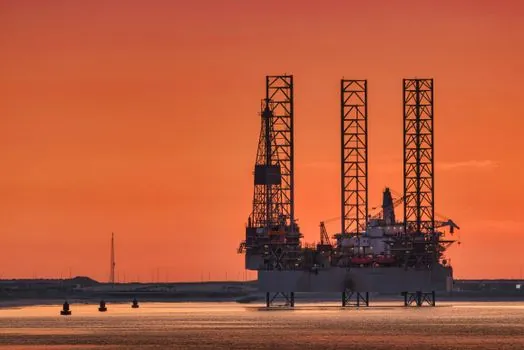
A reverse circulation (RC) drill rig uses a dual-wall drill rod system to bring rock chips and samples back to the surface through the inner tube, which is why it is selected for mineral exploration and sample recovery where sample quality matters more than penetration rate per metre [S3]. Alongside these sit smaller portable, small, and truck-mounted DTH variants: portable DTH rigs are lightweight and built for remote sites, small DTH rigs cover small to medium holes in geotechnical, water well, and mineral exploration work, and truck-mounted DTH rigs move between large-scale drilling projects on a road-legal carrier [S2]. Mobile offshore units are a separate family that includes jack-up mobile drilling units, fixed platform drilling units, and semi-submersibles for harsher environments [S5][S7].
Selection criteria: rock, hole size, depth, mobility, and support fleet
The first decision is rock hardness and abrasiveness. Hydraulic DTH rigs are the default for medium-hard to hard rock surface drilling because the hammer sits just above the bit; top hammer rigs are more efficient for shorter, smaller- or medium-diameter holes in less demanding rock, while RC rigs are chosen when sample integrity for mineral exploration is the primary deliverable [S3]. Hole diameter and depth then push the trade: DTH keeps its edge as diameter and depth grow, top hammer is preferred for shallower, smaller-diameter patterns, and integrated DTH is selected when the contractor values fewer support machines and faster bench moves over raw single-hole efficiency [S3].
Mobility and site access are the second filter. Crawler-mounted hydraulic DTH rigs handle uneven quarry benches, mine roads, and rough construction sites; truck-mounted DTH rigs suit projects connected by roads; portable and small DTH rigs cover remote or access-limited locations such as geotechnical, water well, and mineral exploration sites [S2][S3]. A practical comparison looks like this across four criteria: crawler hydraulic DTH ranks high on hard-rock productivity, medium on mobility, high on hole-diameter range, and low on support-fleet count; integrated hydraulic DTH ranks medium on hard-rock productivity, medium on mobility, high on hole-diameter range, and high on support-fleet simplification; top hammer ranks medium on hard-rock productivity, high on mobility, low on hole-diameter range, and high on support-fleet simplification; RC rigs rank low on hard-rock productivity, medium on mobility, low on hole-diameter range, and high on sample quality [S3]. For related context on how a larger rotary platform is specified and where DTH leaves off, the working envelope of a rotary drilling rig is a useful cross-check.
Applications, consumables, and where DTH fits in the wider fleet
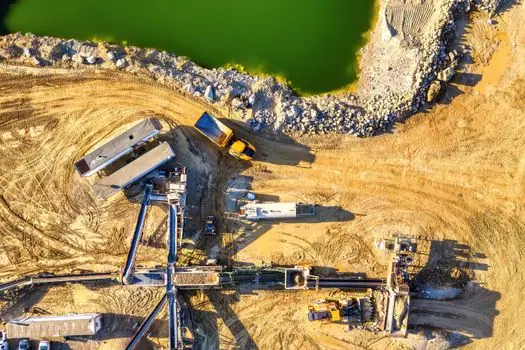
Across mining, quarrying, and construction, DTH drilling rigs are used for blasthole drilling (production holes for primary rock fragmentation, and pre-split holes to create a fracture plane for controlled blasting), mineral exploration, overburden removal, infrastructure preparation, quarry extraction of stone blocks, and foundation or piling work [S1][S2][S4]. A typical support train for a separated hydraulic DTH rig includes a matching external air compressor sized to the hammer pressure class, drill rods, the DTH hammer itself, and the drill bit; the integrated variant collapses that train into one crawler [S3]. Compressors are commonly classified as low, medium, or high pressure to match low, medium, and high pressure DTH hammers, which is the standard way vendors align bit, hammer, and compressor selection across a fleet [S4].
Maintenance discipline is straightforward and well-documented: regular lubrication of all moving parts, scheduled inspection for wear or damage, cleaning to remove cuttings and dust, and immediate replacement of worn parts to prevent cascading damage, all of which protect a service life that DTH rigs are normally specified for over many years of hard-rock duty [S2]. DTH is one branch of the broader construction machinery and equipment family, and where blasthole work overlaps with foundation, anchoring, and slope-stabilization contracts the same rig class is often paired with grouting and anchor drilling consumables on the same site [S4].
Limits, failure modes, and trackable signals
The hard limits of hydraulic DTH rigs are set by hole diameter, hole depth, air supply pressure, and the rock's compressive strength and abrasiveness; once hole diameter or depth drops below the economic threshold, top hammer becomes the better tool, and once the requirement shifts to clean representative samples, an RC rig replaces the DTH setup [S3]. Common failure modes are well known to operators: worn bits and shanks that drop penetration rate, under-sized or poorly matched air compressors that starve the hammer, missed lubrication intervals that accelerate wear on rotating components, and dust ingress when the dust collection system is bypassed, all of which show up first as a falling metres-per-shift figure before any mechanical breakdown [S2][S3].
Trackable signals worth watching on the next planning cycle are: (1) the move by Chinese manufacturers toward integrated DTH platforms with automatic rod changers and enclosed cabins, which is now a stock configuration rather than a custom build [S3]; (2) the continued bifurcation of the offshore fleet between ultra-deepwater drillships rated to 12,000 ft water depth and harsh-environment semi-submersibles with 3,700-7,500 metric ton variable deck load, both of which are still being actively specified for new deepwater tenders [S5]; and (3) closer integration between DTH rigs, geotechnical drills, and water well rigs on the same crawler or truck platform, a pattern visible across the 2024-2026 product line-ups of multiple Chinese OEMs [S3][S4]. For context on how DTH consumption compares with rotary platform selection in foundation and piling work, the rotary drilling rig selection trade-offs and the wider construction machinery and equipment taxonomy are useful cross-references.
The underlying component specifications are covered under lamps and light fittings.