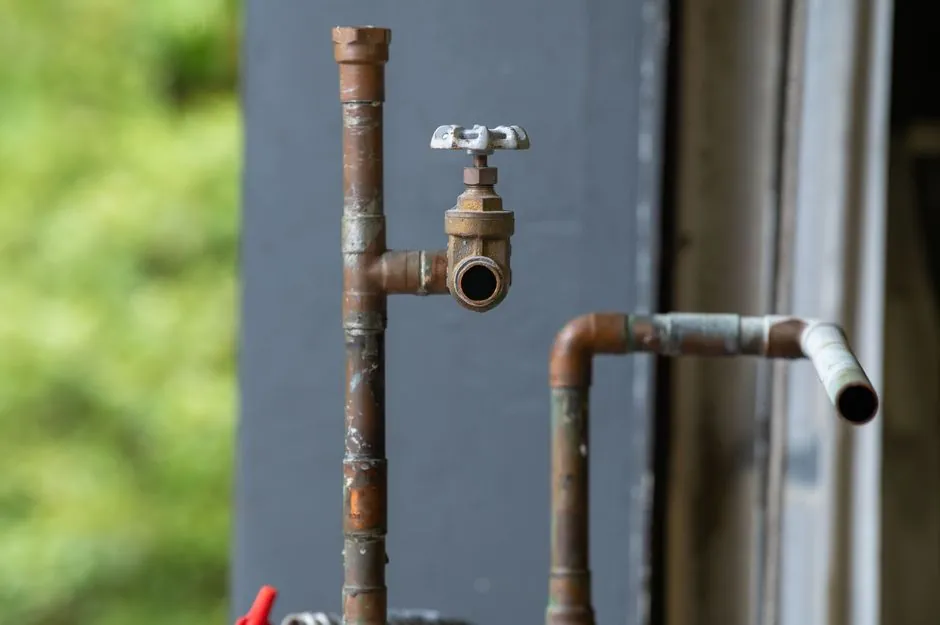
An electric ball valve purchased at a 2026 catalog price of USD 35-120 for DN15-DN100 UPVC models [S1] is rarely the line item that determines project profitability; on pipeline-scale DN150 Class 600 builds, the electric actuator premium versus a pneumatic head is dwarfed by the avoided cost of compressed-air infrastructure over a 10-15 year service life [S6].
Total cost of ownership for an electric ball valve decomposes into five interacting buckets: initial equipment cost (body plus actuator plus accessories), installation and commissioning, energy draw, planned and unplanned maintenance, and end-of-life replacement. Each bucket moves differently across material classes (UPVC, SS304/316, duplex, forged steel), voltage classes (AC380V, AC220V, DC24V), and sealing technologies (soft-seat NBR/PTFE versus hard-alloy metal-to-metal) [S3][S5].
Initial Equipment Cost: Body and Actuator Line Items
A DN50-DN400 flanged electric ball valve in 2026 catalogs carries face-to-face lengths from 108 mm at DN50 to 216 mm at DN400, with companion flange diameters from 125 mm to 515 mm, and bolt patterns stepping from 4-Φ18 at the small end to 16-Φ26 at DN400 [S3]. At the small-bore end, UPVC motorized valves in the DN15-DN100 window are quoted from USD 35 to USD 120 per piece at MOQ 1, with PN10 (10 Bar / 145 PSI) pressure rating, IP67 enclosures, and 220V AC / 24V DC / 12V DC supply options [S1].
For comparison, a 3/4" DN20 three-way L-port SS304 electric ball valve with 15 Nm torque, 2-wire auto-return, IP67 rating, and manual override is listed at USD 118.56 with a 5-second open/close time [S8]. A DN150 Class 600 ball valve with electric actuator, as documented across 32 oil and gas pipeline projects, carries a higher initial actuator cost than its pneumatic counterpart; the gap narrows once compressor room, air-treatment skid, and tubing runs are capitalised [S6]. The dominant cost driver inside the body is the ball-and-seat trim pair: hard-alloy seats handle higher temperatures and abrasive slurries, while NBR soft seats serve lower-temperature water and light hydrocarbons at a fraction of the trim price [S3].
Installation and Commissioning: What the Actuator Choice Forces
Electric actuators simplify the field build because they need only a power drop and a control cable; pneumatic heads additionally require a solenoid valve, an air filter regulator, tubing runs back to the compressor skid, and dry air at dew point typically -40°C [S5]. On a greenfield site without an existing compressed-air ring, a pneumatic ball valve installation therefore carries hidden costs that frequently exceed the actuator price differential, especially when the air system is sized for instrument-air plus valve duty combined.
For hazardous-area drops, DC24V is the control-voltage default because extra-low-voltage supply is mandated; for fixed industrial plants, AC380V three-phase or AC220V single-phase remains the baseline [S3]. Modular electric actuators ship with built-in servo systems, eliminating the need for an external servo amplifier and shortening commissioning time on the bench [S7]. Where IoT-enabled actuators are specified, additional integration time with the DCS or SCADA layer must be priced in, but the same digital link enables the predictive maintenance savings counted under operating cost.
Energy Draw: Steady-State vs Cycling Power
Electric ball valves consume power only during the 5-60 second open/close stroke, with catalog on-off times of 15 s, 30 s, 45 s, or 60 s for a 90° rotation at AC380V / AC220V / AC110V / DC24V [S3]. Pneumatic systems, by contrast, keep the compressor cycling continuously to maintain ring pressure, with air leakage, compressor heat loss, and dryer parasitic loads eroding efficiency even when no valve has stroked for hours [S5].
The faster the actuator's specified on-off time, the less torque margin remains in the gear train, and the shorter the gear life becomes at high differential pressure; this is a duty-cycle decision rather than a speed preference [S3]. In remote mining and mineral processing sites where the air-compressor room is impractical, electric actuation also eliminates the standby diesel or electric compressor load that would otherwise run 24/7, shifting the TCO calculation further toward the electric side [S2].
Maintenance and Spare Parts: Soft-Seat vs Hard-Seat Service
Material-science advances are extending service intervals in abrasive mining service: tungsten carbide hardfacing on ball and seat surfaces, ceramic erosion-resistant coatings, duplex and super duplex stainless bodies, and advanced polymer seals compatible with aggressive chemicals all reduce maintenance frequency and unplanned downtime [S2]. The trade-off is upfront: a hard-alloy metal-seated ball for high-temperature or slurry service typically costs 2-3x a soft-seat PTFE/NBR equivalent and demands a larger actuator torque envelope.
For soft-seat UPVC valves used in water, acid, alkali, and saline solution service at 0°C to 60°C, the maintenance profile is dominated by seal replacement every 2-4 years depending on cycle count; pneumatic systems layered on top add filter changes, dryer service, and leak inspection on a fixed calendar regardless of valve activity [S1][S4][S5]. Electric actuators themselves may need motor or PCB replacement after long-term service, but the failure mode is typically scheduled rather than unscheduled when condition monitoring is in place.
Service Environment: Why Site Conditions Dominate the Math
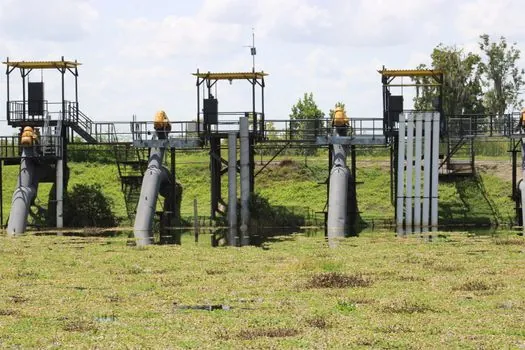
Underground mining, chemical dosing skids, and offshore platforms shift the cost calculus hard toward electric actuation because compressed-air logistics are unreliable or unsafe in those locations [S2]. UPVC bodies are up to 70% lighter than metal equivalents, reducing structural load on plastic piping and shipping cost per unit; they also tolerate HCl, H2SO4, NaOH, and saline solutions in the 0-60°C window where SS304 would survive but at significantly higher unit cost [S1].
For hygienic, food-grade, or potable-water service, 304 stainless bodies with IP67 actuators and 2-wire auto-return on power loss are a common spec, priced in the low-hundreds USD band for DN20 sizes [S8]. In high-temperature smelting and thermal processing, ball valves rated for elevated service require extended bonnets and high-ambient-temperature actuators, which sit in a different cost tier again [S2]. A related reference on actuator selection boundaries for B2B buyers is covered in Electric Ball Valve Pros, Cons, and Spec Boundaries for B2B Buyers.
Five-Year TCO Comparison: Electric vs Pneumatic on a Pipeline Project
For a DN150 Class 600 ball valve, pneumatic ball valves typically stroke in milliseconds to seconds while electric ball valves run 5-30 seconds, so pneumatic wins on raw speed [S5]. On lifecycle cost, however, electric ball valves win on energy efficiency because they draw power only while stroking, and on maintenance simplification because no air-treatment skid is in scope [S5].
The crossover point documented across Carilo Valve's 32 oil and gas pipeline projects in Southeast Asia, the Middle East, and South America is generally inside three years on remote or unmanned sites, where avoided compressor capital, avoided air-leakage losses, and reduced filter/dryer service compound annually [S6]. On sites with a mature compressed-air ring and high cycle counts (multiple strokes per hour), pneumatic systems can still show lower TCO because their simpler mechanics tolerate harsh environments with fewer PCB-style failures [S5]. Material selection for adjacent foundry work is mapped in Shell Core Shooter Selection for Pump and Valve Foundries, and broader plug-valve options appear in Plug Valve Advantages, Disadvantages, and Type Selection.
Decision Matrix: When Electric TCO Wins, When It Loses
Specify an electric ball valve when the site has no compressed-air ring, when remote control or DCS integration is required, when hazardous-area classification favours extra-low-voltage DC24V supply, when energy efficiency matters more than sub-second stroking, or when valve count is low to moderate and the compressor capital cannot be amortised across many actuators [S2][S3][S5]. Specify a pneumatic ball valve when sub-second emergency-isolation stroking is mandatory, when a mature instrument-air ring already exists, when ambient conditions are dusty or hot enough to challenge PCB electronics, or when cycle counts are very high and the simpler pneumatic mechanics show lower failure rates [S5].
Within the electric column, UPVC is the cost-optimised choice for water, acid, alkali, and chemical dosing at 0-60°C in DN15-DN100, with 220V AC, 24V DC, and 12V DC actuator supply options and IP67 protection [S1][S4]. For hygienic and potable service at DN20, 304 stainless with 2-wire auto-return at roughly USD 118.56 is the mid-tier entry point [S8]. For high-pressure pipeline service at DN150 Class 600, forged steel bodies with hard-alloy seats and high-torque electric actuators sit at the top of the price band, and TCO parity with pneumatic depends entirely on whether compressor capital is already sunk [S6].
The next decision node for spec-driven buyers is to lock the actuator voltage class (AC380V/AC220V for fixed plants, DC24V for cabinet or hazardous-area drops) and the sealing class (soft-seat NBR/PTFE for water and light hydrocarbons, hard-alloy metal-to-metal for abrasive slurry, high-temperature, or fire-safe service) before soliciting line-item quotes, because these two choices move the bill of materials more than any other specification on the datasheet [S3]. Buyers should also confirm certification scope: ISO 9001, CE, RoHS, and SIL ratings are commonly bundled on UPVC and stainless models in the 2026 catalog window, and ATEX/IECEx certification for explosive atmospheres is a separate line item that materially shifts the actuator price [S1][S2].