An electronics engineer leading McKinsey's Digital Capability Center in Singapore published a July 2026 commentary arguing that Industry 4.0 (I4.0) adoption succeeds only when companies stop chasing every technology and concentrate on four pragmatic levers: IIoT connectivity, data infrastructure, advanced analytics, and frontline workforce enablement [S2].
For EV charger OEMs, those four levers now map directly onto high-mix power-electronics lines producing AC and DC units in volumes where per-station scrap and end-of-line rework directly erode margins. Foundries and machining cells feeding the same supply chain have already published peer-reviewed evidence: AI/ML-driven metamodels combined with ICME tools cut shrinkage scrap in ductile iron sand casting trials, as documented in the International Journal of Metalcasting [S3].
Scope: What "Industry 4.0 EV Charger Manufacturing" Actually Covers
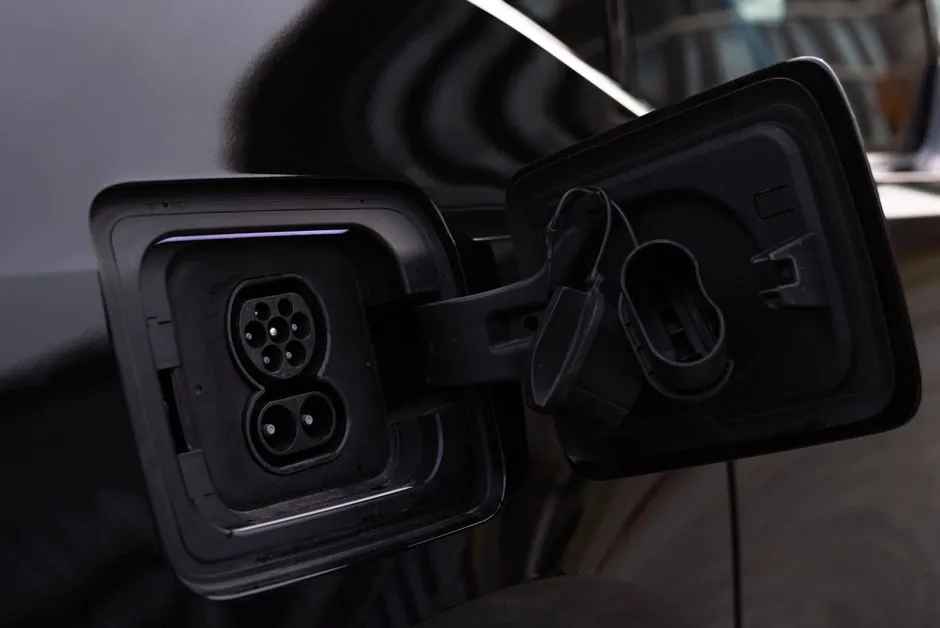
Industry 4.0 in this segment is the convergence of cyber-physical production systems, IIoT, big-data analytics, and AI/ML on a single EV charger assembly line, with horizontal integration from incoming power-converter subassemblies to shipping [S1]. A 2021 Springer reference framework lists the foundational technology stack as cyber-physical systems, IIoT, cloud computing, big data, AI, augmented reality, autonomous robots, additive manufacturing, and digital twins, with cybersecurity positioned as a cross-cutting enabler [S1]. On a charger line that translates concretely into networked soldering stations for power modules, RFID/MQTT-traced component lots for traceability, and inline hipot and insulation-resistance testers feeding a digital thread for each unit.
ENISA's 2018 framing, still cited in the I4.0 literature, treats cybersecurity as a key enabler of adoption rather than an afterthought, which matters for chargers because OCPP backhaul and firmware-over-the-air pipelines expose the same factory network to remote actors [S1]. Process engineers planning a brownfield retrofit should therefore plan network segmentation between MES/OPC UA traffic and OTA staging from day one, not after the first pilot.
Selection Criteria: The Four Levers That Matter for Charger Lines
Per the July 2026 McKinsey operations-blog guidance, I4.0 adopters should rank candidates against four filters: connectivity readiness, data quality and lineage, analytics maturity, and the ability of floor staff to act on the output [S2]. On an EV charger line, connectivity readiness is gated by station-level PLC retrofits and OPC UA brokers, since many surface-mount and wave-solder cells still ship with proprietary fieldbus. Data quality hinges on consistent tagging of lot, operator, and firmware version at every node, without which the AI layer cannot reconcile scrap events to root cause.
Analytics maturity scales with closed-loop control: a line that only visualizes OEE is at level 1; one that auto-tunes reflow profiles from SPI data is at level 3. Work-force enablement is the lever most often skipped, and the same McKinsey commentary flags it as the dominant failure mode when dashboards go up but stations are not staffed or trained to act on them [S2]. Readers building charger lines in parallel to lithium-cell pilot lines will recognize the same pattern flagged in our BESS manufacturing equipment guide, where capacity and standardisation decisions hinge on the same data plumbing.
Comparison: I4.0 Stack Options for an EV Charger OEM

Process engineers evaluating platforms should weigh four representative options against concrete decision criteria. Option A is a vendor MES suite (e.g. Siemens Opcenter, Rockwell Plex) with native OPC UA and ISA-95 batch model, strongest on brownfield integration but heaviest on licensing per seat. Option B is an open-source IIoT broker stack (MQTT/Apache Kafka + Node-RED + Grafana) plus a custom MES layer, lowest license cost, fastest to deploy, weakest on regulated traceability unless wrapped in-house. Option C is a cloud-native manufacturing analytics platform (AWS IoT SiteWise, Azure Industrial IoT) with ML model hosting, strong on AI/ML metamodeling and remote fleet visibility for chargers already shipping with OCPP, but introduces data-sovereignty review for EU builds. Option D is a digital-twin-first stack (Siemens Tecnomatix, Dassault 3DEXPERIENCE) targeting upfront process simulation, strongest on commissioning ramp but requires high-fidelity line models most charger OEMs do not yet maintain. [S1]
For a mid-volume DC charger line of 5,000-20,000 units/year, the data plumbing cost in options A and C is comparable, but option C pulls ahead where AI/ML metamodeling is a stated goal, since the same journal article on ductile iron castings demonstrates that predictive plus prescriptive metamodels need historical production data plus selective DOE to function [S3]. For sub-5,000-unit/year AC charger builders, option B is the realistic entry point, with a planned migration to A or C once OPC UA coverage exceeds 80% of stations.
Who It Is For, and Where It Fails
I4.0 adoption in EV charger plants is for OEMs already running a controlled production environment with experienced line engineers, where sporadic scrap and property non-conformances can be traced to specific process variables, exactly the conditions that justify the AI/ML metamodeling investment documented in the ductile iron casting study [S3]. It is not for job shops making fewer than a few hundred units a month, where the cost of instrumentation outweighs scrap savings, and it is not for plants without a stable PLC layer to instrument against.
Common failure modes in the Springer review include perceived complexity, lack of a clear business case at line level, cybersecurity exposure from hyperconnected systems, and a workforce trained on legacy dashboards [S1]. The 2021 review also notes that autonomous robots, AR-assisted operations, and 3D printing are still maturing for serial manufacturing of high-reliability power electronics, so they should be piloted, not specified, in the first retrofit wave.
Real Use Cases on the Charger Line
The most defensible use case is AI/ML metamodeling of reflow and wave-solder profiles, the same class of predictive-plus-prescriptive models proven on ductile iron castings, where the authors combined historical production data with selective design of experiments to quantify uncertainty and drive corrective action in production trials [S3]. On an EV charger line the equivalent is a metamodel that ingests SPI, AOI, and X-ray data plus the firmware version of the on-board controller, then prescribes a stencil-clean cycle or a soak-zone delta before the next lot starts.
A second concrete use case is digital-twin commissioning: building a virtual model of the end-of-line test rig, including hipot, ground-bond, and OCPP handshake simulators, so a new SKU can be debugged before the physical line changeover. A third is closed-loop OEE tied to a PLC layer that auto-pauses a station when inline insulation resistance drifts outside a control band, the same control philosophy applied to converter subassembly cells. Foundries feeding the same supply chain have already shown that such models need both historical and DOE-generated data, and that the framework is portable to any high-variance process, not just casting [S3].
Limitations, Standards, and Sourcing Discipline
Process engineers should expect three hard constraints. First, the pressure transmitter and flow meter instrumentation on coolant loops for liquid-cooled DC chargers has to be specified to ATEX/IECEx zones before any IIoT gateway is co-located, and that work is independent of the I4.0 retrofit. Second, cybersecurity has to be scoped to ENISA's 2018 framing as an enabler, with network segmentation and OTA update signing as baseline, not as a post-pilot add-on [S1].
On the sourcing side, a spec-first reader should also weigh the upstream supply chain for power-converter and industrial valve components feeding the same line, since a metamodel is only as good as the sensor and lot-trace data feeding it. A useful cross-reference for the foundry side of that chain is the ferrosilicon upstream map, which grades furnace specs the same way an EV charger OEM grades its converter subassembly vendors.
The two trackable signals to watch are McKinsey's published SIR (Smart Industry Readiness Index) assessment cadence across Singapore and ASEAN charger plants, and the next wave of peer-reviewed case studies extending the metamodel framework from castings to surface-mount and pressure sensor calibration cells. When those publications cluster, expect the AI/ML metamodeling claim to harden from pilot to reference architecture.