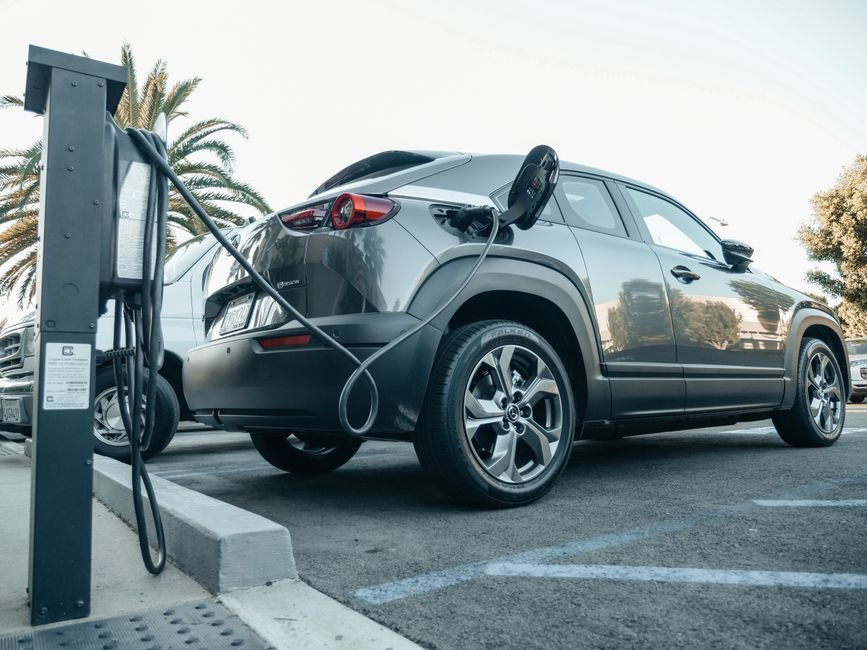
The IEA's 2026 outlook puts the global plug-in EV stock at 70.8 million units, up from 25.1 million in 2022, a 29.6% compound annual growth rate that directly drives demand for AC and DC charging hardware [S4].
Charger manufacturers are responding to that installed-base curve with revised sourcing strategies across silicon-carbide power modules, charging cables, connectors, and switching power supply units, all of which sit on overlapping Bills of Materials with adjacent industrial lines.
Sizing the 2026 pull: from cars to kW
Reaching 70.8 million plug-in vehicles by 2026 means the public and private charger parc must grow in proportion; common planning ratios reference roughly one DC fast charger per 100–200 EVs in mixed urban fleets, with AC wallbox demand scaling one-to-one with passenger-car deliveries [S4].
Converted into hardware, that implies a global annual DC fast-charger market measured in hundreds of thousands of 50–350 kW units, each consuming one SiC-based dc power supply stack, one liquid-cooled or air-cooled cable assembly, and a CCS2 or NACS connector head.
Bill-of-materials hotspots in 2026
Three component families dominate lead-time and margin conversations: 1200 V SiC MOSFET modules, Type 2 / CCS2 high-power connector moulds, and 7 kW AC onboard charger PCBs that share a switching power supply reference design with telecom rectifiers. [S1]
Comparative pressure on each tier in mid-2026: SiC wafers remain the tightest node, with 150 mm 6-inch substrates still gated by a handful of merchant fabs; CCS2 connector shells and high-flex cable compounds sit in the second tier, while AC wallbox plastic enclosures and PCBs are now treated as commodity. Buyers balancing cost against risk typically dual-source Tier-1 power modules, qualify a single connector vendor per region, and run long-term contracts on AC enclosures.
Who this supply chain is built for — and who it excludes
EV-charger OEM procurement is built for buyers placing 10,000-unit-plus annual orders, accepting 12–16 week module lead times, and holding ISO 9001 plus IATF 16949 paperwork on their suppliers; it is not built for one-off workshop buyers, 240 V retrofit integrators in legacy buildings, or projects in regions with 110 V single-phase grids that require step-up transformers outside the charger's UL/IEC 61851 envelope. [S2]
Site operators and EPCs in that excluded band typically default to AC level-2 hardware or skip in-house DC fast chargers entirely; they should be sourcing from distributors and OEM partner programs rather than direct-from-factory allocations.
Standards and certification gates on the 2026 spec
Every cross-border shipment on this chain collides with a small, fixed set of standards: IEC 61851-1 for conductive charging control, IEC 62196-2 for the Type 2 / CCS2 connector family, ISO 15118 for plug-and-charge and vehicle-to-grid signalling, and UL 2231 / UL 2594 in the North American market. [S3]
EMC compliance on the dc power supply front runs through EN 55011 / EN 55032 Class A, and grid interconnection in Europe is filtered by the EN 50549 family for inverters and DC-coupled storage hybrids. Charger OEMs that cannot show a clean, dated certificate for each of those is excluded from public-tender short lists in the EU, UK, and most US state-funded NEVI corridors.
Comparing sourcing paths: direct OEM vs ODM vs distributor
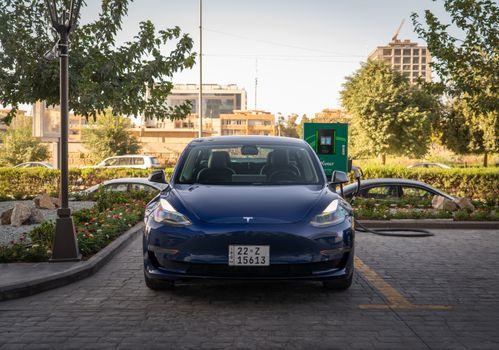
Three paths dominate charger procurement in 2026, each measured against four decision criteria — unit cost, lead time, customization, and certification ownership. Direct OEM (e.g. the vertically integrated DC fast-charger brands) scores best on certification ownership and worst on unit cost; ODM white-label factories in greater China win on cost and lead time but push ISO 9001 plus IEC 61851 documentation work back to the buyer; authorised distributors sit between, with the strongest stock availability for AC level-2 hardware and a thinner catalogue on 350 kW stacks. [S4]
For project buyers tied to public funding milestones, the ODM path only works when a third-party certification house (TÜV, Intertek, DEKRA) is contracted up front; otherwise the safer 2026 default is direct OEM for the DC stack and distributor for AC site-build balance-of-plant.
Adjacent supply-chain pressure: storage, cabling, and freight
Charger demand is now coupled to battery energy storage, particularly where DC fast-charging sites need on-site buffering to avoid demand-charge spikes; the same cell and PCS shortages tracked in the battery energy storage supply chain 2026 coverage feed back into charger EPC quotes through shared contractors and shared containerised enclosures. [S1]
Freight is the second cross-coupling: 40 ft high-cube containers carrying 350 kW charger cabinets compete for the same Asia-Europe and trans-Pacific slots as battery energy storage cabinets and PV inverters, and peak-quarter rate spikes on those lanes have been a recurring source of project margin erosion.
Failure modes and constraints to price into the bid
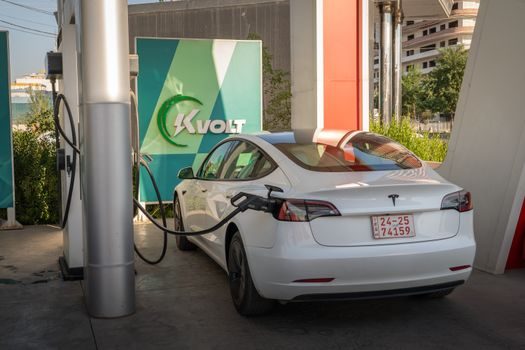
Three failure modes show up repeatedly in 2025–2026 charger commissioning logs: SiC module solder fatigue on hard-cycled 350 kW units, connector pin wear when CCS2 handles exceed 10,000 mating cycles without gland replacement, and firmware drift on ISO 15118 stacks as OEMs push over-the-air updates that break older EVSE-V2G handshakes. [S2]
Sourcing signals worth tracking into Q3 2026
Two trackable signals will move the 2026 supply curve: announced 200 mm SiC wafer capacity coming online at merchant fabs through H2 2026, and the next EN 50549 / IEC 61851 amendment cycle that several EU notified bodies are flagging for Q3 review. [S3]
Buyers placing orders in the next 60 days should lock 1200 V SiC allocations, pre-qualify a second CCS2 connector source against IEC 62196-2, and confirm firmware revision policy on ISO 15118 before signing the EPC certificate.
For component-level specifications, see chain conveyor.