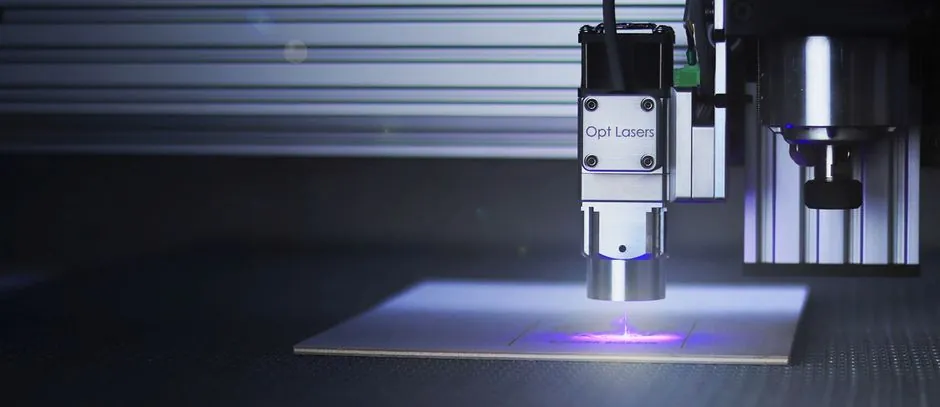
An industrial fiber laser cutting machine built for metal production carries a factory price between $15,000 for a 1kW entry unit and $600,000-plus for a 20kW-plus system, with the laser source, working area, and cutting head package doing most of the price-formation work [S1][S4].
The same three cost axes (laser wattage, bed size, automation) repeat across every vendor quote, so a process engineer who reads the spec sheet for a fiber laser cutting machine the same way he reads a laser marker datasheet will predict the invoice within roughly 10% before talking to sales [S1][S4].
Five laser technologies, five price bands
Diode, CO2, fiber, Nd:YAG, and hybrid platforms each occupy a distinct price band, because the laser source itself, the optics train, and the machine architecture scale differently with power [S1]. A hobbyist diode unit sits at $300-$4,000, a professional CO2 machine at $1,000-$100,000+, and an industrial fiber system at $15,000-$600,000+ [S1].
Nd:YAG cuts and bores thick sections and ranges $50,000-$500,000+, while hybrid CO2-plus-fiber units configured for mixed-material multi-mode production cluster at $6,800-$32,500 [S1]. A diode module at 5-40W cuts wood up to 5mm, leather, acrylic, fabric, and paper, but can only engrave metal surfaces; the same enclosure that houses a $500 diode source cannot accept a kilowatt-class fiber resonator without re-engineering the entire optical path [S1].
Fiber laser power-tier pricing (the dominant metal-cutting platform)
The 2026 fiber price ladder runs $15,000-$25,000 at 1kW, $25,000-$40,000 at 2kW, $35,000-$60,000 at 3kW, $60,000-$100,000 at 6kW, and $100,000+ for 12kW-plus systems, with sheet and tube configurations quoted separately [S4]. A 2026 market check on entry-level 3kW production units lands the same band at $28,000-$38,000, with mid-range 6kW production machines climbing into the $60,000-$120,000 bracket [S2].
Tube and pipe cutting machines add a rotary chuck, four-chave (4-jaw) synchronization, and part-length loader; that sub-assembly alone can lift the quote 20-40% over an equivalent sheet machine, because rotary accuracy has to hold while the head traces a 3D path on a moving workpiece [S3]. The underlying driver is that higher power increases cutting speed and material thickness capability, so a 6kW-to-12kW upgrade is sold on throughput, not on the kilojoule cost of the resonator [S4].
What actually moves the price: seven line items
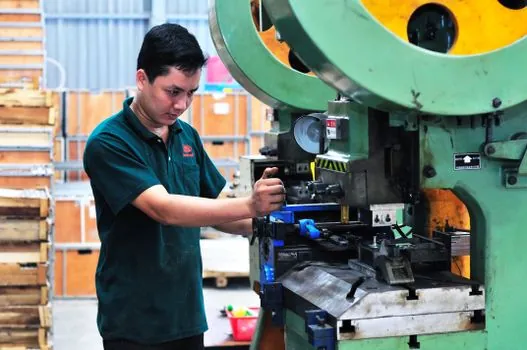
Across the surveyed manufacturer guides, seven variables consistently explain the price spread: laser type, output power, bed size, cutting speed, material capability, component brand (laser source, cutting head, servo motors, CNC controller), and the level of automation integrated around the cell [S1][S4].
For example, the working area naming convention 3015 / 4020 / 6025 corresponds to 3000x1500mm, 4000x2000mm, and 6000x2500mm beds; each step roughly doubles the linear rail length, gantry mass, and the structural steel that has to be stress-relieved, and the bed-size premium is non-linear, not a flat 30% adder [S4]. Exchange tables, automatic loading systems, and full production-line integration add further cost but are priced on cycle-time gain, not on hardware cost alone [S1][S4].
Operating cost stack: electricity, assist gas, consumables, labor
A new industrial-grade machine can cost anywhere from $100,000 to $500,000 or more, with depreciation accounting for tens of thousands in annual value loss even before the utility bill arrives [S5]. Assist gas is the single largest recurring line for shops cutting stainless or aluminum: oxygen for carbon steel is cheap at low pressure (2-6 bar) and adds heat exothermically, while nitrogen for stainless, aluminum, and oxidation-free work is significantly more expensive at high pressure, and routinely exceeds the electricity line in high-volume shops [S3].
For a 6-12kW fiber running multiple shifts per day, electricity is meaningful but per-part energy is dropping as cutting speed rises, which is the core economic argument for the 6kW-and-up tier [S3]. A diode cutter annual maintenance of $20-$300 covers lens cleaning, diode module inspection, and belt or rail lubrication; the equivalent on a 6kW industrial fiber runs much higher because the cutting head, chiller, and servo stack are all wearing parts [S1][S5].
Total cost of ownership, not sticker price
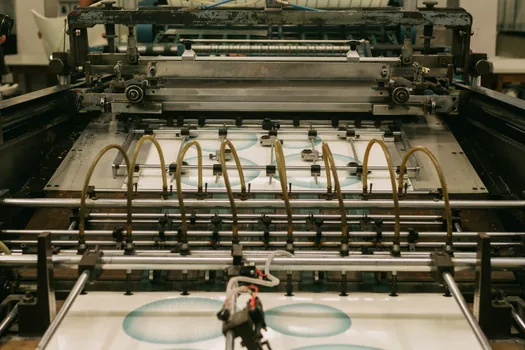
The headline purchase price covers only the hardware; energy, gas, consumables, maintenance, and labor sit on top, and a 2024 owner-survey puts the small-footprint 1kW-3kW industrial machine at $250k all-in and the high-power 6kW-plus system above $1 million when fully optioned [S6]. The same logic explains why so many high-volume stainless and aluminum users invest in on-site nitrogen generation: nitrogen cost is the largest controllable variable in the operating stack, and a generator amortizes in 12-24 months at two-shift utilization [S3].
For a procurement decision, the rule of thumb is to size the laser to the thinnest-and-thickest mix the shop actually runs, not to the maximum thickness on a marketing brochure, because over-spec'd wattage raises both the depreciation line and the per-hour electricity draw without lifting throughput on the thin-stock majority of the nest [S4][S5]. This is also why the IGBT supply chain that drives the laser power supply, covered in IGBT supply chain: wafer to module, node by node, now matters to fabrication shops that buy cutters the same way panel shops buy welders.
Selection criteria: who the bands are for, and who they are not for
Diode and entry CO2 platforms target hobbyists, crafters, signage shops, and light custom-merchandise producers; fiber 1kW-3kW fits small and medium fabrication; 6kW fits production lines running two shifts or more; 12kW-plus fits heavy steel service centers cutting 25mm+ carbon plate at high utilization [S1][S4][S7].
What this means in practice: a job shop with mixed signage and light metal work should stay on CO2, because a fiber unit will sit idle on the non-metal jobs and depreciate anyway; conversely, a fab shop focused on stainless should not start on a 1kW entry-level fiber, because nitrogen assist-gas costs on thin stainless and the per-part cycle time can erode any savings on the purchase price [S3][S4][S5]. The abrasive and consumable side of the cutting cell is well covered in abrasives market share by manufacturer: 2026 vendor map and tier breakdown for shops that want to align tooling supply with cutter utilization.
Decision-side constraints and failure modes
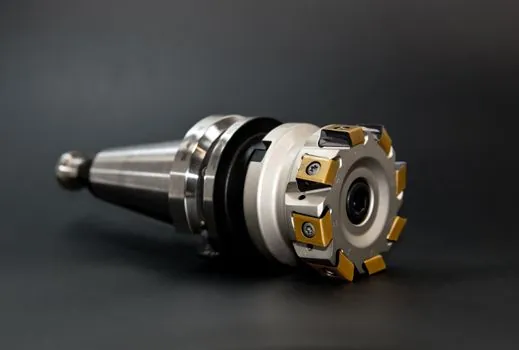
The three failure modes that wipe out the cost calculus on a fiber cutter are: under-sized nitrogen supply on stainless/aluminum, wrong assist-gas pressure on the cutting head (the head has a window, not a knob), and inadequate dust extraction that loads the optics until beam quality drifts [S3][S5]. Cooling, dust extraction, and safety systems are not optional accessories; they are part of the spec line and a laser cutting tool system without them will fail beam-quality audits inside a year [S3].
Two trackable signals for the next sourcing cycle: the 6kW-to-12kW price floor, which moved from the $80,000 band toward $60,000-$100,000 across 2025-2026, and the nitrogen-on-site economics, which is now the single largest line item that a procurement team can actually move [S2][S3][S4]. Buyers comparing tube and sheet configurations in 2026 should also check the rotary chuck retrofit cost separately, because vendors routinely quote the sheet base and add the rotary as a 20-40% option that competes with buying a dedicated tube machine outright [S3].