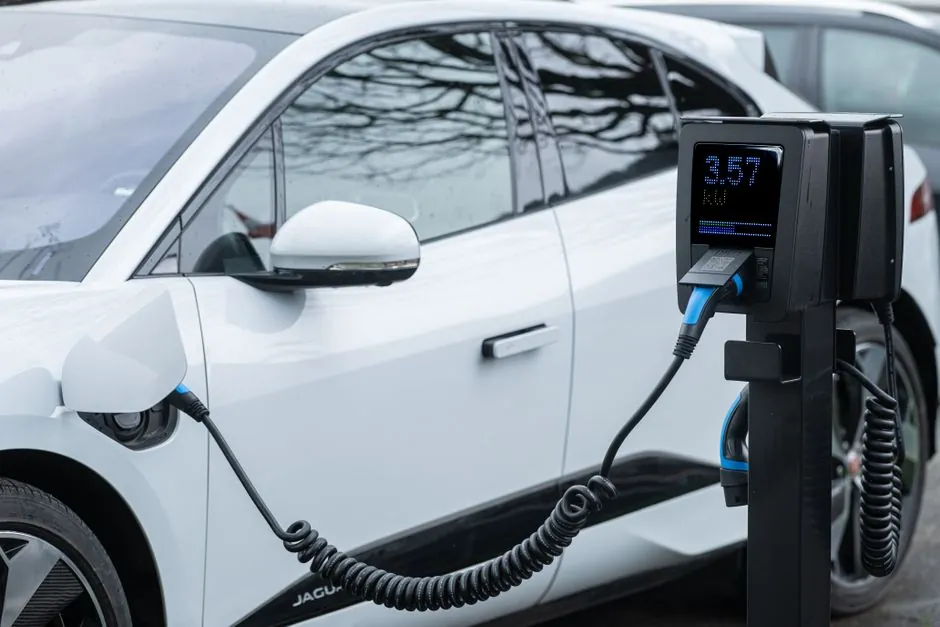
A commercial Level 2 port carries an EVSE hardware bill of $1,500 to $5,000 and lands at $3,000 to $12,000 fully installed, while a DC fast charger runs $80,000 to $250,000 or more per unit once power electronics, certification, and electrical service upgrades are tallied [S2][S3].
On the manufacturing side, the global EV charging station market reached USD 21.6 billion in 2025 and is forecast to USD 213.7 billion by 2034 at a 28.15% CAGR, with factory gross margins sitting at 20-30% and net profit at 12-20% for established OEMs [S4].
Charger Class Definitions and What Each One Actually Costs to Build
Level 1, Level 2, and DC fast (Level 3) chargers differ by more than connector type: the power-conversion stage, isolation, cooling, and communications stack scale with output, and so does the bill of materials [S2][S4].
Level 1 units are simple cord sets that plug into a standard outlet, priced at $200 to $1,000 at retail and are not viable for daily commercial duty because they deliver only about 4 miles of range per hour [S2]. Level 2 hardware runs $1,500 to $5,000 per port for the EVSE alone, with the full installed price typically $3,000 to $12,000 per port once wiring, permits, and labor are added [S2][S3][S7]. Output is commonly 3.3 kW upward, and a Level 2 unit can deliver roughly 25 miles of range per hour of charging [S2][S7].
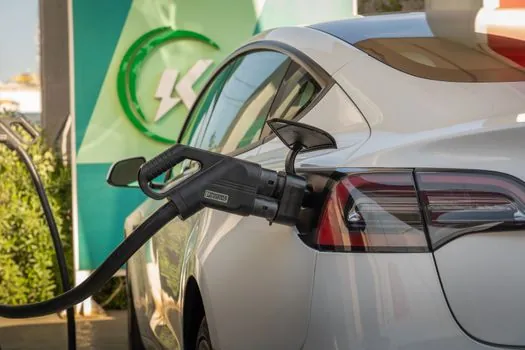
DC fast chargers occupy a different cost category. Hardware alone is in the $30,000 to $100,000+ range and total installed project cost runs $80,000 to $250,000+ per charger, driven by high-power rectifiers, liquid-cooled cables on the higher-end units, and dedicated utility service [S3][S6][S7]. Public DC fast sites commonly deliver 100 to 350 kW per stall, with the higher-output class demanding grid upgrades and on-site transformer work that can dwarf the EVSE hardware line item [S3][S4].
BOM Cost Drivers Inside the Charger
Four blocks dominate the bill of materials: power conversion, control and communications, the mechanical enclosure and connector, and certification/quality [S4].
The power-conversion block (rectifier, PFC stage, transformer or high-frequency magnetics, filtering, and thermal management) is the single largest cost contributor on a DC fast charger, and it scales roughly with output power, which is why the gap from Level 2 to DC fast is not linear but step-function [S4]. The controller/communications block covers the charging controller, OCPP or equivalent network protocol stack, RFID or payment modules, and the HMI; the pressure transmitter class of industrial measurement devices shares a similar analog/digital mixed-signal architecture and reliability expectation, which is why commercial-grade chargers borrow process-control design practices for the metering and isolation paths.
The enclosure (IP-rated housing, cable management, connector holster, and any liquid-cooling plumbing on 350 kW units) and the certification burden (UL, IEC 61851-1, IEC 62196, SAE J1772, CHAdeMO, CCS, and regional variants) add the next layer [S1][S2]. The same metrology discipline that defines a flow meter accuracy class shows up here in DC metrology, kWh billing, and revenue-grade metering, both of which are now commonly required for public billing [S1].
Component-level ratios are not publicly disclosed by every OEM, but the published hardware cost model shows that power electronics typically account for the majority of DC fast charger COGS, while the controller, enclosure, and certification each contribute single-digit to low-double-digit percentages of the total BOM [S4].
Installation, Civil, and Electrical: Where the Project Cost Doubles
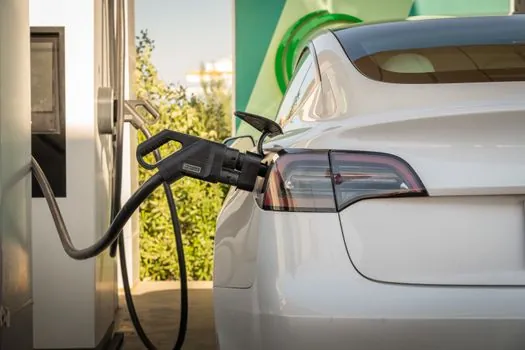
For commercial sites, soft and site costs frequently equal or exceed the EVSE hardware line item, especially on DC fast projects [S3][S6][S7].
Common line items include basic installation ($5,000 to $20,000+ per port), permit and design allowance, trenching, transformer and service upgrades, networking, and ongoing software fees [S3][S6]. The biggest variables are existing panel capacity, distance from the electrical room to the parking area, and how much site work is required before the first charger goes in the ground [S3]. A site that already has 480 V three-phase service and spare panel capacity can be tens of thousands of dollars cheaper than a greenfield pad that needs a new transformer, switchgear, and long cable runs.
For DC fast sites, the electrical infrastructure allowance (transformer, switchgear, conduit, and demand-charge management hardware) is often the single largest project line item, and that is the reason a "cheap" $40,000 DC fast charger can land at $150,000 installed once the utility upgrade is included [S3][S7].
Software, Networking, and Recurring Revenue Layers
Networked chargers carry a software stack on top of the EVSE bill: OCPP backend, payment processing, user authentication, load management, and remote diagnostics [S1][S5].
Published estimates for the EVSE software layer in the Indian market run roughly ₹20,000 to ₹50,000 per charger, which is a useful proxy for the recurring software cost on a commercial fleet [S5]. On the manufacturing side, smart-grid integration, load balancing, and renewable energy or battery storage interfaces are now standard expectations, and the controller firmware is where much of the differentiation between OEM tiers actually lives [S4].
Commercial systems are also expected to include network connectivity, access controls, payment processing, and multi-port load management; this is the part of the BOM that overlaps with industrial controls, where the total station style of multi-sensor, networked, calibration-managed design language is a reasonable mental model for what a multi-port commercial pedestal actually does.
Margin Structure, Incentives, and Policy Movers
Established EVSE manufacturers operate at 20-30% gross margin and 12-20% net profit, with the gap between the two figures reflecting SG&A, certification amortization, and warranty reserves [S4].
On the demand side, the U.S. had more than 250,000 public EV charging ports as of mid-2026 and plug-in EVs accounted for about 9% of new passenger vehicle sales in 2025, which keeps the commercial installation pipeline active even as headline federal incentives change [S3]. The federal Section 30C tax credit ended for property placed in service after June 30, 2026, so projects that want to capture that 30% credit must have been energized before that cutoff; state and utility incentives remain patchy and site-dependent [S3]. For buyers, this shifts more of the payback calculation onto utilization and tariff design rather than federal subsidy capture, and pushes operators to favor lower-cost Level 2 deployments at workplaces and multifamily sites where dwell time is long.
For manufacturers, the implication is straightforward: as the 30C credit phases out, demand is more sensitive to the all-in installed cost, which means OEMs that can hit lower BOM costs through localized magnetics, integrated SiC power stages, and shared controller platforms across Level 2 and DC fast lines have a margin advantage [S3][S4].
Who Should Spec Which Charger (and Who Shouldn't)
Use this rule of thumb to avoid overspending on the wrong class: spec Level 2 for dwell times of 1 hour or more, and spec DC fast only where dwell time is under 30 minutes or where route economics demand high turnaround [S2][S3][S4].
Workplaces, multifamily housing, hotels, and retail parking lots are Level 2 territory; the connector-and-cable cost, the simpler permitting, and the lower utility demand all favor AC [S1][S2]. Highway corridors, urban fast-fill sites, ride-share hubs, and fleet depots that turn vehicles in 20-30 minutes need DC fast, and the higher hardware cost is justified by the throughput per parking space [S3][S4]. Fleet depots with predictable dwell windows can run a hybrid: Level 2 for overnight and DC fast for opportunity charging on shifts [S3].
Buyers who should not spec DC fast include low-utilization sites (under 8-10 sessions per day per port), sites without 480 V three-phase service, and any site where the utility upgrade cost will push payback past 7 years; these are the cases where Level 2 with simple load management is the better economic answer [S3][S7].
Total Cost of Ownership Over a 10-Year Horizon
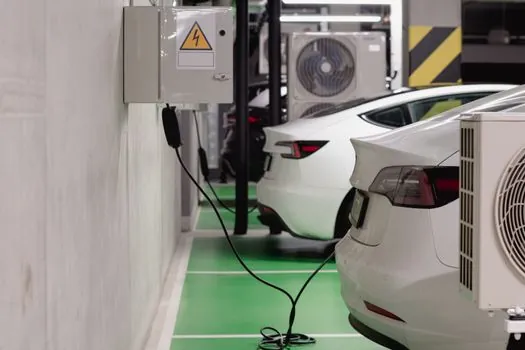
Purchase price is the smallest line in a 10-year TCO model for commercial chargers; energy costs, demand charges, networking fees, and field service dominate the lifecycle number [S3][S4][S7].
For a DC fast site, the main recurring cost drivers are: (1) demand charges from the local utility, which can be a large fraction of operating cost in regions with high kW charges; (2) OCPP network and payment-processing fees; (3) preventive maintenance on the power-electronics stage, fans, filters, and connector cables; and (4) unplanned downtime, which on a public DC fast site is the single most expensive line because lost sessions translate directly to lost revenue [S3]. Battery-buffered or solar-plus-storage DC fast sites can reduce demand charges meaningfully and should be evaluated as a cost-mitigation option, not as a green add-on [S4].
For Level 2 sites, TCO is more predictable: networking fees, periodic connector and cable replacement, and energy cost dominate, and the units rarely fail within a 10-year window if they are spec'd with industrial-grade contactors and proper thermal derating [S2][S3].
Selection Criteria: A Quick Comparison for Buyers
On three decision criteria, the charger classes line up clearly: hardware cost per port, install cost per port, and dwell time served [S2][S3][S6][S7].
Level 2 wins on hardware cost (typically $1,500-$5,000) and install cost ($3,000-$12,000 per port), and serves dwell times of 1 hour or more [S2][S3]. DC fast loses on both hardware ($30,000-$100,000+ per charger) and install ($80,000-$250,000+ per charger) but serves dwell times under 30 minutes and delivers 100-350 kW per stall, which Level 2 cannot [S3][S6][S7]. On grid impact, Level 2 can be deployed behind an existing 208/240 V service with minimal upgrades, while DC fast almost always needs 480 V three-phase and frequently a dedicated transformer and demand-charge mitigation [S3].
For a related engineering reference on how industrial control hardware lifecycle costs are managed, this industrial control selection logic covers spec-mapping that applies similarly to charger controller selection. Sites that pair EV charging with on-site renewables or storage also need to size the supporting power-quality hardware, where the static var generator sizing logic is directly relevant to keeping demand charges and reactive-power penalties in check.
Trackable signals for the next 6-12 months: OEM announcements of silicon-carbide-based 30-50 kW DC fast units aimed at lowering the entry price of the category, and any state-level successor programs to the now-expired 30C federal credit. The IMARC forecast of 28.15% CAGR through 2034 and the Mordor forecast of USD 55.78 billion in 2026 to USD 143.76 billion by 2031 are the two published demand baselines to watch against actual deployed-port counts [S4][S8].