
A fluid coupling's purchase price typically represents only 20-30% of its 10-year total cost of ownership, with hydraulic slip losses, working-fluid replacement, seal and bearing service, and unplanned downtime absorbing the remaining 70-80% [S2].
For industrial buyers, the TCO levers are: matched coupling size to motor kW, fill-ratio discipline, thermal management of the working fluid, and event-driven versus calendar-based maintenance windows [S1]. The detailed drivers follow.
What TCO Actually Covers for a Fluid Coupling
Total cost of ownership for a fluid coupling, anchored in the classical Cowan framework [S2], breaks into acquisition (coupling, mounting hardware, baseplate), installation (alignment, piping for cooling/heat exchanger, fluid fill), operating energy (motor input minus shaft output = slip loss), maintenance (fluid change, seal, bearing), and end-of-life disposal. Acquisition is the visible line item; operating energy and maintenance dominate over a 10-15 year service window.
The Shell TCO framework reinforces this view: 45% of surveyed fleet operators link fuel and energy choice to unplanned downtime, and more than half report they could cut operating costs by 10% or more monthly with better energy management [S1]. For a fluid coupling, the analogous "fuel" is the kWh burned in the motor to overcome slip — typically 3-8% of transmitted power at rated load.
Cost Driver 1: Slip Loss and Electric Energy
Slip in a fluid coupling is mandatory for torque transmission — the input impeller must rotate faster than the output rotor, with kinetic energy transferred through the working fluid. At full load, slip is usually 2-5%; under partial load it climbs sharply, and a coupling driving a high-inertia start (conveyor, crusher, fan) can sit at 8-15% slip for extended run-up periods, each percentage point of slip costing roughly 1% of input kW. [S7]
For a 110 kW drive running 6,000 hours/year, a sustained 5% slip versus 3% slip at the same load is on the order of 13,000 kWh/year difference — at industrial tariffs, a four-figure annual delta. Specification should size the coupling so the duty point sits on the flatter part of the slip curve, and pair a delayed-fill or controlled-fill coupling to high-inertia loads. See the selection map at fluid coupling types and spec bands for the slip-curve bands by type.
Cost Driver 2: Working Fluid, Seals, and Bearings
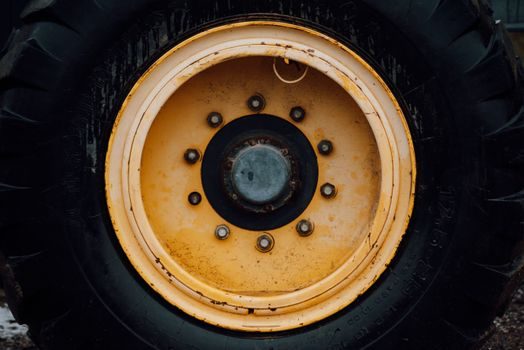
Mineral or synthetic hydraulic oil inside the coupling degrades from shear, heat, and contamination. In dust- or moisture-exposed environments (mining, cement, bulk handling), fluid change intervals drop to 4,000-6,000 hours versus 8,000-12,000 hours in clean plant service. The fluid itself is a small cost line, but access (drain, flush, refill) drives the labour cost; couplings mounted on elevated conveyors or in confined gear rooms routinely carry 2-3x the bench-price service cost. [S1]
Seal and bearing service scales similarly. Elastomer seals age out at 4-6 years; bearings at 8-12 years depending on radial load, balance quality (ISO 21940 grades), and lubrication. Specifying higher-grade seals (FKM versus NBR) and shielded or re-greasable bearings can shift service intervals outside one plant overhaul cycle, which is where the real TCO win lives.
Cost Driver 3: Overload Events and Unplanned Downtime
The fluid coupling's soft-start and torque-limiting function protects the motor and driven machine — when it works. When overload conditions repeat (jammed conveyors, choked crushers, blocked fans), the coupling absorbs the shock as heat, accelerating fluid breakdown and elastomer wear. Shell's fleet survey data point to 45% of operators seeing fuel or energy quality as a downtime contributor [S1]; for fluid couplings, the equivalent failure mode is thermal overload trips and scavenge-pump failure on regulated-fill designs.
Compared with a gear coupling, a fluid coupling trades some efficiency (slip loss) for overload absorption. Compared with a disc coupling, it adds fluid-management scope but removes the need for tight alignment to sub-millimetre tolerances — each option has a different TCO profile.
Fluid Coupling vs Gear Coupling vs Disc Coupling: TCO Comparison
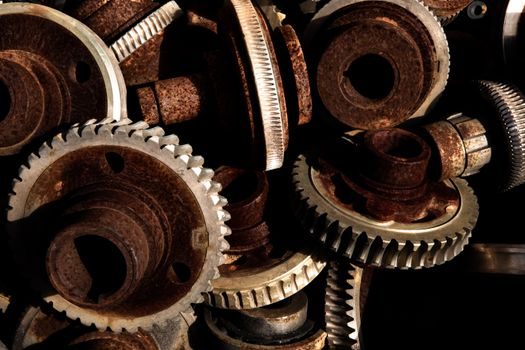
On a 4-pole motor drive of 75-200 kW running two shifts, the three mainstream flexible coupling families rank differently on TCO levers:
- Fluid coupling: higher acquisition (impeller housing, working fluid, optional scavenge pump), 2-5% slip loss, excellent overload absorption, requires fluid service. Best for high-inertia soft-start (conveyor, crusher, fan, mill).
- Gear coupling: lower acquisition, <1% loss (no slip), high torque density, requires lubricant service, less tolerant of misalignment. Best for steady-state high-torque drives without soft-start demand.
- Disc coupling: mid acquisition, <1% loss, no lubricant, no fluid, sensitive to misalignment. Best for clean, high-speed, precision-aligned drives where contamination must be avoided.
A buyer should pick by duty profile, not by catalog price: a fluid coupling on a steady-state pump is a TCO penalty; a gear coupling on a stalled-start conveyor is a downtime risk. The full coupling family sits in the shaft coupling reference, with jaw-type economy options in jaw coupling.
Decision Criteria and Sourcing Levers
Three levers move TCO most:
1. Correct sizing to the load curve. Undersized couplings run hotter, leak earlier, fail bearings sooner; oversized couplings cost more at purchase and operate at higher slip in the low-load region.
2. Fill-ratio control. Most fixed-fill couplings are set at the factory; regulated-fill (delayed-fill) couplings let the user trim fill for the actual inertia — directly cutting run-up slip loss.
3. Service environment. IP-rated housings, breather location, and heat-exchanger sizing change 5-year service cost more than the brand choice. A coupling on a raw-material conveyor in a dust-laden mill needs a different spec envelope than the same coupling in an HVAC room.
Buyers running capex-constrained projects should weigh acquisition cost more heavily; buyers running 24/7 process plants should weight energy and downtime. The TCO framing in [S2] and [S1] both flag that the visible invoice is rarely the largest cost line over asset life.
Limitations and Failure Modes
Fluid couplings are not universal. They do not transmit torque at synchronous speed, so they cannot be used where absolute speed matching is required (synchronised conveyors, registration drives). They add length to the driveline, which can force a baseplate redesign. Cold-start viscosity can spike torque transfer unpredictably, and the working fluid is a contamination and disposal concern in food, pharma, or cleanroom zones. [S2]
Within a broader TCO comparison, fluid couplings also do not displace variable-frequency drives (VFDs) for true speed control — a VFD and a fluid coupling are complementary in some high-inertia systems, with the VFD trimming running slip and the coupling handling peak shock. Pairing a fluid coupling with a soft-start-only contactor, in contrast, leaves slip losses on the table during partial-load running.
Standards, Sourcing, and Trackable Signals
No single ISO or IEC standard governs fluid-coupling TCO calculation; procurement typically references manufacturer selection software, ISO 5198 for mechanical classification, and IEC 60034 for motor input assumptions. For overload-event probability, API 671 / API 610 driveline guidance is sometimes invoked on petrochemical sites even when the driven equipment is not a pump. [S1]
Trackable signals for the next planning window: regional electricity tariff movements (industrial kWh cost), lubricant price index (Group II/III mineral oil, synthetic PAO), and conveyor/crusher drive retrofit cycles in mining and cement — each materially shifts the TCO math above. The matching construction-materials TCO map in sandwich panel price 2026 applies a parallel cost-driver structure and is useful for cross-checking lifecycle framing on adjacent capex lines.