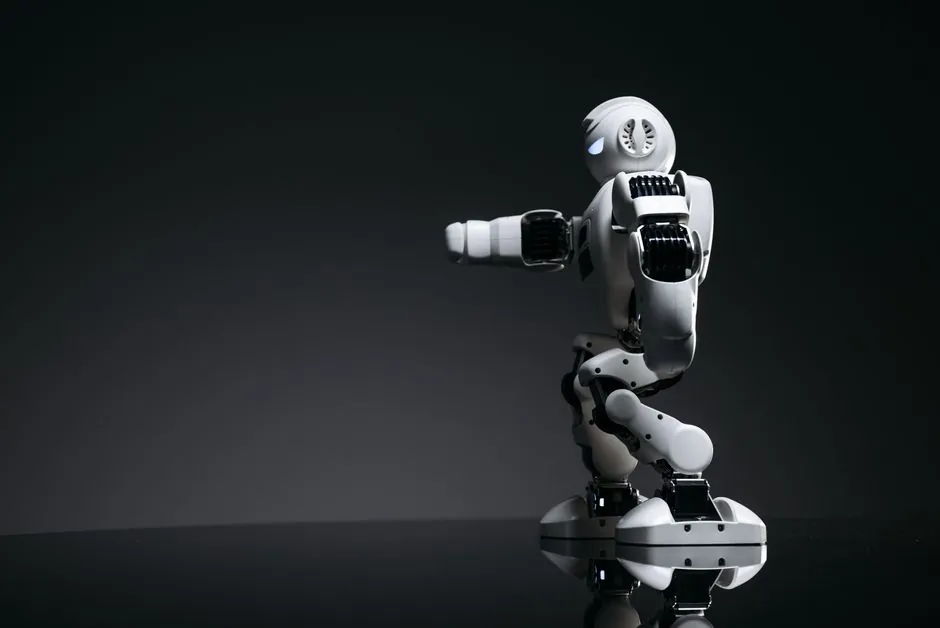
UBS projects global humanoid robot demand at 30,000 units in 2026, rising to 35,000 in its optimistic case and 40,000 in an upside scenario if AI capability breakthroughs or strong customer feedback materialise, with the volume peak concentrated in 2027 to 2028 [S1][S3]. 2025 global shipments already totalled roughly 18,600 units, of which Chinese vendors Unitree and AgiBot each shipped about 5,000 units, together accounting for more than half of worldwide volume [S1].
On the supply side, Tesla is building a 1,000,000-unit annual Optimus line targeted for end-2026 operation, UBTECH has planned 10,000-unit capacity for 2026, and Boston Dynamics is targeting 30,000-unit annual Atlas capacity by 2028 [S1]. Two independent market sizing exercises frame the demand envelope: Vyansa Intelligence values the 2025 base at USD 3.19 billion rising to USD 5.53 billion in 2026 and USD 54.85 billion by 2032 at a 50.14% CAGR, while Singapore Outlook's model reads USD 2.16 billion in 2026, USD 2.54 billion in 2027, and USD 8.78 billion by 2035 at a 16.91% CAGR, reflecting very different unit-economics assumptions across houses [S5][S7].
2026 Unit Forecast vs Vendor Capacity Build-out
UBS's 30,000-unit 2026 demand call is supported by an aggregate vendor capacity pipeline that already exceeds 1.04 million units per year once Tesla's Optimus line, UBTECH's 10,000-unit plan, and Boston Dynamics' 30,000-unit Atlas line are all online [S1]. This implies utilisation rates well below 5% on nameplate capacity in the base year, a structural overhang that puts downward pressure on ASP and rewards vendors with the lowest bill-of-materials. The capacity race also explains why Chinese vendors are pricing aggressively: Unitree and AgiBot combined shipped close to 10,000 units in 2025 alone, more than the rest of the world outside China [S1].
Analyst Phyllis Wang, cited in the UBS report, notes that "although only a few robots can autonomously complete simple tasks in industrial scenarios this year, the growth momentum has been initially established," and that "once substantial breakthroughs are achieved in industrial applications, the demand forecast for 2027 to 2028 will face significant upside potential" [S1].
Application Tier 1: Automotive and Logistics Pilots
IDTechEx's 2026 humanoid roadmap identifies automotive manufacturing as the first scaling segment, driven by OEM strategic backing, controlled environments, and the clearest ROI case for repetitive labour-intensive tasks such as material handling, inspection support, intra-factory transport, and simple assembly assistance [S4]. Logistics and warehousing are expected to follow, although growth will be moderated by existing automation such as AMR robots, AGV systems, and fixed articulated arms already deployed at scale [S4].
IDTechEx's May 2026 payback data quantifies the deployment economics: high-utilisation intensive industrial sites reach payback in approximately 6 months, while average-utilisation multi-task deployments extend to approximately 15 months [S6]. This 2.5x spread is the single most important variable for any pilot business case, and it is governed by task continuity, not by unit hardware cost, which means fleet utilisation is the dominant lever for both industrial robot line extensions and humanoid-class platforms during the 2026 to 2028 window [S6].
Spec Bands: Height, Payload, Runtime, and Battery
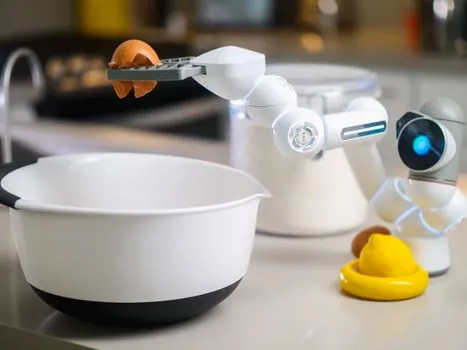
Robots Asia's 2026 spec taxonomy segments humanoids into four grades: Entry-Level at 100 to 130 cm height, Mid-Range at 130 to 160 cm, Industrial-Grade at 160 to 180 cm, and Research Elite at 150 to 200 cm [S2]. Axis Intelligence's deployment roadmap for 2025 to 2026 puts foundation capability at 2 to 4 hours continuous operation on a single battery charge, 15 to 30 kg payload, basic pick-and-place with simple object shapes, mapped indoor navigation with obstacle avoidance, and 80% to 85% task success under semi-segregated operation [S8].
Two battery technologies are worth flagging for spec sheets. UBTECH's Walker S2 pioneered a hot-swappable battery system that enables continuous operation without system shutdown, an architecture that directly attacks the 6-month payback ceiling in high-utilisation cells [S2]. IDTechEx further breaks the hardware into component-level forecasts covering actuators, motors, reducers, screws, bearings, cameras, LiDAR, radar, ultrasonic sensors, tactile sensors, batteries, and high-performance materials such as PEEK, which is the granular layer where cost-down roadmaps are negotiated [S4].
Market Sizing Divergence: approximately 50% CAGR (Vyansa Intelligence, 50.14% for 2026-2032 [S5]) vs approximately 17% CAGR (Singapore Outlook, 16.91% for 2026-2035 [S7]).
The two publicly cited 2026 to 2030 outlooks do not agree on slope. Vyansa Intelligence projects 50.14% CAGR through 2032 with a USD 54.85 billion terminal value, anchored to a 2025 base of USD 3.19 billion, while Singapore Outlook's model runs at 16.91% CAGR through 2035 with a USD 8.78 billion terminal value, off a lower 2026 base of USD 2.16 billion [S5][S7]. The 3x gap in CAGR reflects different assumptions about ASP erosion, automotive penetration, and the timing of home-use adoption, all of which are still undecided at the 30,000-unit 2026 base.
Vyansa also reports a market structure in which more than 20 vendors are active, the top 5 hold roughly 75% share, Asia Pacific leads with 42% of the global market, healthcare captures 30% of end-user demand, and bipedal platforms command 60% of motion-type share [S5]. For an engineer comparing humanoid classes against existing automation, the comparison set is narrow today: collaborative robots and SCARA robots remain the entrenched pick-and-place incumbents, and humanoid ROI has to clear their installed-cost benchmark of USD 25,000 to USD 75,000 per workcell before 2027 to 2028 volumes scale.
Limitations, Failure Modes, and Selection Gates
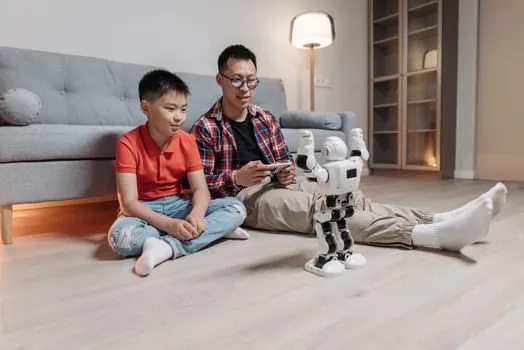
Three constraints are visible in the 2026 data and deserve to be spec-line items. First, intelligence level still falls short of customer expectations, in UBS's own framing, and only a few robots can autonomously complete simple industrial tasks this year [S1]. Second, logistics and warehousing adoption will be moderated by competition from existing AMR and AGV fleets, so humanoid positioning must be justified against flexible mixed-task requirements that current automation cannot serve [S4]. Third, home-use penetration is expected to remain limited through the 2026 to 2036 window, with safety, affordability, and reliability gating any consumer-scale ramp [S4].
For 2026 spec gates, Axis Intelligence's data points to 80% to 85% task success as the realistic floor for foundation-class units, with 2 to 4 hour continuous battery operation and 15 to 30 kg payload capacity as the binding limits [S8]. Procurement teams should treat any vendor quoting sub-2-hour runtime or sub-15 kg payload as marketing-grade, not industrial-grade, regardless of form factor, and should require demonstrated 6-month continuous duty at the target site before signing multi-year volume contracts.
Sourcing Standards and Component Risk
No single IEC or ISO standard governs humanoid deployment as of 2026, but the component supply chain is mapped. IDTechEx's component-level coverage spans actuators, motors, reducers, screws, bearings, cameras, LiDAR, radar, ultrasonic sensors, tactile sensors, batteries, thermal management, high-performance PEEK-class materials, and end effectors, with explicit cost-down roadmap and supply-chain constraint analysis [S4]. For LiDAR and tactile-sensor sourcing, vendor clusters and spec gates in 2026 mirror the wider robotics supply map, and battery sourcing intersects directly with China liquid cooling procurement for thermal management.
The next verifiable signals to track are UBS's 2027 demand revision due in Q1 2027, Tesla Optimus line commissioning at end-2026, Boston Dynamics Atlas 30,000-unit capacity commissioning in 2028, and any vendor that breaks 80% task success in a documented continuous-duty industrial pilot. The 6-month high-utilisation payback figure [S6] is the most actionable number in the dataset: if it holds across more than five sites outside automotive, the 2027 to 2028 peak forecast will likely prove conservative, and the 40,000-unit upside case [S1][S3] becomes the working baseline.