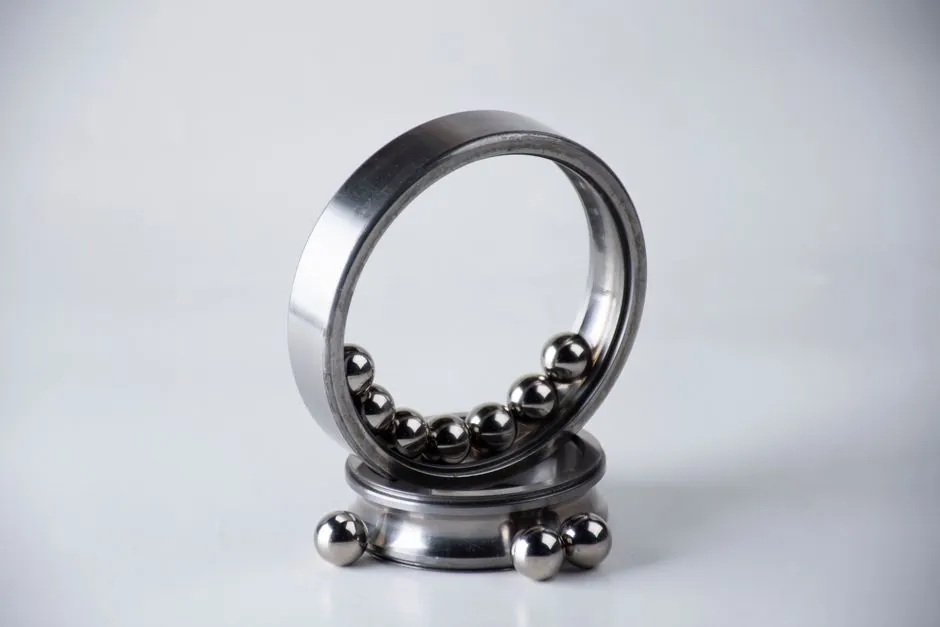
Harmonic drive gear units and planetary gearheads both sit on the output shaft of a servo or stepper motor, yet their internal kinematics, ratio envelopes, and torque behaviour differ enough to make a wrong pick visible on the first oscilloscope trace.
Current production data from Chinese precision-reducer catalogues show harmonic units offered in ten frame sizes with ratios of 50, 80, 100, 120, and 160:1, while planetary lines from the same factory floor (FHTW PAR, VRB, PAB, PAD series) span single-stage ratios from roughly 3:1 to 10:1 with much higher nominal torque per frame [S1]. For background on each architecture, see the harmonic reducer and planetary reducer reference pages.
Architecture and ratio envelope
Harmonic drive units use a wave generator, flexspline, and circular spline; the flexspline is typically two teeth fewer than the circular spline, so a single stage gives ratios such as 50, 80, 100, 120, and 160:1, with LeaderDrive LHD-series parts offered in six frame sizes (14, 17, 20, 25, 32, 40) covering those exact ratios [S2].
For comparison data on a third common robot joint option, see the RV reducer entry.
Backlash, repeatability, and positioning
Harmonic drive units are specified at near-zero backlash (less than 1 arc-minute, often quoted as 0 for preloaded cup designs), which is why LeaderDrive markets the LHD and LHSG lines as "zero backlash" alongside high positioning accuracy [S2]. ZDMOTOR's zero-backlash harmonic unit ships with hardened tooth surfaces, a three-step coaxial layout, and a square mounting flange, with FOB pricing of 100 to 400 USD per piece on the 2026 Made-in-China listing [S3].
Standard planetary gearheads, by contrast, are sold at backlash grades from standard (around 15 to 20 arc-min) down to precision (under 5 arc-min) and ultra-precision (under 1 arc-min), with cost and lead time scaling accordingly; many catalogue lines expose this as a model-code suffix rather than a separate SKU. For a deep dive on planetary precision grades, the gear reducer encyclopedia page covers the backlash tiers in detail.
Torque, frame size, and speed limits
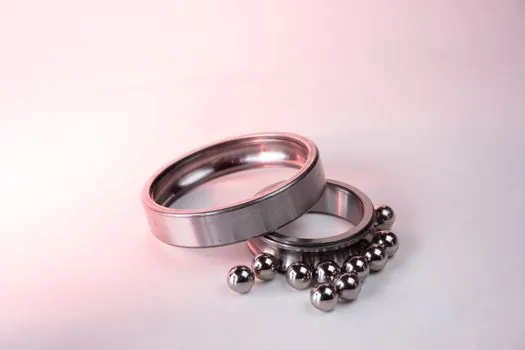
The LeaderDrive LHD-series harmonic drive reducer lists an allowable peak torque of 700 N.m and a rated life of over 10,000 hours across the six available frame sizes, with a 12,000 m2 dust-controlled assembly area and ISO plus CE certification supporting the production claim [S2].
Planetary lines on the same manufacturer's product page reach far higher continuous torque, with PAR right-angle units running in the hundreds to thousands of N.m class depending on frame size, and helical PAB/VRB series pitched for servo/stepper mounts where continuous, not peak, torque is the limiter [S1]. The trade-off is real: harmonic units are torque-limited by flexspline fatigue, while planetary units are torque-rich but ratio-limited per stage. For applications needing an intermediate solution, the cycloidal reducer class offers a third route between the two.
Use-case fit: robots, CNC, and AGV joints
Six-axis robot joints and collaborative robot (cobot) gearboxes overwhelmingly use harmonic drives for the wrist axes where ratios of 80:1 to 160:1 and sub-arc-minute repeatability are mandatory; hollow-shaft harmonic units are also specified as collaborative-robot joint modules, with the same ZDMOTOR line carrying CE, UL, ISO 9001, and RoHS marks on its data sheet [S3].
Planetary reducers dominate the lower-axis robot gears, AGV wheel drives, CNC tool turrets, and packaging servo axes, where continuous torque and stiffness matter more than single-stage ratio; right-angle PAR and PAB units also replace belt-and-pulley servo kits on space-constrained machine tools [S1]. Where a robot arm needs both high ratio and high torque (typically the base axis), the RV reducer family sits between the two and pairs a planetary first stage with a cycloidal second stage.
Selection criteria comparison
Standards coverage is comparable: the LHD line carries ISO plus CE marks [S2], the ZDMOTOR zero-backlash unit carries CE, UL, ISO 9001, and RoHS [S3], and mainstream planetary lines typically carry CE plus ISO 9001 as a baseline [S1]. Neither architecture is intrinsically safer than the other; both require the integrator to validate robot-axis safety functions per ISO 10218 and TS 15066 for cobot cells.
Limitations and failure modes
Harmonic drive flexsplines are fatigue-limited; lifetime is rated at 10,000 hours under the LeaderDrive LHD peak-torque condition, with lifetime dropping sharply if the unit is run continuously near its 700 N.m peak rather than its rated torque [S2]. They are also sensitive to shock load, side load on the output, and oil contamination of the wave-generator bearing, which is why most are shipped as sealed, lubricated-for-life units.
Planetary reducers fail differently: planet-bearing brinelling from radial load, sun-gear wear from back-driving without a brake, and ring-gear cracking from impact starts; the right-angle PAR series is also more sensitive to mounting-flange flatness than a coaxial helical unit [S1]. Both architectures need a coupling or shrink-disc interface to the motor shaft, and both lose efficiency in cold-start below roughly -10 degrees C unless a low-temperature grease is specified. For ancillary motion hardware that pairs with these reducers, see the selection map on linear bearing types, materials, and applications.
Sourcing, standards, and 2026 supply signals

Verified sourcing facts for the August 2026 spec window: LeaderDrive's LHD series harmonic drive reducer is offered in six sizes (14, 17, 20, 25, 32, 40) with ratios of 50, 80, 100, 120, and 160:1, 700 N.m peak torque, and over 10,000 hours rated life [S2]; the FHTW planetary line under planetaryreducer.com lists CSG/CSF-2UH harmonic units in ten sizes with the same five ratios, plus PAR, PAB, VRB, and PAD planetary series for servo and stepper mounts [S1]; and ZDMOTOR's zero-backlash harmonic drive reducer is listed on Made-in-China at 100 to 400 USD FOB per piece, with CE, UL, ISO 9001, and RoHS marks, vertical-mount, three-step coaxial layout, and square flange [S3].