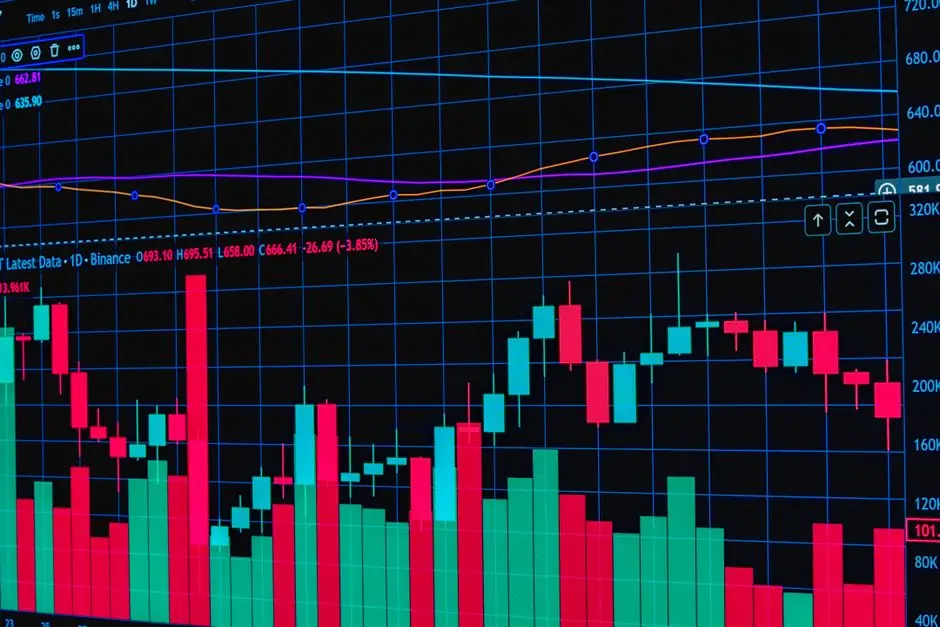
Vanadium supply stays heavily concentrated: China holds 59% of global production, Russia 17% and South Africa 7%, with the balance split across Brazil, the US and Australia, and roughly 85% of output feeding steelmaking as ferrovanadium and V2O5 flake [S5]. The market is sized at US$3.19 B in 2024 with a 5.0% CAGR projected to 2035 [S2].
2026's standout names cluster in three groups: integrated steel-and-alloy majors (EVRAZ, Ansteel, AMG), vanadium-primary miners (Bushveld, Largo, Australian Vanadium, Energy Fuels), and explorers pivoting from uranium to vanadium-nickel feedstocks for vanadium redox flow batteries (VRFBs) such as Phenom Resources and Western Uranium & Vanadium [S1][S2][S4].
Integrated producers: steel, alloy and chemical capacity
EVRAZ plc, Ansteel Group and AMG Advanced Metallurgical Group anchor the upstream-midstream layer, running captive steel mills paired with ferrovanadium conversion [S2][S4]. HBIS Group is cited alongside AMG as a textbook vertically integrated operator that locks in raw material supply and controls alloy cost through captive downstream offtake [S2].
Product breadth is the differentiator here: these firms move between ferrovanadium (FeV), vanadium pentoxide flake (V2O5), vanadium chemicals and specialty alloys, with diversification into electrolyte for VRFBs emerging on the margin [S2]. For a spec engineer cross-checking alloy supply chains, the same logic of locked feedstock and captive heat treatment maps cleanly onto pressure transmitter and industrial valve sourcing where single-vendor traceability is the priority.
Primary vanadium miners: Bushveld, Largo and Australian Vanadium
Bushveld Minerals operates the high-grade Bushveld Complex deposits in South Africa, while Largo Resources runs the Maracás Menchen mine in Brazil, one of the world's few standalone vanadium operations, and is also noted for hydrometallurgical flowsheet work aimed at lower-impact extraction [S2].
Energy Fuels Inc. is a US-based producer operating across uranium, vanadium and rare earth elements, giving it a multi-commodity buffer against single-metal price swings [S3]. Process engineers comparing these operations should weigh ore grade, FeV conversion cost and logistics to port, the same trio that drives decisions on flow meter and PLC vendor selection in remote plants.
Canada-listed juniors: gold-vanadium hybrids and uranium pivots
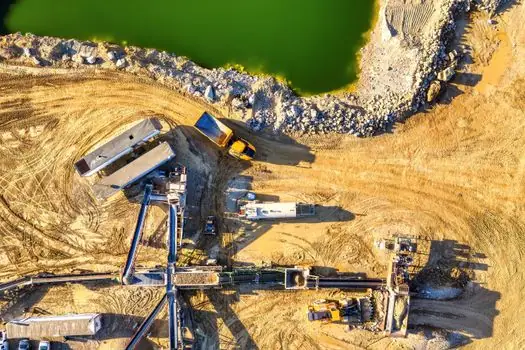
Its Carlin gold-vanadium project in Elko County, Nevada covers 2,608 acres across 150 unpatented claims plus 80 acres of fee land, and a 2020 PEA modelled US$29 M post-tax NPV at 7% IRR on a 7.7-year payback using US$10.65/lb V2O5 [S1].
The indicated resource stands at 303 Mlb V2O5 inside 24.64 Mt at 0.62% V2O5, with a 75 Mlb V2O5 inferred addition at 0.52% V2O5 [S1]. Phenom has applied to the US DOE for an 80% grant on a US$19.8 M pilot for high-grade vanadium-nickel feedstock averaging 6% vanadium and 1.4% nickel, and on 2026-07-23 filed a US patent on a flowsheet that delivered 80% vanadium and 75% nickel recovery at SGS Canada [S1]. Blue Sky Uranium (TSXV:BSK) and Western Uranium & Vanadium (CSE:WUC) round out the top three Canadian listings, both pivoting legacy uranium assets into vanadium and battery feedstock plays [S1].
Selection criteria: ore grade, jurisdiction, downstream fit
Three decision criteria separate the field for a spec engineer or strategic buyer: ore grade and resource size, jurisdictional risk, and downstream integration. On grade, Maracás Menchen and the high-grade South African Bushveld Complex ores sit well above the 0.5% V2O5 cutoff common in greenfield studies; the Carlin project sits at 0.62% V2O5 indicated, just above that line, with a 1,800 m strike and 600 m width across multiple mineralised zones [S1].
On jurisdiction, Chinese and Russian majors carry supply-chain and sanctions exposure for Western buyers, while Australian, Canadian and US-listed juniors sit in friend-shoring tiers that align with Inflation Reduction Act and EU Critical Raw Materials Act sourcing preferences [S1][S5]. On downstream fit, integrated players like EVRAZ, Ansteel and AMG offer captive FeV supply for rebar and HSLA steel, while Largo, Australian Vanadium and the Canadian juniors are explicitly positioning around VRFB electrolyte-grade V2O5 for long-duration stationary storage [S1][S2][S3]. Buyers running plant upgrades in parallel can pair this sourcing decision with adjacent capital decisions such as the Industrial Ethernet OEM vs ODM spec map when evaluating control-system vendors, or the Metal Powder Suppliers 2026 Sourcing Map for adjacent alloy powder procurement.
Vanadium redox flow batteries: the demand-side swing factor
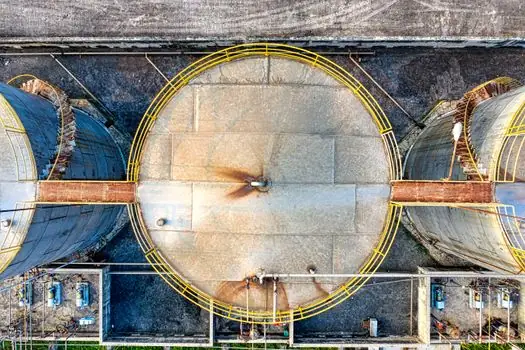
VRFBs remain the structural demand argument behind vanadium equities in 2026, with the Investing News Network explicitly citing long-duration energy storage as the renewed investment thesis and noting that the metal is positioned as safer and longer-lasting than lithium chemistries for grid-scale duty [S1]. Steel, however, is still the volume driver: roughly 85% of all vanadium produced is consumed by steel production for strength, toughness and heat resistance [S5].
For process and metallurgical engineers, the practical implication is that V2O5 electrolyte specs and FeV grade specs will diverge further as VRFB capacity comes online, with purity thresholds (typically 99.5%+ for electrolyte) sitting well above the metallurgical-grade FeV norm. Tracking-grade decisions in upstream V2O5 supply chain mirror the precision trade-offs spec engineers already manage in servo motor and pressure sensor sizing, where purity, tolerance and duty cycle all feed into a single qualification.
ASX small-caps: scale, liquidity and 12-month signals
The 2026 ASX vanadium cohort is wide but mostly small-cap.
Anson Resources (ASN) and Arafura Rare Earths (ARU) round out the more liquid names, with ARU up 11.77% on the day at A$0.19 and a A$1.15 B market cap, the largest in the cohort though its vanadium exposure is incidental to its rare earths focus [S5]. Smaller movers include Richmond Vanadium Technology (+50% YoY) and Mount Burgess Mining NL (+150% YoY on a tiny A$12.95 M cap), the kind of names a process engineer would treat as explorers rather than qualified supplier candidates.
Limitations and failure modes for buyers
Vanadium price is not publicly disclosed on the major trading platforms, which makes benchmarked procurement harder than for base metals like copper or aluminium [S5]. Concentrate contracts are typically bilateral, and grade premiums for battery-grade V2O5 over metallurgical FeV are not transparent, so a spec team should anchor any offtake bid to a defined purity spec and a take-or-pay window, not a published index.
Junior miners carry a separate failure mode: PEA-stage economics modelled at US$10.65/lb V2O5, as in the Carlin 2020 study, do not survive a sustained sub-US$6/lb environment, and at least one of the 12-month decliners in the ASX list (Syrah -59.65%, Aura -55.32%, QEM -54.05%) shows how quickly sentiment shifts when battery-metal demand softens [S1][S5]. For non-metallurgical readers cross-shopping adjacent spec decisions, the same caution applies to Checkweigher Selection for E-commerce Fulfillment and Filling Machine Suppliers 2026, where vendor financial stability is part of the qualification, not a separate checklist.
Trackable next signals: the US DOE grant decision on Phenom's vanadium-nickel pilot (US$19.8 M total, 80% grant ask), any Q4 2026 update on Largo's hydromet flowsheet scale-up, and Bushveld's next quarterly FeV realised price disclosure, each of which will reset the relative ranking among the juniors and the integrated majors within a single quarter.