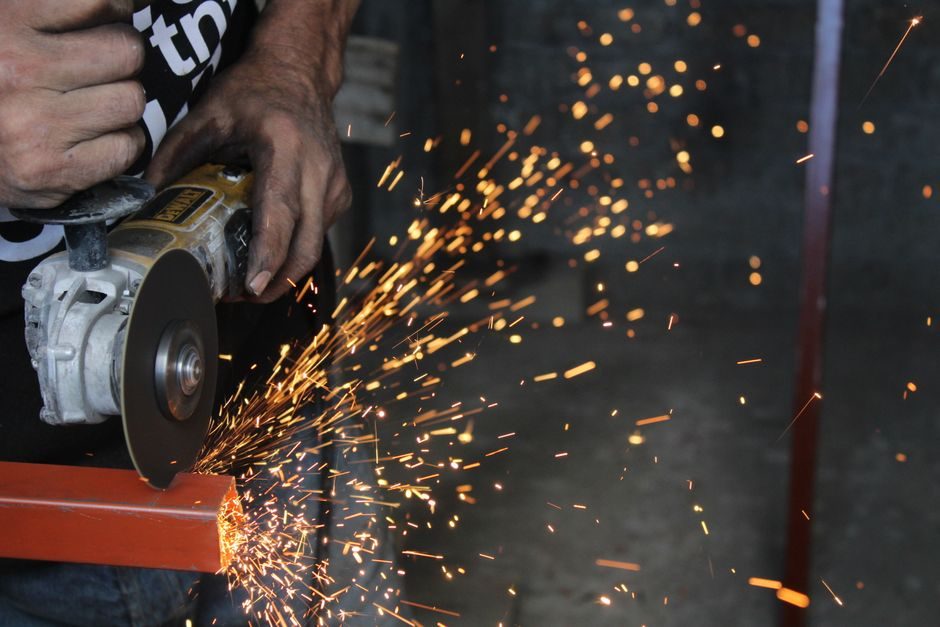
For industrial buyers in 2026, the carbon steel decision collapses to three gates: grade designation (AISI, ASTM, BS, DIN, GB, JIS), forming route (hot-rolled coil/plate vs cold-rolled strip), and surface treatment (bare mill, oiled, painted, hot-dip galvanized) — everything else is downstream [S1][S2].
Carbon steel competes on cost-per-tonne and weldability, not on corrosion or hardness. Where corrosion resistance or magnetic-permeability control matters, the conversation shifts to stainless steel or silicon steel; where tensile strength per kilogram matters, alloy steel or carbon fiber come up instead [S1][S2].
Grade Designation and Chemistry Bands
Carbon steel is generally classified by carbon content: low-carbon (typically ≤0.25% C) for forming and welding, medium-carbon (~0.25-0.60% C) for machinery parts, and high-carbon (>0.60% C) for springs and cutlery — the kitchen-knife comparison is a clean illustration: stainless wins on corrosion, carbon wins on edge retention, and the trade-off is decided by environment [S4].
Mill certificates travel under multiple regional standards simultaneously: a single Shanghai-origin hot-rolled coil can ship against AISI, ASTM, BS, DIN, GB or JIS grade lines, in thickness 0.3-100 mm and width 1000-2000 mm, with technique and surface treatment specified per order [S1]. For sour-service or chloride exposure, material selection must also clear NACE MR0175 / ISO 15156 — a gate that pure AISI/ASTM grades do not automatically pass.
Form: Hot-Rolled vs Cold-Rolled vs Forged
Forming route sets both tolerance and price. Hot-rolled plate and coil dominate ship-plate, structural and general fabrication — Shanghai-listed hot-rolled galvanized coil ships in 1000-2000 mm width with both hot- and cold-rolled technique options on the same product code [S1]. Cold-rolled strip and sheet carry tighter thickness tolerance and a better surface, and feed stamping, deep-drawing and precision tube lines.
Forged routes cover the high-pressure end. ANSI B16.9 / B16.28 / MSS SP-43 180° elbows in carbon steel are forged, supplied in 30°/45°/60°/90° geometry with rust-proof oil or black-paint coating, ISO + ANSI certificates, and a typical supply capability around 1000 pieces per month per supplier [S3]. Where dimensional accuracy and impact toughness matter more than raw throughput, steel fiber reinforced or forged forms displace generic plate.
Surface Treatment and Corrosion Allowance

Bare mill scale is acceptable only for indoor, dry, weldable applications. The three common upgrades are: rust-preventative oil (short-term shipping protection, ~3-6 months), black paint or varnish (mid-term indoor/outdoor, ~1-3 years), and hot-dip galvanizing (zinc coat, typically 50-120 µm, giving 10-30+ years depending on atmosphere) [S1].
For natural-gas line fittings, suppliers ship carbon steel elbows with rust-proof oil plus black paint as the default protective stack, with ISO and ANSI conformance on every heat [S3]. When a buyer is choosing for food, marine, or chemical exposure, galvanizing alone is rarely enough — the comparison axis that matters is total annual corrosion rate (mm/yr) against the design service life.
Mechanical Properties and What They Buy You
These numbers are standard bands for AISI 1018 / 1045 / 1095 / 1080 families. [S1]
Where strength-to-weight drives the spec — cranes, pressure vessels, transport — buyers compare alloy steel and carbon fiber against standard carbon steel on the same loading case, not in isolation. For general fabrication, a mill-certified A36 / Q235 / S235JR hot-rolled plate remains the lowest-risk default.
Standards, Certifications and Mill Test Reports

Every shipped heat should carry a Mill Test Certificate (MTC / MTR) referencing the order standard. For pressure piping, ASME B16.9 (factory-made wrought buttwelding fittings) and ASME B16.28 (short-radius elbows) are the usual call-outs, with MSS SP-43 covering stainless buttweld fittings and ASME B36.10 / B36.19 covering pipe dimensions [S3].
For structural plate, ASTM A36 / A572 and the GB equivalent Q235 / Q345 are the workhorses. Where sour-service hydrocarbons are involved, the supplementary gate is NACE MR0175 / ISO 15156; where European hazardous-area equipment is involved, ATEX and IEC 60079 series apply to the assembled unit, not to the raw plate. Buyers who only check the coil certificate but not the fitting or component certificate routinely get a non-conformance at goods-in.
Cost, MOQ and Sourcing Reality
Price bands across the four main carbon-steel product families sit roughly at: fasteners / anchors US$0.01-15 per piece at MOQs of 100-10,000 pieces [S5]; pipe fittings negotiated by size/angle at MOQs around 1000 pieces with ~1000 pc/month supply capability [S3]; hot-rolled galvanized coil priced per tonne against LME and domestic Chinese steel indices [S1][S2]; plate and structural sections tracked against the same indices with regional mill premiums [S2].
Lead-time reality in 2026: Shanghai and Jiangsu stock-holding exporters quote 15-30 days for galvanized coil and standard plate from stock, 30-60 days for mill-direct production runs, and 45-90 days for custom forged fittings with non-standard angles [S2][S3]. This is consistent with the broader 2026 industrial sourcing picture described in Bearing Supply Chain 2026: Lead Times, Steel Cost and Sourcing Reality — steel-input cost volatility is still the dominant swing factor.
Carbon Steel vs the Alternatives: A Four-Gate Comparison
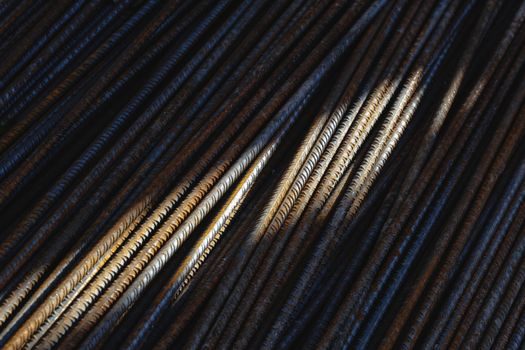
Comparing the four main engineering metals against the same four decision gates (cost-per-tonne, corrosion allowance, tensile strength, weldability) gives a fast go/no-go: [S2]
1) Cost: carbon steel is the cheapest baseline; stainless and silicon steel run 2-4× per tonne; aluminum sits between; alloy steel and carbon fiber sit 3-10× above [S1][S2].
2) Corrosion allowance: carbon steel needs coating or galvanizing; stainless and silicon steel are largely self-protecting; aluminum forms a natural oxide; alloy steel varies by chemistry.
3) Tensile strength: high-carbon and alloy grades reach 1000+ MPa; stainless 300-series sits around 500-700 MPa; aluminum 6000-series around 200-350 MPa; carbon fiber composite exceeds 2000 MPa but with very different design rules.
4) Weldability: low-carbon steel is the easiest to weld by every process; stainless requires controlled heat input; silicon steel is generally not welded (it is stacked); alloy steel needs preheat and PWHT; carbon fiber is bonded, not welded.
Application Routing: Where Carbon Steel Wins and Where It Loses
Carbon steel wins clearly in: structural beams and plates, ship plate, general fabrication, low-pressure water and steam piping, anchor and fastener products, and forged pipe fittings for natural-gas and process lines [S1][S3][S5]. It loses clearly in: chloride or sour-service exposure without lining, food-contact surfaces where stainless is mandated, magnetic-circuit laminations where silicon steel is specified, and any application where the strength-to-weight ratio justifies aluminum, titanium, or carbon fiber.
For kitchen knives the rule is the same: stainless for wet, low-maintenance use; carbon steel for edge retention and ease of sharpening, with the understanding that it will rust without drying [S4]. For fasteners, the rule is the same again: carbon steel anchors at US$0.01-15 per piece [S5] handle concrete and masonry fixing; stainless anchors take over in coastal, chemical or hygienic zones.
Selection Checklist for 2026
A practical procurement gate sequence: [S3]
Gate 1 — Standard and grade: lock AISI / ASTM / BS / DIN / GB / JIS grade line, with supplementary NACE MR0175 if sour service [S1].
Gate 2 — Form: hot-rolled plate/coil, cold-rolled strip, or forged fitting; match thickness/width/angle to the order [S1][S3].
Gate 3 — Surface: bare, oiled, painted, or hot-dip galvanized, with coat weight specified in g/m² or µm [S1].
Gate 4 — Certification: MTC / MTR per heat, ISO 9001 for the mill, ANSI / ASME / EN standards for the component, and ATEX / IECEx only if the finished equipment is going into a hazardous area [S3].
Gate 5 — Supplier: prefer audited stock-holding exporters with multi-product lines and 20+ years' history when lead time and traceability both matter, as in the HuaRun Group profile [S2].
Cross-check against the related spec work on Belt Conveyor Selection: Load, Belt Type, Length and Drive Gates when the carbon steel is being specified for conveyor frames, and against Best Aluminum Alloy for HVAC: Spec-Cut Selection for Coils, Fins and Frames when the line-up genuinely includes aluminum frames — a like-for-like cost and weight delta across the two metals usually decides the call. For buyers who already have the grade but are still fighting lead time, the next step is to lock a mill-direct PO with an MTC clause and a 30/70 shipment split, against a Shanghai or Jiangsu stock-holding exporter with 20+ years of export history [S2]. Trackable signals over the next quarter: any ASTM A36 / Q235 spot-price moves of more than ±8% in a 30-day window, and any change to the standard NACE MR0175 / ISO 15156 chloride limits, both of which would force a re-spec of long-lead sour-service components.