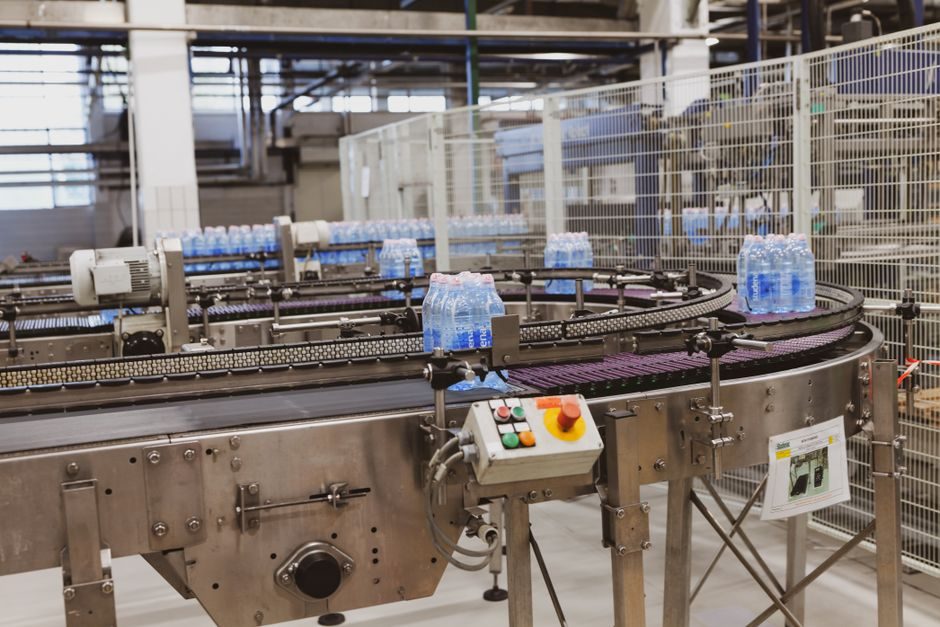
Hydraulic system production technology is a five-block build path: a hydraulic cylinder converts fluid pressure into linear force, a hydraulic pump supplies flow, a hydraulic motor converts flow back into rotary motion, a hydraulic valve directs and regulates flow, and a hydraulic power unit packages the reservoir, pump, motor coupling, and conditioning hardware into one tested skid [S1][S2].
The current Chinese supply base — typified by Jinan-based telescopic-cylinder and dump-trailer skids, and the Guizhou distribution channel for axial piston pumps, axial piston motors, relief valves, oil filters, and closed-loop reservoirs — builds these blocks on the same ISO 3320 / ISO 4413 logic that Western OEMs use, so a 2026 buyer can dual-source cylinders and pumps without re-validating the system math [S1][S2].
Cylinder block: tube honing, piston sealing, telescopic staging
A hydraulic cylinder converts 160-420 bar system pressure into linear thrust through a precision-honed tube, a ground piston rod (typically 20MnV6 or 42CrMo4, with hard-chrome plating 20-30 µm), and a piston fitted with a stepped seal stack (OD wiper + primary U-cup + backup O-ring on the piston, rod wiper + main rod seal + buffer ring on the gland) [S1].
Testing is done on a 1.5x working-pressure hold and a 0.5-1.0 million cycle endurance rig before shipping [S1].
For readers cross-referencing heavy-process machinery, a similar ring-forging and raceway-grinding discipline drives bearing production, which is the reason a hydraulic cylinder rod-end spherical bearing and a main-rotor bearing share a comparable QA logic — see the bearing production technology walkthrough for the parallel chain.
Pump and motor block: axial-piston, gear, and closed-loop pairing
Closed-loop pairing — pump feeding motor in a single circuit with a flushing valve and charge pump — is the standard for high-power mobile drives (skid-steers, harvesters, mini-excavators) because it removes the directional-control valve stack and trims hose count by 20-30% [S2]. A representative closed loop packages a variable axial-piston pump, an axial-piston motor, a relief valve assembly, an oil filter, and a shared reservoir; the pump swash-plate handle gives a stepless speed range from low-rpm torque up to maximum rpm, which is why a single hand lever can replace a multi-gear transmission on a compactor or a road-header [S2].
Valve and control block: pressure, flow, directional, and proportional logic
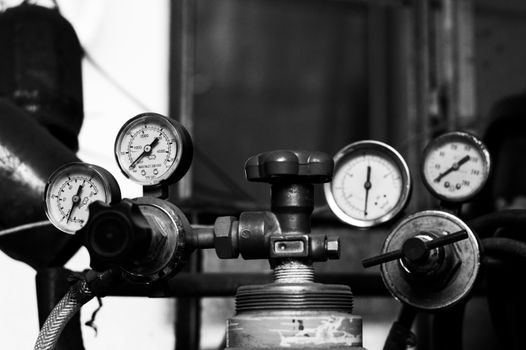
A hydraulic valve does three jobs: pressure compensation (relief, sequence, counterbalance), flow control (throttle, 2-way compensated, priority), and directional logic (solenoid-actuated spool, 4/3-way, 6/3-way); in 2026 mobile equipment, the directional stack is the single most serviceable item and the one most likely to be specified as a name-brand (Bosch Rexroth, Eaton, Parker, Kawasaki) for warranty reasons [S1][S2].
Production technology for valve bodies is gravity-cast or low-pressure die-cast in a 6061-T6 / A356 aluminum body with anodized spool bores held to 0.005-0.015 mm, then assembled with hardened-steel spools (ground to 0.002-0.004 mm tolerance) and NBR or FKM seals rated for -20 to +120 °C oil [S2]. For a 2026 cost benchmark, mid-flow 4/3 proportional valves FOB China sit around 18-45 USD per unit at 100-piece MOQ, with name-brand equivalents running 4-8x that figure; buyers running >1,000-piece annual volume are typically better off locking a private-mould body and sourcing a name-brand cartridge insert [S2].
Power unit packaging: reservoir, filtration, cooling, and noise
A hydraulic power unit (HPU) is a hydraulic power unit that bundles the electric motor (or engine), coupling, hydraulic pump, reservoir, return filter, pressure filter (typically 10-25 µm absolute on the pressure line, 25-40 µm on the return), level/temperature gauge, and a manifold of hydraulic valves onto a single welded skid rated to 250-700 L tank capacity depending on duty cycle [S1].
The four production gates that drive warranty cost on an HPU are: (1) reservoir cleanliness flushed to NAS 1638 class 7-8 / ISO 4406 18/16/13 before assembly, (2) suction strainer 100-149 µm with a 2-3x flow area margin, (3) cooler sized for 30-50% of the input kW as heat-rejection capacity (a 22 kW HPU needs roughly 7-11 kW of air- or water-side cooling), and (4) sound enclosure limiting operator-station noise to 72-78 dB(A) for indoor lifts and dock equipment [S1][S2]. Skid-steering the tank back to the pump with a flooded-suction line is what separates a 5,000-hour HPU from a 15,000-hour HPU more than any other single design choice.
Selection: which block goes where, in three criteria
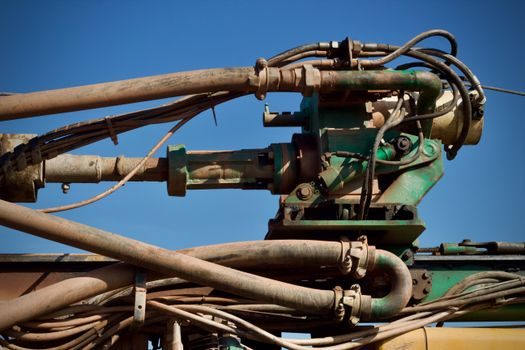
A buyer can shortlist the right production technology by lining the five blocks up against three decision criteria: pressure class, motion type, and duty-cycle hours/year. Cylinders handle linear motion, motors handle rotary, and pumps + valves + power units are the supply and conditioning layer for both. [S1]
Pressure class drives pump and valve selection — under 200 bar, gear pumps and DC valve manifolds are the cheapest path; 280-420 bar, axial-piston swash-plate pumps with load-sensing proportional valves dominate. Motion type picks cylinder vs. motor at the actuator stage. Duty cycle separates continuous-duty industrial HPUs (3-shift, 6,000+ hours/year, water-cooled) from intermittent mobile units (1,000-2,000 hours/year, fan-cooled) [S1][S2]. The same selection logic that picks a cylinder bore and stroke for a 30-ton dump trailer is what a 2026 specifier uses to pick a hydraulic actuator family for a 1,500-ton press or a 50-ton mining truck — only the cleanliness, filtration, and monitoring gates scale up.
Standards, failure modes, and 2026 sourcing signals
The production-technology baseline is governed by ISO 4413 (hydraulic fluid power — general rules), ISO 3320 (fluid power systems — cylinders), ISO 4391 (hydraulic fluid power — motors), and ASME B30 (mobile and locomotive cranes) on the safety side, while mobile equipment typically layers on EU Machinery Directive 2006/42/EC for European builds and GB/T 7935 for the Chinese domestic market [S1][S2].
The three recurring failure modes buyers should price into QA are: (1) rod scoring from contaminated oil — a NAS 1638 class 9 fluid will cut seal life by 50-70% versus a class 7 baseline; (2) pump cavitation from starved suction on cold-start with high-viscosity oil — a 32 cSt oil at -10 °C can drop a gear-pump inlet to 0.3 bar absolute and start metal-to-metal contact within 30 seconds; (3) valve spool stick-slip from varnish buildup — fixed by a 25 µm pressure-side filter and a quarterly oil sample [S1][S2]. The 2026 sourcing signal to track is a 10-15% price spread narrowing between Chinese-built telescopic cylinders and equivalent Eastern European product, driven by Ningbo and Jinan finishing capacity expanding roughly 8-12% year-on-year since 2024 [S1].
For buyers also evaluating control-side hardware, the same spec-discipline that locks a proportional valve's deadband and hysteresis drives solenoid coil selection — see the solenoid coil cost-and-spec guide for the parallel FOB-band logic and the solenoid-vs-electric-ball-valve cut for the actuator-side trade-off.