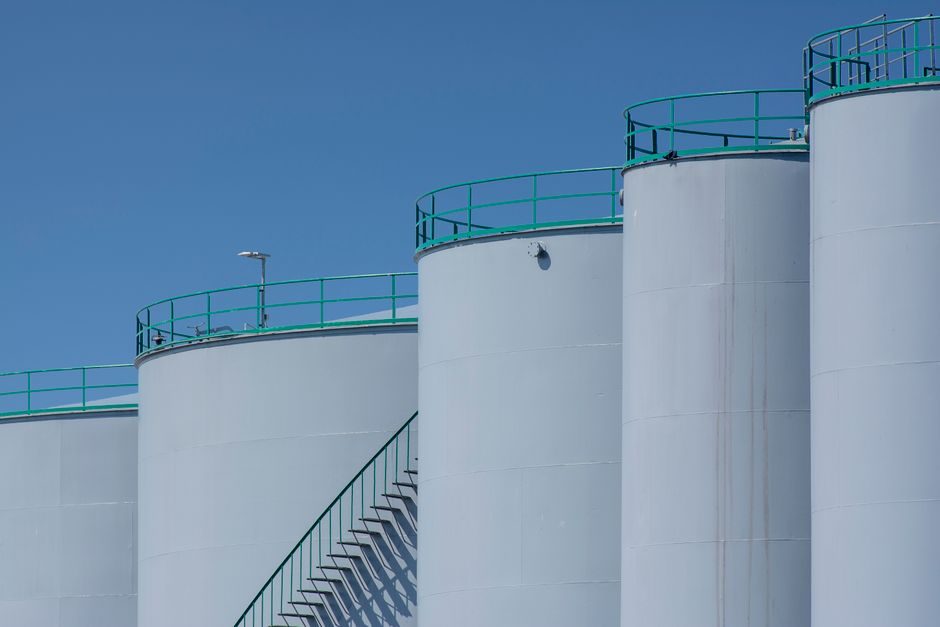
Intermediate bulk containers (IBCs) are standardized liquid-handling units that move roughly 4× the volume of a 55-gallon drum on the same pallet footprint, with the 275-gal and 330-gal sizes dominating because they match 4-drum pallet geometry [S3][S4]. Common base footprint sits near 45" L × 45" W with average envelope volume of about 58.6 cu.ft at 50" height [S3].
Selection is governed by four independent axes — material of construction, UN/DOT certification class, volumetric capacity, and operating-temperature window — and a wrong pick on any one axis can invalidate the whole shipment or destroy the inner bottle [S2][S5].
Material-Based Classification: HDPE, Carbon Steel, Stainless Steel
HDPE (high-density polyethylene) inner-bottle composite IBCs are the workhorse for general chemicals, lubricants, oils, and solvents, and account for the bulk of single-trip composite tote volume in the market [S1][S3]. The inner bottle is blow-molded HDPE, supported by a welded tubular steel cage and pallet base, with fill temperature capped at 60°C and storage floor at -40°C [S2].
Carbon-steel IBCs carry the same 110–550 gal range as composite but are specced for heavier solvents and lubricant inventories where HDPE chemical resistance is borderline; their added mass raises dynamic-stacking limits [S3]. Stainless-steel IBCs (typically Type 304) are the hygienic-spec choice for food, beverage, vineyard, cosmetic, and pharmaceutical service, with capacities from 59 to 793 gal and 350 gal the most popular [S6]. UN/DOT 31A-certified stainless units are rated to 1.9 specific gravity for Packaging Group II and III materials per Title 49 CFR, with a 22" top manway (EPDM gasket, bolted clamp ring), 3" fill fitting with fusible cap, 2" top bung, and 2" bottom discharge through a lockable stainless ball valve [S5].
Capacity Classes and Footprint Engineering
IBC volumetric range runs 110–550 gal standard, with 793-gal SS as the upper outlier [S3][S6]. The 275-gal and 330-gal sizes dominate because they preserve the 4-drum pallet footprint while delivering 5–6× the per-pallet payload of a 55-gal drum [S3][S4]. Footprint stays near 45"×45" across the capacity range; increasing volume mostly increases total height, not base area — a useful property for plants standardizing on a single pallet-jack or forklift lane [S3].
For a fuller primer on the container format itself, see the IBC tank overview reference page. Where larger intermediate bulk transport is needed (and footprint is not a constraint), tank containers cover the ISO 20-ft/40-ft multi-thousand-liter class for rail and ocean freight.
UN/DOT Certification and Packing Group Mapping
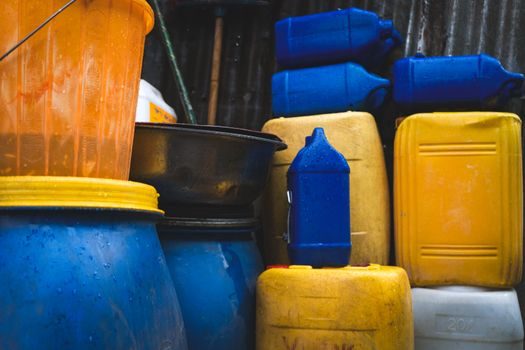
UN/DOT 31A certification is the regulatory gate for transporting Packing Group II and III hazardous liquids in stainless IBCs at 1.9 SG, with the data plate, fusible caps, manway clamps, and bottom ball valve all part of the certified assembly [S5]. For HDPE composite IBCs carrying Class II and below dangerous goods, the 1000-L (≈264 gal) format is explicitly used as a UN-style intermediate bulk package across petrochemical, dye, pesticide, and brewery liquids [S2].
UN performance requires a leak test after any repair and before re-entry to service, and visual inspection of cage, pallet, and inner bottle for corrosion, contamination, or impact damage [S2]. Reuse without a passing inspection voids the certification for the next load.
Stacking, Density, and Handling Rules
Static stack height is limited to 3 layers; dynamic stacking (in-transit) drops to 2 layers when the fill specific gravity is below 1.5 and goes to single-layer (flat) only when SG exceeds 1.5 [S2]. Forklift access varies by model: standard square stackable, premium, and widemouth units are 2-way pallet-jack / 4-way forklift; carbon- and stainless-steel units are typically 3-way / 3-way; caged, HDPE, and heavy-duty composite variants expose full 4-way / 4-way channels for pallet-jack and forklift entry [S3].
Lifting is bottom-only — the IBC is a bottom-load-bearing design and any strap or sling lift is explicitly prohibited because the HDPE inner bottle is not rated for suspended loads [S2].
Decision Matrix: Material vs Service
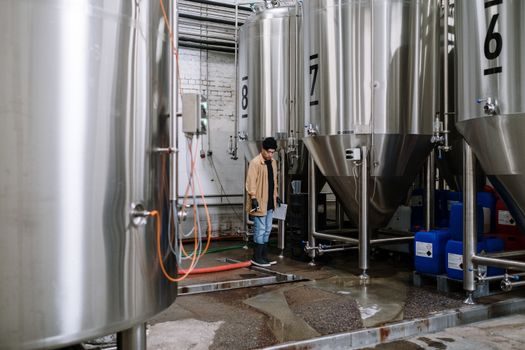
For a single chemical, low-cost, one-trip solvent or acid service, HDPE composite (275/330 gal) is the default; for multi-trip, food/pharma hygienic service, switch to Type 304 stainless (350 gal typical, 1.9 SG rated); for high-density lubricants or hydrocarbons with elevated flash-point concerns, carbon-steel offers the temperature and structural margin HDPE cannot [S3][S5][S6]. Chemical compatibility is the first gate — the HDPE inner bottle must be verified against the SDS of the fill liquid before the first load, and the seal materials (EPDM, Viton, or FKM depending on IBC) checked separately [S2][S7].
Fill ceiling is 98% of nominal capacity to leave ullage for thermal expansion and slosh — going above 98% in transit is a common DOT violation and a frequent root cause of fusible-cap venting [S2].
Logistics, Transport, and Container Loading
For dangerous-goods transport, the load must follow the CTU (Cargo Transport Unit) packing guidelines referenced in the IMDG supplement, and the chassis must prevent both lateral and longitudinal movement of the IBC [S2]. In containerized shipping, a 20-ft container holds 20 IBCs and a 40-ft holds 40, with the sidewall height acting as a hard limit on stacking configuration [S2].
Total landed cost spans $200 to $5,500+ USD depending on model and capacity, with HDPE composite at the low end and UN-rated stainless or specialized 793-gal units at the high end [S3]. Pricing correlates with material, certification (UN 31A adds cost vs non-UN), and accessory count (manway size, valve spec, fusible cap, data plate).
Limits, Failure Modes, and Reuse Gates
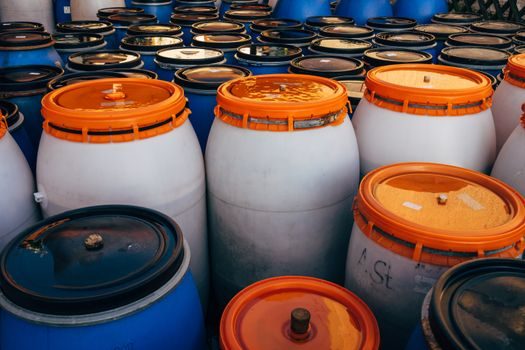
HDPE inner bottles fail by environmental stress cracking when chemical compatibility is assumed without verification — the failure mode is silent until the first stack or thermal cycle exposes it [S2][S7]. Stainless units avoid that class of failure but add capex and weight; carbon steel fails by rust at weld seams and bottom-valve interfaces if coatings are breached. Reuse without a documented inspection record and a passing leak test is the single most common audit finding in IBC fleets [S2].
Operating-temperature window of -40°C to 60°C applies to the HDPE inner bottle; going outside the window risks brittleness at the low end and deformation at the high end, both of which are out-of-spec for UN-certified transport [S2].
For a related spec-driven classification walkthrough on bulk dry-material handling, see FIBC bulk bag pros and cons, which covers the dry-side counterpart to liquid IBCs. Cleaning of returned stainless IBCs is handled in tank cleaning machine workflows, where CIP cycle time and nozzle pressure are the controlling variables. Trackable signals for the next quarter: any 2026 update to UN 31A on stainless wall-thickness testing, and DOT guidance on 793-gal SS reuse cycles beyond the current 1.9 SG / PG II–III envelope.