
Inductive Automation confirmed its Ignition Community Conference (ICC 2026) for September 22-24, 2026, with group registration tiers offering $960+ in savings for teams of three or more, signaling a continued integrator-channel push in the SCADA layer [S1].
SourceForge's 2026 industrial automation software roundup lists Shoplogix Smart Factory Platform as a vendor with over 20 years of deployment history in discrete manufacturing MES, positioning it against newer SaaS MES entrants on the same comparison page [S2]. The combined picture: the 2026 industrial automation software market still splits cleanly into SCADA (Inductive Automation, AVEVA, Siemens WinCC), MES (Shoplogix, Rockwell Plex, Aegis FactoryLogix), and IIoT edge platforms, each with its own supply-chain risk profile.
SCADA platform consolidation and the "universal licensing" gate
Ignition by Inductive Automation uses an unlimited-licensing model on a server-based deployment, with separate product editions including Ignition Cloud Edition, Ignition Edge, and Ignition Maker Edition listed on the vendor site [S1]. That licensing model is now a procurement gate: spec writers comparing SCADA stacks evaluate per-tag vs unlimited server pricing before any feature checklist, because the cost curve diverges sharply above 5,000 I/O points. SourceForge's 2026 government-focused industrial automation review treats platform scalability as a first-order criterion alongside real-time machine-data ingestion [S2]. For a deeper reference on the SCADA layer itself, see the SCADA software overview and the broader electrical automation layer that SCADA sits on top of.
For plant engineers building new spec packages, the practical question is not which SCADA has the most modules but which licensing curve survives a 3x I/O expansion without re-negotiation. Unlimited server licensing removes that risk; per-tag licensing on competing platforms typically requires a license-server audit and a true-up purchase at the 2x to 3x I/O mark, which a 2026 spec writer must price in upfront.
MES layer: 20-year incumbents vs SaaS challengers
Shoplogix is described on SourceForge as "a smart, scalable platform trusted by manufacturers worldwide for over 20 years," with a feature focus on transforming real-time machine and production data into operational KPIs [S2]. That longevity is a supply-chain signal: a 20-year MES vendor has a multi-decade installed base, which translates to a deep integrator pool, documented upgrade paths, and lower retirement risk. Newer SaaS MES entrants may ship faster feature velocity, but their 3-5 year track record is a hard cap on warranty and support commitments for safety-relevant cells.
MES selection criteria in 2026 cluster around four axes: on-prem vs cloud deployment, OPC UA / MQTT native support, ERP handshake depth (SAP, Oracle, Microsoft Dynamics), and line-side hardware abstraction. The first two axes determine cybersecurity posture; the second two determine how much custom integration the end user absorbs. When the spec requires air-gapped operation, on-prem MES with native OPC UA beats any browser-based SaaS tenant, because the air gap eliminates the need for an outbound data diode entirely.
IIoT, edge gateways, and the Unified Namespace pattern
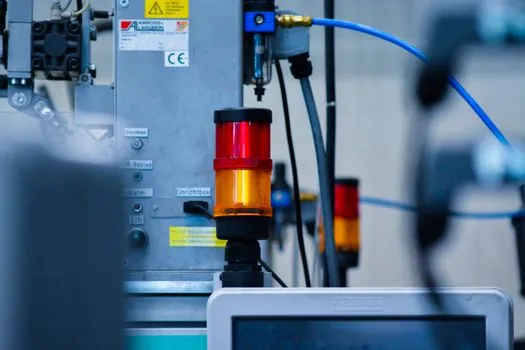
Inductive Automation lists Edge IO and Control, Unified Namespace, IIoT, and Power Monitoring among its named Ignition solution categories [S1], confirming that the SCADA vendor itself is now selling directly into the IIoT and Unified Namespace (UNS) layer that historically belonged to MQTT brokers and historians. This is a meaningful supply-chain shift: when a SCADA vendor absorbs the edge gateway role, the buyer no longer needs a separate MQTT broker (HiveMQ, EMQX) or a separate historian, which compresses the integrator bill of materials.
For engineers sourcing industrial power supply and DC power supply hardware that feeds edge gateways, the consolidation above matters because the edge node count drives 24 VDC supply quantity, not the SCADA tag count. A 50-cell plant with edge-per-cell architecture draws roughly 2-3x the DIN-rail 24 VDC supply count of a 50-cell plant with centralized SCADA I/O, which shifts the procurement weight from the software vendor toward the industrial UPS and switching power supply supply chain.
Lean supply chain principles applied to software stacks
Lean supply chain methodology, summarized in the 2024 Sogou Baike entry, rests on five steps: tool selection, principle definition, strategy formulation, value clarification, and adaptive implementation of leading methods, with explicit emphasis on eliminating non-value-adding activity [S3]. Applied to a 2026 automation software stack, "non-value-adding activity" maps directly to redundant middleware: a separate MQTT broker plus a separate historian plus a separate SCADA, when one platform now ships all three, is muda in the lean sense. The same source notes that Lean Six Sigma integration (Lean 6 Sigma, Lean 6 Sigma logistics) has become the dominant combined framework for supply-chain optimization work, and the same logic applies to software-stack rationalization.
The pragmatic lean test for any 2026 spec is: does this software layer ingest data the layer above could already ingest natively? If yes, it is candidate retirement. That single question typically removes one to two middleware products from a brownfield stack and is a higher-ROI exercise than any feature comparison matrix.
Comparison: SCADA, MES, and IIoT edge on four procurement axes
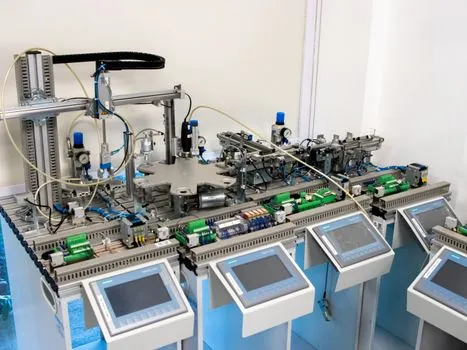
Side-by-side on the axes that drive 2026 sourcing risk: SCADA platforms (Inductive Automation Ignition, AVEVA System Platform, Siemens WinCC) score high on unlimited-licensing and open-protocol support, medium on cloud-native deployment, and low on direct MES functionality. MES platforms (Shoplogix, Rockwell Plex, Aegis FactoryLogix) score high on production-KPI depth and ERP handshakes, medium on open-protocol ingestion, and low on real-time control. IIoT edge platforms (Ignition Edge, HiveMQ, EMQX) score high on MQTT/UNS and on-prem plus cloud hybrid, medium on historian depth, and low on full SCADA tag capacity. The procurement takeaway: a single-vendor stack covering all three layers is now technically feasible, but the integrator must hold certifications across all three or the support risk shifts downstream. [S1]
Integrator channel, training, and certification as supply-chain risk
Inductive Automation runs Inductive University, an Ignition Certification program, and a Top-Selling Integrator directory, all surfaced on the vendor site [S1]. That channel structure is itself a supply-chain asset: a plant in a tier-2 city can be supported by a remote integrator because the training and certification are vendor-issued and globally consistent. MES vendors with thinner certification programs, or with regional-only training, create a hidden single-point-of-failure in the support chain that no spec sheet will flag.
For 2026 sourcing, the recommended gate is to require named, certified integrator availability within a defined radius (typically 4-hour drive or 2-hour flight) as a contractual line item, not a sales-team assurance. The 2026 industrial automation market still rewards incumbents with deep integrator channels, and the procurement audit must price that in. Engineers evaluating similar dual-source risk in adjacent categories can cross-reference the measuring-instrument supply chain map for 2026 and the measuring-instrument shortage risk map, where the same dual-source logic applies to hardware. For plants scaling edge hardware in parallel, the power-grid vendor map for 2026 covers the upstream power side that every SCADA cabinet ultimately depends on.