Industrial laser marker pricing spans roughly US$500 for entry-level 20W CO2 desktop units to over US$40,000 for high-power MOPA fiber systems with 3D dynamic focusing [S2][S3]. The four main cost drivers are laser source type (CO2 / fiber / UV / green), output wattage, scan-head architecture (2D galvo vs 3D dynamic), and certification or software tier.
Buyers evaluating a laser marker for marking, coding, or engraving should expect a 2x to 3x markup for installation, chiller, fume extraction, and PC integration on top of the FOB machine price. China-based OEM listings on Made-in-China.com dominate the entry and mid-tier, while European and Japanese vendors hold the high-precision and traceability segment.
Source Type vs Price: CO2, Fiber, UV, and MOPA
CO2 laser markers at 30W to 60W occupy the lowest price band, with portable CNC metal fiber models listed from 30W through 100W in the entry band on Made-in-China.com [S2]. CO2 sources are commonly specified for non-metal substrates (wood, leather, acrylic, paper, anodized aluminum marking) and appear at price points consistent with general-purpose industrial engraving [S3].
Fiber laser markers handle metals (stainless steel, carbon steel, aluminum, titanium) and many plastics, and command a clear price premium over CO2 for comparable wattage. MOPA (Master Oscillator Power Amplifier) fiber variants add tunable pulse duration for color marking on stainless and anodized aluminum, which is the most expensive sub-class in the fiber family. UV laser markers (typically 3W to 15W) sit at the top of the source-type price ladder due to the frequency-tripled Nd:YAG resonator, cold-marking behaviour on glass and PCB, and lower yield rate of the UV optics.
Wattage Tiers and What Each Watt Buys
Entry 20W fiber markers cover basic stainless-steel marking and plastic coding. The 30W to 50W range is the workhorse for industrial traceability (data-matrix, alphanumeric, logos on metal parts). 60W to 100W portable CNC fiber units extend to deep engraving and light cutting, and are commonly listed alongside 30W/50W SKUs as the standard portable band on Made-in-China.com [S2]. CO2 30W to 60W units serve wood, leather, MDF, and acrylic, and are frequently grouped in shared product listings with shared 30W-50W-60W power options [S3].
Wattage does not scale linearly with price; doubling wattage inside the same source family typically adds 40% to 80% to the SKU price, because the diode stack, driver, and cooling demand change. UV wattage, by contrast, jumps non-linearly above 5W because the harmonic crystals and beam delivery become the bottleneck. For a linear guide mounted moving-axis gantry option, expect a further 20% to 40% adder versus a fixed galvo head.
Head Architecture: 2D Galvo vs 3D Dynamic vs Flying vs CO2 Gantry
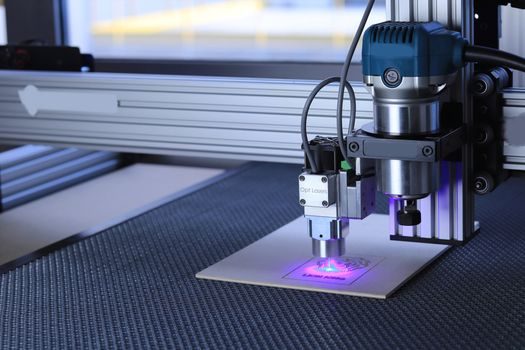
Standard 2D galvanometer (galvo) scan heads with F-theta lenses cover flat workpieces up to about 300 mm by 300 mm and represent the default configuration across price bands. 3D dynamic focusing heads add a Z-axis on the F-theta to maintain a tight spot on curved surfaces (cylinders, embossed tooling, freeform automotive parts); the adder is substantial because the dynamic lens assembly, controller, and calibration routines are specialized. [S2]
Flying laser markers integrate with conveyors and print on the fly at line speeds typically in the 100 m/min to 200 m/min range for coding applications, with pricing closer to the high end of fiber units. CO2 gantry-style markers replace the galvo with a Cartesian crossed-roller guide axis for cutting and engraving large leather/MDF panels, a topology also covered in selection guides for strapping machine types where axis architecture dictates the work envelope. MOPA head options appear on the same product listings as standard fiber galvo units, confirming the configurability matrix vendors publish online [S3].
Cost Drivers Beyond the Sticker Price
Beyond the SKU, the four cost drivers that swing total spend are: (1) laser source (CO2 / fiber / UV / MOPA / green), (2) output wattage, (3) scan-head architecture (2D galvo vs 3D dynamic vs gantry), and (4) certification and software tier (CE / FDA CDRH Class IV enclosure / FDA CDRH-accessible). For medical or aerospace work, FDA 21 CFR part 820-aligned traceability and IATF 16949 process control add documentation cost that does not show on the OEM price sheet. [S2]
Installation accessories routinely add 30% to 60% on top of the machine: industrial water chiller (for fiber and UV), fume extraction with HEPA and activated-carbon stage for CO2 marking of plastics, anti-vibration table for precision work, and a Class IV enclosure interlocked to the door circuit. Software licensing for proprietary marking editors (EZ-cad, JCZ, or vendor-proprietary) is sometimes sold as a separate line item. KEYENCE's user-support portal also lists training, setup, and mastering content alongside the equipment, indicating that vendor support hours are a budgetable line, not a freebie [S1].
Volume, MOQ, and Lead Time

China-origin MOQ on Made-in-China.com is typically 1 set for sample orders, with 30W/50W/60W/100W fiber models negotiated at piece-level pricing on small batches and tiered breaks at 5, 10, and 30+ units [S2]. Lead time for stock SKUs at the 20W to 50W fiber tier is commonly 7 to 15 days ex-works, while custom 3D heads, MOPA, or UV configurations push to 25 to 45 days. Comparable MOQ logic for shotcrete machine installation projects shows that the same acceptance-test and rigging overhead applies to laser cells, and a useful cross-reference is the total-cost treatment in the machine vision controller price 2026 write-up.
Total Cost of Ownership: 5- to 10-Year Lens
On a 5- to 10-year horizon, laser markers are dominated by three cost lines: diode/source replacement (fiber diodes typically 20,000 to 100,000 hours MTBF depending on drive level), electrical consumption (a 30W fiber at full duty is roughly 0.6 kW to 1.0 kW wall-plug with chiller, so roughly 5,000 kWh/year at single-shift), and consumables (fume-filter cartridges, lenses, galvo mirrors). Plan US$2,000 to US$6,000/year for consumables and a diode-replacement event at year 5 to 8 in a 24/7 cell. [S2]
For job shops marking varied substrates, a single 50W MOPA fiber unit will replace what would otherwise be a CO2 plus a fiber pair, recovering roughly US$8,000 to US$15,000 of capex over 5 years. The compliance and training overhead that surrounds Class IV laser installations also tracks the lifecycle math covered in the fire extinguisher TCO and pile driver TCO references, where audit, recertification, and operator-training line items are predictable recurring spend rather than one-time capex.
Selection Criteria and Who It Is For / Is Not For
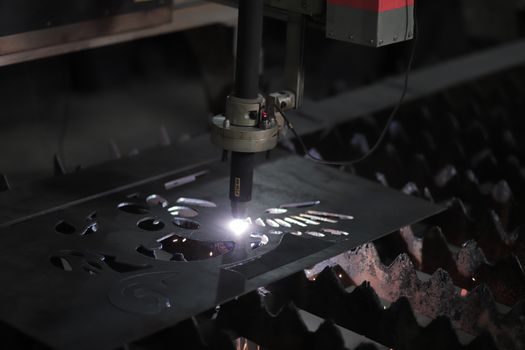
Match source to substrate: CO2 for organics and coated metals, fiber for bare metals and plastics, UV for glass, PCB, and medical polymers, MOPA for color marking on stainless and anodized aluminum, green (532 nm) for reflectives like gold and copper. Match head to geometry: 2D galvo for flat parts, 3D dynamic for curved or embossed, gantry for large panels, flying for in-line coding. Match wattage to mark depth and cycle time, not to a price tier. [S2]
It is for: traceability and coding cells, brand-marking shops, automotive part marking, electronics PCB and IC marking, medical device UDI, tool and die shops, and leather or wood personalization at 100+ units/day. It is NOT for: high-volume metal cutting (use a fiber cutter instead), and continuous 24/7 deep engraving of thick steel (use a dedicated laser welder or plasma cell). Buyers who need real-time quality data should plan a vision loop; a useful control-side reference is the industrial automation software stack map.
Comparable Specs Across the Main Options
On substrate, a 30W CO2 galvo unit will mark wood, leather, acrylic, and paper at 600 mm/s to 7,000 mm/s; a 30W fiber galvo will mark stainless, carbon steel, and aluminum at similar speeds but cannot mark transparent organics. A 3W to 5W UV galvo will cold-mark glass, PCB, and silicone rubber where both CO2 and fiber would crack or burn the substrate. On cost, an entry 20W to 30W fiber typically lands 1.5x to 2x the price of an equivalent-watt CO2, and a 3W to 5W UV typically lands 4x to 6x the price of an equivalent 30W fiber. On maintenance, CO2 tubes are consumables (replacement every 10,000 to 30,000 hours), fiber diodes are long-life (20,000 to 100,000 hours), and UV resonators need periodic harmonic-crystal service. [S2]
Trackable signals for the next 90 days: (1) new MOPA fiber SKUs at 60W to 100W from China OEMs with published FDA CDRH Class IV enclosure options; (2) UV marker price compression as 5W to 10W units move from niche to general-purpose; and (3) flying-laser integration kits shipping with EtherCAT or PROFINET for high-speed line integration. Standards governing the safety envelope of these systems (laser-product classification, enclosure interlock, and operator training) remain the gating constraint for any cell sign-off, and should be confirmed against the laser-safety standard in force at the installation country before purchase.