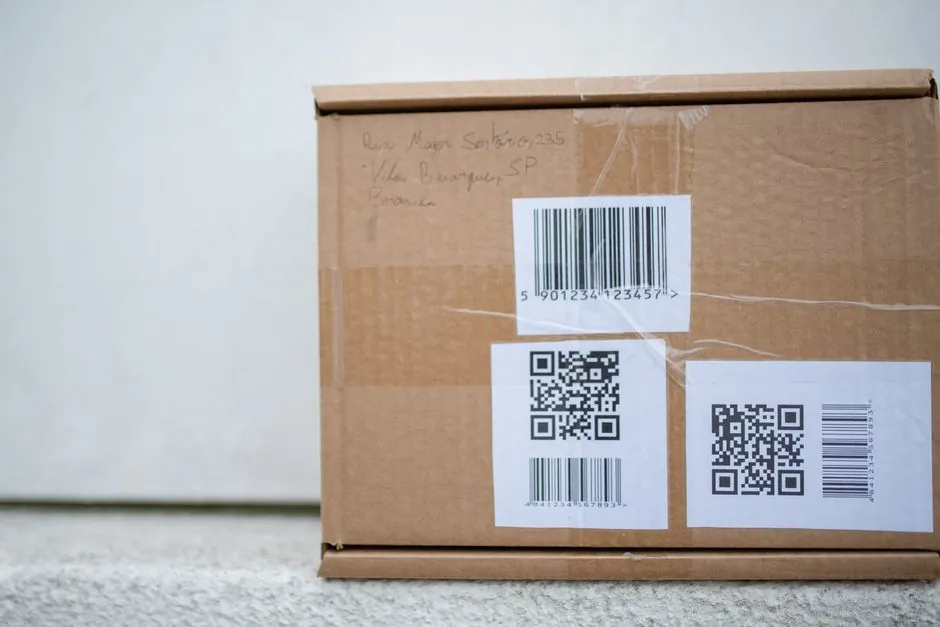
For high-volume manufacturing and logistics, a 1D laser industrial barcode scanner generally costs $200 to $1,000 per unit, whereas a vision-based 2D code reader sits in the $2,000 to $15,000 band before cabling, optics, and software are added [S3]. Vision-based 2D code readers use a 2D area sensor plus image processing, which is why they can decode Data Matrix, QR, and damaged 1D codes that defeat a laser line.
Total cost of ownership, not unit price, is what kills or saves a project: laser scanners win on simple 1D labels at conveyor speeds, while vision systems absorb 2D codes, OCR, and inspection in one station, often removing a separate camera later. Engineers who spec only on purchase price routinely double the per-station cost once integration and read-rate losses are booked.
Where Each Technology Actually Wins
Laser scanners (a low-power laser swept by an internal spinning mirror) remain the cheapest path for clean 1D barcodes on a controlled conveyor, with read rates near 100% on well-printed codes and unit prices clustered between $200 (entry-level handheld like Zebra DS2200) and $1,000+ (rugged industrial fixed-mount such as the TC8000 class) [S3]. Handheld industrial imagers, by contrast, start near $1,700 for a Wasp HC1-style unit and move upward as ruggedization, IP rating, and battery life scale [S7].
Vision-based readers win the moment the code is 2D, damaged, or printed on a curved, reflective, or variable surface. A camera-based 2D Data Matrix reader at 200 dpi, using a multi-core processor board (no fan, no moving mirror), can match laser scan speed in constant-acquisition mode and also run OCR on the same image, an inspection-plus-identification task a laser cannot perform at all [S5]. Cognex's 2D vision systems segment and 3D vision systems segment target exactly this combined inspection-and-identification use case, including AI-assisted decode on challenging surfaces [S2].
Selection rule of thumb from the field: if you only need to read a single 1D symbol on a flat label and your read-rate target is 99%+ on clean print, a fixed laser scanner is the cost-minimizing choice. If the symbol is 2D, the label is damaged, or the line also needs presence/OCR inspection, a vision-based code reader pays back in one to two years by replacing a second station.
Cost Drivers and the Real Price Bands
Five line items move the bill, and only one of them is the sticker on the scanner: [S5]
1. Sensor and optics. Laser diodes with spinning-mirror assemblies are commodity; 2D area sensors (CMOS global shutter) plus C-mount or S-mount lenses drive the bulk of vision-reader cost. A fixed-mount industrial imager with liquid-lens autofocus typically adds $400 to $1,500 over a fixed-focus equivalent, but removes the mechanical focus step on every product changeover [S1].
2. Illumination. Red LED bars are nearly free on laser units; integrated dome, coaxial, or polarized LED arrays for 2D readers add $200 to $800 and are mandatory for reflective or curved surfaces [S1].
3. Processing. A laser scanner ships with on-board decode; a vision reader needs either an embedded processor (often multi-core, fanless) or an external industrial PC, which alone runs $500 to $3,000 depending on CPU class and IP rating [S5].
4. Software and licensing. Laser decoders are usually included. Vision readers frequently split firmware, decoder licenses, and configuration tool seats; AI-based decode (e.g. edge-learned symbology models) is sold as a separate option on several OEM lines [S2].
5. Mounting, cabling, and integration. IP67/IP69K housings, M12 industrial Ethernet (PROFINET, EtherNet/IP), and field-replaceable lenses/window glass routinely add 20 to 40% to the bare scanner cost. Annual calibration and window-cleaning budget should be carried as opex, not capex.
For 1D-only fixed-mount scanning on a packaging line, all-in installed cost typically lands $1,200 to $2,500 per station (scanner + cable + bracket + PLC tag). For a vision-based 2D code reader with OCR on the same image, realistic installed cost is $5,000 to $18,000 per station once lens, light, processor, and software are stacked, which is consistent with OEM product positioning for high-resolution AI-powered readers [S2].
Total Cost of Ownership: What the Spreadsheet Hides

Purchase price is roughly 30 to 50% of five-year cost on a vision station and 60 to 75% on a laser station; the rest is misreads, downtime, changeover labor, and scrapped product. A 1% read-rate loss on a high-throughput line is material: at one major US retailer, a 1% read-rate shortfall on a distribution sortation project was tied to six-figure annual rework cost, a benchmark the imaging-vs-laser debate keeps returning to [S5].
Vision readers compound savings by absorbing adjacent tasks. A single vision station can verify label presence, run OCR on lot/date codes, measure print contrast, and flag skew, jobs that otherwise require one or two extra photoelectric or vision sensors each adding $300 to $2,000. The integrated approach is why modern machine vision system architectures for traceability push identification and inspection into one node rather than two.
Laser scanners compound savings the other direction: zero moving parts beyond the spinning polygon, decade-long MTBF in benign environments, and a service technician can swap a unit in under five minutes with no reconfiguration. For greenfield 1D-only lines, that simplicity still wins on lifecycle cost even when 2D is technically possible.
Decision Matrix by Application Profile
Match the use case to the tool, not the brochure:
High-speed sortation, 1D on cardboard, fixed scan tunnel: laser industrial barcode scanner, $400 to $1,500 per unit, 99%+ read rate on clean print, minimal integration risk. Pair with a separate presence sensor if needed.
Pharma or medical device serialization, 2D Data Matrix on vials, small code, curved glass, OCR required: vision-based code reader, $5,000 to $15,000 per station, validated 21 CFR Part 11 / GS1 workflow, AI decode on damaged codes [S2].
Automotive end-of-line, DPM (direct part marking) on metal, mixed 1D/2D, harsh fluids: vision-based reader with polarized dome light, $8,000 to $18,000 per station, IP67 housing, PROFIBUS or EtherNet/IP to line PLC. A vision controller becomes relevant if multi-camera inspection is added.
Warehouse receiving, handheld 1D/2D mixed: rugged handheld imager, $700 to $1,700 per unit, drop-rated, Bluetooth or Wi-Fi, common Zebra/Honeywell/Cognex class [S7]. A code reader in fixed-mount form factors competes here only when the receiving lane is automated.
Electronics SMT, 2D on PCBs, low contrast, micro-code: vision-based reader with coaxial light and high-magnification lens, $6,000 to $14,000 per station, often integrated into the vision imaging cell that does AOI before or after.
Limits, Failure Modes, and What to Spec Against

Laser scanners fail in predictable ways: mirror motor wear in dirty environments, specular reflection on shrink-wrap or polished metal, and complete inability to read 2D codes (a hard limit, not a degraded one) [S5]. Vision readers fail differently: motion blur on under-lit high-speed lines, focus drift across temperature swings without a liquid lens, decode false-positives when the AI model is undertrained on the actual substrate, and software-version drift when a plant runs mixed firmware.
Spec against these failure modes explicitly. For a laser, request MTBF of the scan motor (often 30,000 to 40,000 hours), IP rating of the housing, and a guaranteed minimum print-contrast ratio on the incoming labels. For a vision reader, request a no-no-read demo on the worst-case substrate you actually run, not the demo kit, and pin the firmware version in the purchase order; AI-based decode models are versioned and a stealth update can shift read rates. Also confirm the communication protocol stack: PROFINET, EtherNet/IP, TCP/IP, RS-232, and I/O are common, but proprietary fieldbus add-ons are not. Industrial machine vision ID stations, when the read is part of a regulated traceability flow, should also carry validation documentation (IQ/OQ, signed decode confidence metrics) rather than just a CE/UL mark.
Industrial barcode scanner deployments on conveyor lines also need a window-cleaning and lamp-replacement plan; both are scheduled-maintenance items, not failures, and belong in the budget from day one.
Standards, Sourcing, and What to Verify Before You Buy
No single ISO or IEC standard dictates reader selection, but several govern the surrounding system: ISO/IEC 15420 (1D barcode), ISO/IEC 16022 (Data Matrix), ISO/IEC 18004 (QR), and AIM DPM (direct part marking) quality guidelines set the symbology and verification baseline your reader must decode to. Industrial electrical conformity is usually CE, UL, FCC, and (for line-side integration) a PLC-side bus conformance certificate from the ODVA or PI organization. For hazardous-area or washdown lines, IP67/IP69K ingress ratings and (where applicable) ATEX/IECEx zone classifications apply, but those belong to the housing and cabling, not the decode engine itself. [S5]
Verify the OEM's published read-rate claims against an in-house trial on your actual product. A 99.9% claim on a glossy, curved, low-contrast DPM code is not the same as 99.9% on a flat paper label; the difference is the entire budget conversation. For high-mix lines, prioritize vision-based 2D readers with autofocus or liquid-lens options, AI-assisted decode, and open communication protocols, even at $5,000 to $15,000 per station, because the changeover savings cover the premium within one to two years. For stable 1D-only lines, stay with a fixed laser industrial barcode scanner at $400 to $1,500 and reallocate the saved capex to verification hardware and operator training.
Trackable signals to watch over the next two quarters: OEM release notes for AI-decode model updates on 2D vision readers (typically a firmware + license bump), any change in fixed-mount imager pricing as 5MP CMOS sensors move down the cost curve, and updates to AIM DPM quality guidance for direct-part-mark verification thresholds. Engineers comparing options should also keep an eye on the broader industrial procurement pattern, including the kind of capex shifts visible in counter-equipment signal briefs where station-level economics, not headline unit price, drive the spec.