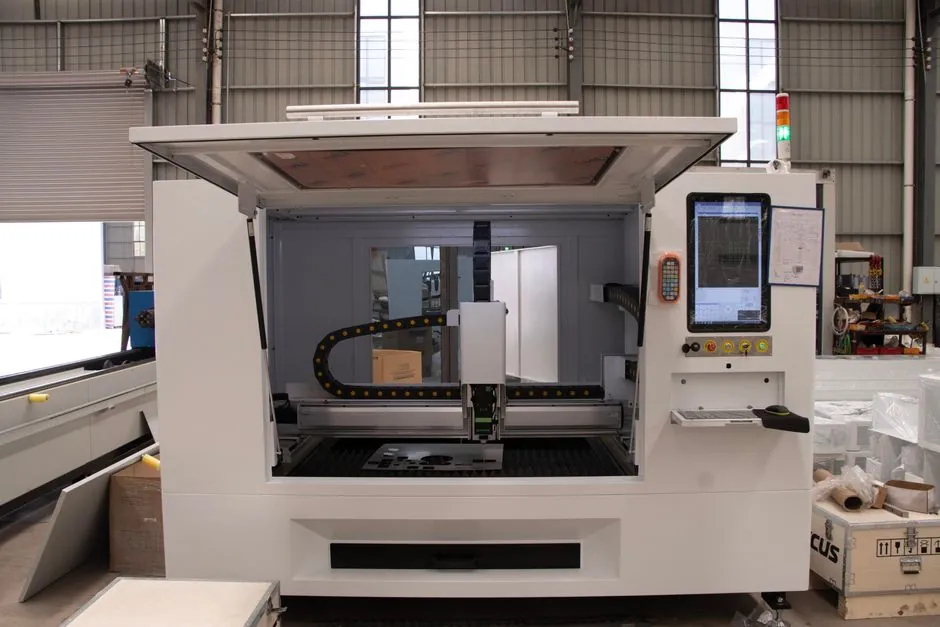
The 2026 industrial laser market is anchored by six globally dominant source vendors (IPG Photonics, Coherent, Corning, Jenoptik, 600 Group, Lumibird) plus a separate tier of systems OEMs led by Trumpf, Bystronic, Amada, Mazak, and Han's Laser, with no single supplier exceeding 15% of global share [S1][S2].
Fiber laser technology commanded 48.4% of the broader industrial laser type mix in 2025, against 42.3% within the laser-for-cutting subset, while Continuous Wave (CW) fiber lasers alone held 52.4% of the dedicated fiber laser market [S3][S4]. The total industrial laser market was sized at $7.8B in 2025, projected to reach $11.57B by 2032 at a 5.8% CAGR, with Asia Pacific at $4.10B in 2025 against $1.73B North America and $1.42B Europe [S4].
Source Vendors: Fiber, CO₂, Ultrafast, and Disk
IPG Photonics (USA) led the industrial fiber laser competitive landscape with the highest global revenue share in 2025, defining the high-power fiber segment with multi-kW CW and QCW architectures used for cutting, welding, and copper hairpin joining [S3][S5]. IPG typically commands a 15–30% price premium over equivalent Chinese fiber sources from Raycus, JPT, or Maxphotonics, a gap that buyers justify through lower lifetime cost only at high utilization above ~2,000 hours/year [S2].
Coherent Corp. (Santa Clara, CA, est. 1966) covers materials processing and electronics, including flexible fiber-laser architectures for welding and joining, with exposure to cyclical industrial end markets; II-VI Incorporated is now part of Coherent Corp. after the 2022 merger [S2][S6]. Corning (HQ Corning, NY, est. 1851) supplies optical fibre, cable, photonic elements, and projection video lens assemblies relevant to laser delivery sub-assemblies rather than complete sources [S2]. Jenoptik AG (Germany) spans microoptics, photonics, life sciences, optoelectronics, diagnostics, industrial metrology, traffic enforcement, defence, and aviation/aerospace lasers, with strong positions in diode-pumped solid-state and ultrafast sources [S2].
600 Group PLC and Lumibird (France) round out the six anchor vendors, covering specialty fiber, CO₂, ultrafast, and disk sources used in cutting, welding, marking, cleaning, and additive manufacturing work cells [S2]. HGTECH Co., Ltd. (China) is ranked alongside II-VI/Coherent, Laser Photonics, and TRUMPF in adjacent top-25 lists, signalling the depth of the Chinese challenger cohort [S6].
Systems OEMs: Cutting, Welding, Marking
Trumpf GmbH & Co. KG (Ditzingen, Germany) led the laser-for-cutting competitive landscape in 2025, reporting group order intake of $5.08B in FY2023/24 and building momentum around manufacturing process innovation for cutting and welding in automotive-linked sheet metal work [S1][S4][S5]. Bystronic (Switzerland) pairs laser cutting with bending systems and an expanding connected-factory software stack, while AMADA (Japan) covers a broad sheet-metal portfolio of laser cutting, punching, and bending equipment [S5].
Mazak, Han's Laser Technology Industry Group Co., Ltd. (China), and the Hypcut/Hypertherm family target industrial-grade build quality at sub-million-dollar price points, with Epilog (Fusion Pro series) closing the list as the entry-level and small-format benchmark for startups and signage shops [S2]. Han's Laser and Bodor Laser have fortified their market positions through continuous innovation in fiber laser systems and cost-competitive pricing, particularly in China, India, and Vietnam [S1].
For marking and engraving cells, Laserax (Canada) leads with high-power fiber, CO₂, and UV marking workstations plus OEM turnkey cells rated for die-casting, automotive, medical, and battery production environments [S2]. Epilog, Trotec, and a wider set of Chinese OEMs handle entry-level and mid-power marking, with 300 W to 1,500 W fiber sources now standard for industrial rust-removal cells and 6-axis robots from Fanuc, KUKA, and ABB dominating automated cleaning work envelopes [S2].
Regional and Application Share
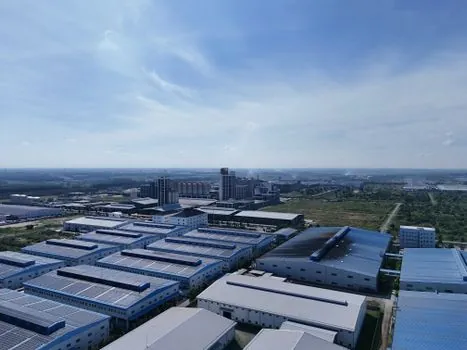
Asia Pacific dominated the laser-for-cutting market with 38.2% of global revenue in 2025 (~$1.96B), while broader industrial laser regional data puts the region at $4.10B in 2025 with some sources placing the share as high as 53% when full system value is counted [S1][S4][S5]. Within the dedicated fiber laser market, Asia Pacific also led with 42.3% share in 2025, powered by China's manufacturing base and government-backed industrialization initiatives [S3].
Cutting is the largest application segment, capturing 40.0% of the broader industrial laser mix in 2025 and 38.6% of the fiber laser market, with the high-power fiber segment (typically 6 kW and above) accounting for 44.1% of power-output share in fiber lasers [S3][S4]. Automotive and manufacturing end-users collectively represent over 48% of total industrial fiber laser demand, driven by battery cell welding, copper hairpin welding for EV motors, and lightweight structural component fabrication [S3].
Semiconductor miniaturization requiring ultrafast laser micromachining contributes 19% to growth, and medical device manufacturing requiring micro-scale laser processing adds 18%, reflecting demand for wafer dicing, micro-drilling, stent cutting, and surgical instrument marking [S7].
Chinese Pricing Pressure and Supply-Chain Risk
Chinese manufacturers, including Raycus Fiber Laser Technologies, Maxphotonics, JPT, and Han's Laser, are significantly closing the technology gap with Western incumbents, creating pricing pressure that compressed margins for Western suppliers by an estimated 18% to 22% in mid-power segments over the 2022 to 2025 period [S3]. For operators below ~1,500 hours/year utilization, Chinese-source machines at equivalent specification represent strong value, while IPG-class sources still win at high-utilization shops where beam quality, lifetime, and service coverage dominate total cost of ownership [S2].
Supply-chain concentration risk runs through ytterbium rare earth sourcing (predominantly from China) and GaAs pump diode chip manufacturing in concentrated geographies, meaning a fibre-laser supply shock at the source layer propagates quickly into cutting and welding OEM lead times [S3]. Buyers are advised to request the laser source model and serial number from the OEM, since any manufacturer that refuses disclosure is a red flag in 2026 procurement [S2].
Selection Criteria and Safety Compliance
Industrial laser procurement in 2026 separates on four engineering gates: laser source provenance, scanning head quality, control software access, and cell safety [S2]. On scanning heads, Raylase (Germany), Scanlab (Germany), and Cambridge Technology (USA) are the premium galvo brands, with lower-cost Chinese galvo systems adequate for sub-1 MHz repetition-rate applications [S2]. For part-geometry validation before a cutting or marking cell is commissioned, the laser tracker reference maps the accuracy classes a fabricator needs for jig-and-fixture validation, and the laser level entry covers flatness checks on long bed frames.
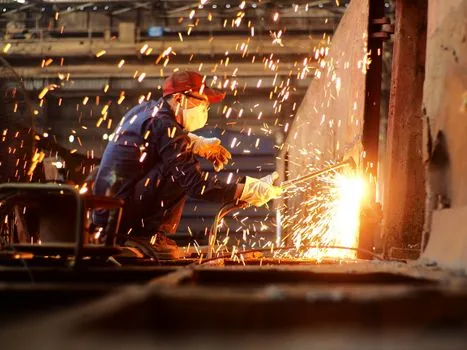
OSHA rules, the European Machinery Directive, and ISO 21500 laser safety standards force stricter handling practices for Class 3B and Class 4 industrial lasers, pushing integrators and plant managers to invest in compliant operating procedures and safer deployment [S4]. For inline profiling, marking traceability, and cleanliness verification in laser cells, the laser profiler and laser displacement sensor references define the resolution and stand-off ranges a typical cell must hit before a brand is shortlisted.
Comparable Vendor Matrix for 2026 Shortlisting
A practical shortlist matrix for 2026 procurement lines up the main options against four decision criteria: technology fit, regional service coverage, price band, and high-utilization endurance [S2][S5].
IPG Photonics scores high on technology fit (broadest fiber power range) and endurance (>2,000 hr/yr economics), moderate on price (15–30% premium), and strong on global service [S2][S3]. Trumpf scores high on cutting-system integration and European service, moderate on price, and high on automotive-qualified endurance [S1][S5]. Han's Laser scores high on price competitiveness and Asia-Pacific service, moderate on technology fit for advanced materials, and moderate on high-utilization endurance [S1][S2]. Bystronic and AMADA score high on sheet-metal workflow integration, moderate on price, and high on regional service in their home markets [S5]. Chinese challengers Raycus, Maxphotonics, and JPT score high on price, moderate on technology fit, and lower on global service coverage outside China [S2][S3].
Trackable Signals and Verifiable Next Nodes
Watch IPG Photonics' quarterly revenue mix between high-power fiber (cutting/welding) and mid-power (marking/cleaning) through Q4 2026 reports; shifts in that mix indicate where the 18–22% margin compression in mid-power Chinese-competed bands is being absorbed [S2][S3]. Track SEMI's fab construction pipeline: 18 new semiconductor fabs were expected to begin construction in 2025, with 15 new 300 mm facilities set to begin operating between 2026 and 2027, and each commissioning event is a discrete procurement signal for ultrafast wafer-dicing and traceability-marking laser systems [S5]. For 2026–2027 sourcing decisions, cross-reference the sourcing playbook for industrial gearboxes from China when qualifying Chinese laser-system OEMs, and check the arc welding spec gates for concrete work for adjacent high-power welding process context.