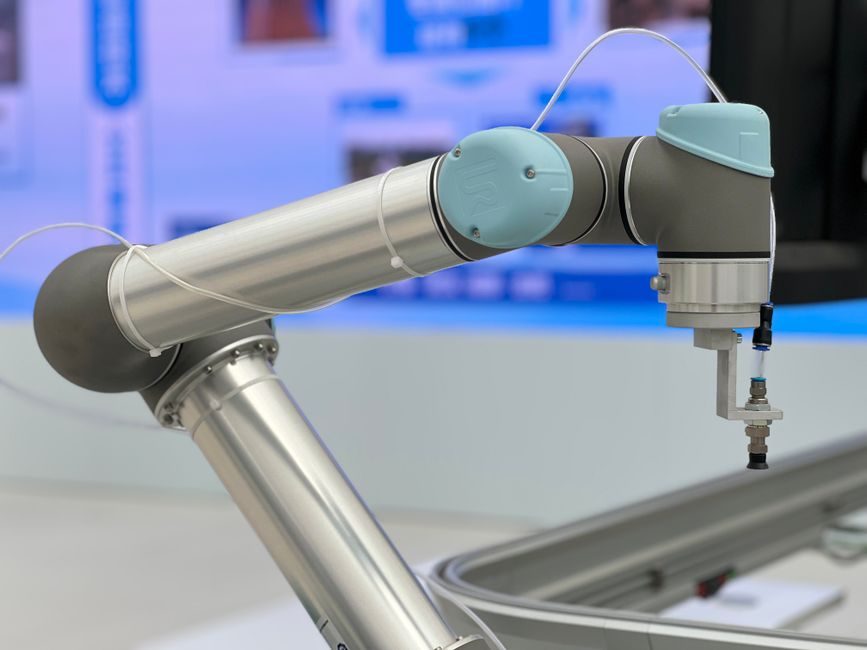
Epson's industrial robot line has supplied discrete manufacturers for more than 40 years, with current offerings positioned for high-precision assembly, dispensing, and material handling tasks across electronics, automotive, and medical OEM lines [S1].
SanCoo Technology, established in 2003, lists 40+ professional engineers, 30+ patents, and 60+ served countries, building dedicated cells for breathing-mask and ventilator-accessory production, semiconductor wafer cutting, and automotive shark-fin antenna lines [S2].
Payload, Reach, and Repeatability: The Three Numbers That Decide a Cell
General-purpose 6-axis cells in the 2026 mid-tier cluster around 20 kg payload with arm spans of roughly 1,900 mm; one representative 1921 mm / 20 kg specification covers welding, spraying, machine-tool tending, sorting, and light assembly within a single envelope [S5]. Repeatability for this class typically sits at ±0.05 mm, though vendor datasheets vary and buyers should request the ISO 9283 test report rather than a brochure figure.
Reach dictates cell footprint: sub-1,000 mm arms fit tabletop electronics work, 1,500-2,000 mm arms cover machine-tending of standard CNC envelopes, and 2,500+ mm arms are reserved for automotive-body or large-format palletizing. The linear guide inside each axis is the dominant wear component in high-cycle cells, and its maker (NSK, THK, Hiwin) often limits MTBF more than the arm's own castings.
Modular Wiring, Dual Safety Circuits, and the ABB Layout Influence
The mid-tier cell referenced above explicitly uses Italian-design mechanical and circuit architecture and adopts ABB wiring-layout conventions in the robot body, with a modular harness that simplifies field service and a double safety circuit (typically dual-channel STO per IEC 61800-5-2) to satisfy Category 3 / PL d stops [S5].
Modular wiring cuts mean-time-to-repair because each sub-harness can be swapped without disturbing the dress pack; buyers should still confirm connector IP rating (IP67 minimum for shop-floor cells) and bend radius for the dress chain. For higher-risk cells such as collaborative welding, a crossed-roller guide on the wrist axis is often specified over a standard slide because of its higher moment stiffness under offset loads.
Vendor Tiering: 40-Year Specialists vs High-Tech Custom Builders

Epson positions itself as a 40-year precision-automation specialist for cost, quality, and throughput programs, with direct contact channels for application engineering on each cell [S1]. SanCoo operates as a custom high-tech enterprise focused on dedicated turnkey lines rather than catalog arms, particularly in medical disposables and semiconductor back-end [S2].
Chaifu Global markets itself on the slogan "One Team, One Robot, Infinite Possibilities" and traces a development logic from reducer to body, reflecting a vertical-integration strategy that mirrors domestic Chinese OEMs but with explicit R&D investment in the RV reducer stack [S4]. For global spec-driven buyers, the practical question is not which tier is best but which cell vendor carries the right combination of cycle-time warranty, regional service footprint, and openness to third-party vision and PLC stacks; for unrelated 2026 selection criteria, see Heat detector vs gas detector: hazard class, sensing principle, and EN 54 / ATEX.
Cell Type Comparison: 6-Axis Modular vs SCARA vs Custom Turnkey
Three cell archetypes dominate 2026 discrete manufacturing: the 6-axis modular arm (20 kg class, 1921 mm reach, dual safety circuit, Italian mechanical design), the SCARA (typically 3-6 kg, 400-700 mm reach, cycle times under 0.3 s for pick-and-place), and the custom turnkey line (medical, semiconductor, automotive) where the "robot" is one station inside a larger indexed line. [S5]
Decision matrix: (1) Payload need — under 6 kg favors SCARA, 6-20 kg favors 6-axis modular, over 20 kg pushes to heavy-payload 6-axis; (2) Cycle time — SCARA wins in pure pick-and-place, 6-axis wins in multi-pose welding or tending; (3) Footprint — SCARA cells are 30-50% smaller; (4) Cell cost — a 20 kg 6-axis module lists in the $35,000-55,000 range, SCARA typically 40-60% of that, while a custom turnkey line runs $250,000 to several million depending on indexing stations. For buyers building a wider plant spec map, CNC Controller Supply Chain 2026: PC-Based, Asian OEM, Industrial Tiers pairs naturally with the cell-level control architecture.
Standards, Safety, and Integration Risk
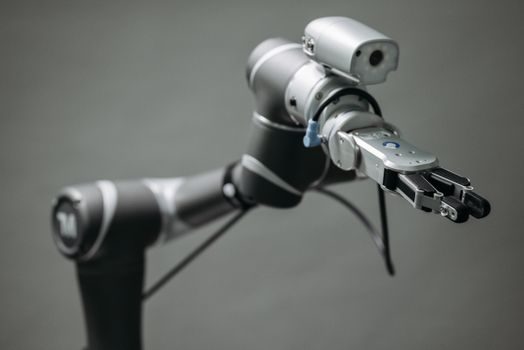
Robotic cells in 2026 are governed by ISO 10218-1/-2 (robot and integrated cell safety), ISO/TS 15066 (collaborative operation limits), IEC 61800-5-2 (drives safety functions including STO, SS1, SS2), and ISO 9283 (performance criteria including repeatability and path accuracy). Buyers should request the vendor's declaration of conformity for ISO 10218-1, not just a CE mark on the cabinet. [S4]
Common integration pitfalls include undersized cable carriers on the dress pack, mismatched fieldbus (EtherCAT vs PROFINET vs Ethernet/IP) between robot controller and the host PLC, and inadequate grounding for welding cells. The industrial adhesive used to bond cable-tray fixtures to cell frames is a frequent failure point in high-vibration cells; spec anaerobic or two-part acrylic rather than generic cyanoacrylate. For deeper quality-standards mapping, Robotics manufacturing quality standards: spec map, gaps, and buyer criteria provides a complementary buyer-side checklist.
Service, Sourcing Channels, and 2026 Lead-Time Signals
HowToRobot and Lexicon Tech Solutions both appeared in 2026 manufacturing trade coverage as accelerated-sourcing and laser-etching automation channels, signalling a broader move toward broker-mediated robot sourcing in North America and Europe [S3]. The same coverage notes UK spirits producers and airport-baggage operators adopting robotics in response to labour and tariff pressure, indicating that 2026 demand has widened well beyond traditional automotive cells [S3].
Trackable signals for the next 6-12 months: (1) RV reducer capacity announcements from Chinese OEMs, since reducer supply remains the bottleneck for the 6-20 kg class; (2) EU Machinery Regulation 2023/1230 transition deadlines, which replace the 2006/42/EC directive and tighten cell-level documentation; (3) delivery lead times for 20 kg 6-axis arms, currently running 12-20 weeks through most brokers. The industrial borescope remains a relevant tool for inspecting dress-pack wear during routine PM on high-cycle cells.