
The DirectIndustry industrial-robot category lists 40 robot-software vendors and 74 application-robot manufacturers [S1][S4], while ceiling-mount listings alone show ABB, FANUC, ESTUN, Efort, EPSON, COMAU and ADTECH all running parallel 4-axis to 6-axis product lines [S3]. Buyers comparing articulated, SCARA, collaborative and ceiling-mounted robots in June 2026 will find the European tier (ABB, COMAU, DENSO) and Japanese tier (FANUC, Panasonic, NACHI-FUJIKOSHI) still holding the spec sheets, with Chinese suppliers now filling price-sensitive palletizing and pick-and-place slots.
Application breadth is the first filter: DirectIndustry's applications-robot index carries 266 products across 74 companies, with CMA Robotics S.p.A., DANOBATGROUP, ENARD Automation and COBOT ONE each publishing application-specific lines rather than generic arms [S4]. For coating, painting, welding and palletizing tasks, vendor specialisation matters as much as payload, and the ceiling-mount sub-index lists 32 FANUC Europe products, 21 ESTUN units and 18 Efort Systems units alone [S3]. This is also a useful preview of the broader Robotics Suppliers and Manufacturers: 2026 Sourcing Map for any spec engineer building a shortlist.
Category-by-Category Manufacturer Count, June 2026
The DirectIndustry manufacturer directory shows clear concentration at the top of each robot category: robot-software lists 40 manufacturers with 57 products, applications-robot lists 74 manufacturers with 266 products, and ceiling-mounted robot lists a heavy SKU spread per vendor (FANUC 32, ESTUN 21, Efort 18, COMAU 13) [S1][S3][S4]. Panasonic Industrial, Robot & Welding exposes 42 products on its DirectIndustry storefront, with conductive-film variants documented at 50 µm thickness and 0–580 mm width envelopes [S2]. The same DirectIndustry search results show ABB Robotics, DENSO Robotics Europe, ADTECH (Shenzhen), FAIRINO and EPSON Robotic Solutions all carrying entries across multiple robot categories [S1][S3][S4]. For general industrial automation components, readers can also reference the industrial coating page when the robot task involves surface finishing or paint lines.
Chinese Suppliers: Pricing Tiers and Product Spread
Alibaba's industrial-robot-sensor supplier index (April 2026) shows Asia at roughly 30% of regional distribution, Eastern Europe 10% and North America 10%, with multiple Chinese suppliers listing 6-axis robotic arms, welding arms and pick-and-place arms under US$1 million total revenue [S5]. Made-in-China lists a 10–25 kg palletizer cobot from ZMDE Co., Ltd at US$ 9,000–11,000 per piece and a separate palletizing line at US$ 37,142–44,700 per piece (MOQ 1) from a Shandong Diamond Member, plus a US$ 3,400–3,800 per piece (MOQ 1) entry from Shandong UMW Technology Co., Ltd [S7]. VEICHI's own catalogue (June 2026) breaks its range into SCARA, collaborative and articulated robots, with the RB200 planetary joint module as a published sub-assembly [S6]. This pricing structure is also why the AMR Price and Cost Guide 2026: Payload, Navigation and Battery Levers is a useful cross-reference when mobile robots share a project budget with fixed arms.
Selection Criteria: Payload, Reach, Mount and Control
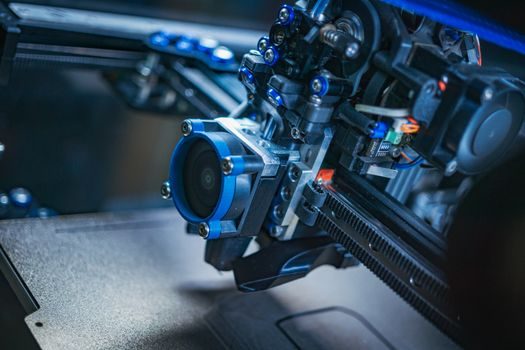
Selection for industrial robots in 2026 still hinges on four criteria: payload (kg), reach (mm), repeatability (mm or arcsec at the wrist), and controller openness. VEICHI publishes an articulated/SCARA/cobot split explicitly aligned to task type rather than price [S6]. For ceiling-mounted cells, the DirectIndustry ceiling-mount index is a reliable proxy for which vendors actually maintain a top-mount product line — FANUC Europe (32 products), ESTUN (21), Efort (18), COMAU (13), EPSON Robotic Solutions (11) and FAIRINO (9) all clear that bar [S3]. Welding-class robots show up in CMA Robotics S.p.A. (8), CLOOS (2) and Panasonic Industrial, Robot & Welding listings [S1][S3]. For the reducer side of the drivetrain, the Harmonic Drive Reducer Selection Criteria: Ratio, Backlash, Torque and Frame guide maps onto the same 6-axis and SCARA selection workflow. Buyers in 2026 should treat ceiling-mount, collaborative and palletizing as separate spec tables, not one shared shortlist.
Options Comparison: Articulated, SCARA, Collaborative, Ceiling-Mount
Across the DirectIndustry 2026 indexes, the four dominant form factors break down by typical task and vendor count as follows: articulated 6-axis (FANUC, ABB, COMAU, ESTUN, Efort, NACHI, ADTECH, FAIRINO, ARCBRO, Borunte) is the widest supplier pool and is used for welding, painting, palletizing and machine tending; SCARA (EPSON, ADTECH, FAIRINO) is the canonical high-speed pick-and-place form, with EPSON Robotic Solutions listing 11 ceiling-mount SKUs that overlap into the SCARA envelope [S3][S4]; collaborative / cobot (COBOT ONE, FAIRINO, ZMDE palletizing cobot at 10–25 kg) is the lowest-payload, highest-mix slot and is also where Chinese pricing enters at the US$ 3,400–44,700 band [S4][S7]; ceiling-mounted (FANUC Europe 32, ESTUN 21, Efort 18, COMAU 13, EPSON Robotic Solutions 11, FAIRINO 9, CMA Robotics 8) is a recognised sub-category with its own DirectIndustry filter [S3]. For drivetrain cost breakdown on the reducers feeding these joints, the Cycloidal Reducer 2026 Price and Cost Guide: Ratio, Frame, Vendor Tier is the natural next read.
Standards, Sourcing Limits and Failure Modes
Industrial-robot sourcing in 2026 still runs through the same four buyer-side gates: ISO 9283 for pose/accuracy/repeatability verification, ISO 10218-1/-2 for safety requirements on industrial robots and robot systems, ISO/TS 15066 for collaborative robot guidance, and ISO 13849-1 for the safety-related parts of control systems. Functional-safety and risk-assessment conformance is the gating issue on every cross-border quotation, and the DirectIndustry 2026 listings do not publish a unified certification matrix — that has to be pulled from each vendor's datasheet. Failure modes to weight on a 2026 shortlist: encoder drift on harmonic-driven joints, cable-chain fatigue on ceiling-mount units, and payload-overrun trips on cobots running near their 10–25 kg limit (the band published by ZMDE on Made-in-China) [S7]. For the upstream electronics side of a robotic cell, the PCB Manufacturing Process 2026: Step Map, Materials, and Spec Gates walkthrough is a useful reference.
Who the 2026 Industrial-Robot Market Is For, and Who It Is Not
The 2026 industrial-robot vendor landscape is for buyers who can write a spec sheet before they contact sales: payload in kg, reach in mm, repeatability in mm, mounting class (floor / ceiling / wall), controller fieldbus (EtherCAT, PROFINET, EtherNet/IP), and required safety category. If the spec is just "we need a robot arm" the Alibaba index is the right starting point, and Chinese suppliers dominate that tier (Asia 30%, North America 10% regional split on the industrial-robot-sensor listing) [S5]. The market is not for buyers who need a turnkey 25 kg cobot shipped in two weeks: lead times on ABB, FANUC and COMAU articulated units in 2026 still run longer than consumer-grade imports, and a project budget below the VEICHI articulated class [S6] is unlikely to clear a European vendor MOQ. Buyers building a heavier automation envelope around the robot cell — furnace, foundry, PCB, induction heating — should also pull in the Induction Furnace 2026 Buying Guide: Power, Capacity, Price and Selection Gates for the upstream process line.
Trackable signals over the next reporting window: revised ISO 10218 and ISO/TS 15066 amendment drafts expected through 2026 (publication dates not yet pinned in the research material), continued SKU expansion by ESTUN and Efort on the ceiling-mount index beyond their current 21 and 18 products [S3], and a Made-in-China palletizing-cobot price band that is already sub-US$ 11,000 per piece at the 10–25 kg payload class [S7]. Engineers building a 2027 capex shortlist should re-pull the DirectIndustry category counts in the next cycle, since the per-vendor SKU count is the cleanest leading indicator of which lines each OEM is actively investing in.
For component-level specifications, see industrial adhesive, and industrial borescope.