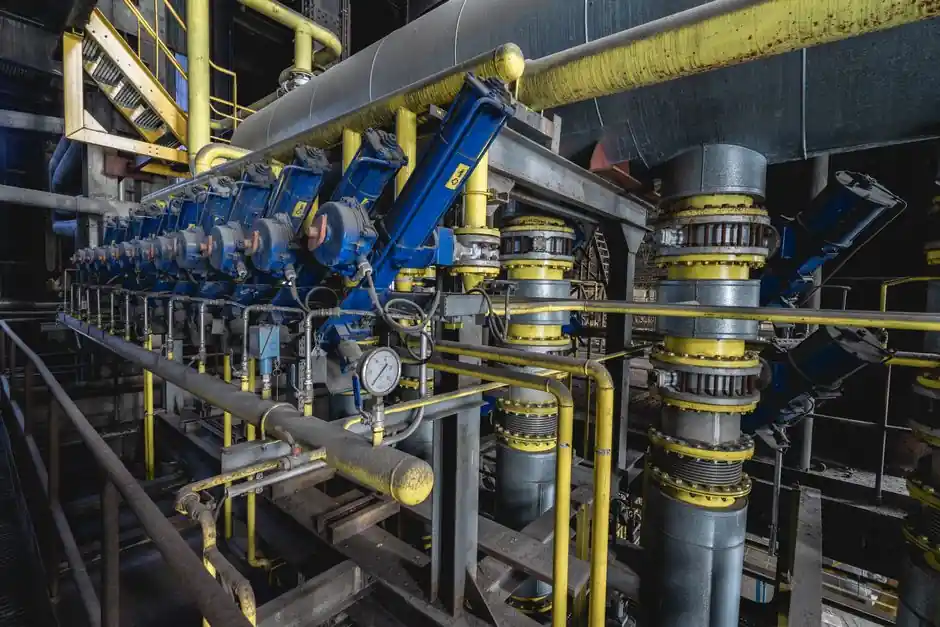
Industry 4.0 is now the dominant demand catalyst across valve sub-segments, with the Europe industrial valve market valued at US$ 17,974.2 million in 2025 and projected to reach US$ 26,494.0 million by 2034, a 4.4% CAGR from 2026 to 2034 [S1]. The control valve slice inside that market is forecast to grow faster, at a 5.0% CAGR over the same window, because it sits closest to the closed-loop digital control layer that Industry 4.0 architectures demand [S1]. Parallel sub-segments tell the same story: the global solenoid valve market moves from US$ 4.10 billion in 2025 to US$ 5.59 billion by 2034 (3.5% CAGR) on industrial automation, while proportional valve demand tracks smart-factory build-outs [S3][S4].
Three forces are colliding: the installed base of connected devices crossed 13 billion units in 2023, the global stock of operational industrial robots hit 3.9 million units in 2022 with roughly 10% annual growth, and electricity demand from data centers is forecast to grow around 15% annually from 2024 to 2030 [S3]. Each of those numbers pulls valve specification toward sensors, digital protocols, and remote diagnostics rather than purely mechanical trim.
What "smart valve" actually means in 2026 specs
A smart valve is any valve assembly that exposes its position, torque, seat load, or process condition to a supervisory system without manual inspection, typically via an integrated positioner, a non-contact position sensor, or a wired/wireless communication module layered on top of a conventional body and actuator [S1]. The four functional capabilities credited to these assemblies in vendor and analyst literature are real-time monitoring, automated control, predictive maintenance scheduling, and efficient resource management, all feeding a central control system [S1]. In solenoid and proportional variants, the digital layer is even more granular: PLC and SCADA interfacing is now baseline rather than optional, and on/off control is being replaced by data-driven flow management loops [S3][S4].
The practical spec delta from a conventional valve is therefore not in the pressure-temperature body rating (those still follow ASME B16.34, API 6D, or ISO 5208 envelopes depending on service) but in three add-on layers: a sensing stack (position, pressure, temperature, vibration, acoustic emission), a communications stack (4-20 mA + HART, IO-Link, wirelessHART, Ethernet-APL, OPC UA, or vendor-proprietary bus), and a software stack (edge analytics, asset-management dashboards, anomaly detection). For specifiers, the procurement question is no longer "which body class" but "which of these three stacks does the plant's control system actually consume." [S1][S3]
Sub-segment comparison: where Industry 4.0 spending is concentrated
The four tracked sub-segments behave differently because the underlying control physics differ. Control valves lead the European market at a 5.0% CAGR because they already host positioners and are the natural home for closed-loop digital trim upgrades [S1]. Class 150 valves outpace the overall market at 5.4% CAGR (2026 to 2034), reflecting replacement-cycle volume in water, HVAC, and lower-pressure process lines rather than high-pressure critical service [S1]. Up to 5-inch valves grow at 4.6% CAGR, the same replacement-and-retrofit theme, while oil and gas, despite its installed base, is the slowest end-market slice at 3.0% CAGR over the same window [S1].
Solenoid and proportional valves follow a different curve: the solenoid segment is a 3.5% CAGR volume play (US$ 4.24 billion in 2026 to US$ 5.59 billion in 2034) driven by automotive, healthcare, and water-treatment automation [S3]. Proportional valves, which are inherently more compatible with closed-loop electronic control, are pulled harder by smart-factory build-outs and electronics-intensive sectors [S4]. The selection rule of thumb is therefore: choose proportional where flow must vary continuously with a process variable; choose solenoid where binary on/off is acceptable and cycle life dominates cost; choose smart control valves where the existing positioner can be replaced with a digital positioner and the plant already runs a modern DCS.
Enabling stack: sensors, protocols, edge, and analytics
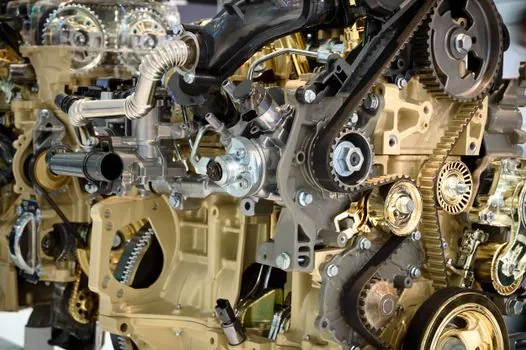
Industry 4.0 valve retrofits lean on a small set of enabling technologies. Position feedback has moved from mechanical limit switches to non-contact Hall-effect, inductive, or magnetostrictive sensors that survive higher cycle rates and report partial-stroke data for diagnostic trending [S1][S3]. Communications follow the same layering seen elsewhere in process automation: 4-20 mA + HART remains the workhorse for brownfield loops, while greenfield builds adopt Ethernet-APL, IO-Link, or OPC UA over industrial Ethernet for richer data exchange [S1]. For comparison context on industrial Ethernet switch selection, the 2026 industrial Ethernet switch spec map covers the network side of the same data path.
On the software side, edge analytics inside the valve assembly or its positioner now performs partial-stroke testing, friction analysis, and pneumatic-supply health checks, then publishes results to the plant's asset management system. This is the data layer that converts a connected valve into a "smart" valve in the analyst sense [S1]. For a parallel view of how the operator-facing visualization layer is being spec'd, the industrial display vs SCADA spec map lays out the HMI trade-offs on the downstream side of the same control loop.
Plant-side drivers and quantified demand pull
Two end-market numbers explain why retrofit demand is outpacing greenfield. The IEA reports that connected devices featuring automated controls reached 13 billion units in 2023, and global industrial-robot stock reached 3.9 million units in 2022 with around 10% annual growth, each of which requires a proportional or solenoid valve in the pneumatic or hydraulic circuit [S3]. Data center electricity demand growing at roughly 15% annually from 2024 to 2030 feeds cooling-system valve demand and pulls forward specification of electronically controlled, monitored valves in HVAC and process-cooling loops [S3]. On the European replacement side, Germany is the single largest country market within the Europe industrial valve report and is projected at a 3.9% CAGR through 2034 [S1].
For process plants, the practical implication is that valve replacement budgets are increasingly justified by predicted rather than reactive maintenance. The Europe market report cites predictive maintenance as one of the four explicit value propositions of Industry 4.0 valve integration, alongside real-time monitoring, automated control, and efficient resource management [S1]. The same shift is visible in the industrial pump Industry 4.0 spec and 2026 reality check, where the rotating-equipment side of the same plant faces the same digitalization curve.
Vendor moves and product evidence from 2025 to 2026

OEMs are anchoring Industry 4.0 around service-harsh applications. In February 2025, Emerson introduced the Anderson Greenwood Type 84 Pressure Relief Valve for hydrogen and high-pressure gas service, using Arlon 3000XT thermoplastic seating and ASME SA-479 Type S21800 stainless steel spindle material for hydrogen-embrittlement resistance [S1]. In January 2025, Emerson partnered with Laramie Energy on zero-emissions electric dump valves for separators and scrubbers, framed as the only all-electric solution in that duty class, an explicit Industry 4.0-compatible replacement for pneumatic-actuated dump valves [S1]. The named European market players in the same report include Emerson Electric, SLB, Spirax Group, Circor International, Flowserve, Velan, Weir Group, Crane Co., Neway Valve, and KITZ Corporation [S1].
On the proportional and solenoid side, the same driver pattern holds: manufacturers are explicitly building sensors and real-time monitoring into new product platforms to capture the smart-factory build-out [S3][S4]. For production-side context, the 2026 industrial valve production capacity and throughput map and the API 6D / ASME B16.34 / ISO 5208 procurement map cover the body-side standards and capacity math behind those connected trim packages. An adjacent view into the industrial valve quality standards procurement map is the natural reference for the body rating under the smart trim.
Limitations and failure modes of Industry 4.0 valve retrofits
The Europe market report is direct that "maintenance and operational complexity" is a headwind for adoption, not a footnote [S1]. In practice, three failure modes recur: (1) sensor or positioner electronics fail before the mechanical body does, lengthening mean-time-to-repair because troubleshooting now spans instrumentation technicians rather than only mechanical fitters; (2) brownfield protocol mismatch forces costly gateways when existing DCS or PLC hardware cannot consume the new valve's native bus, especially for plants that standardized on legacy fieldbus years ago; and (3) cybersecurity scope expands, because every connected valve becomes a node on the plant network, with firmware-update and patch-management obligations. The specifier's defence is to demand open protocols (HART, IO-Link, OPC UA), vendor-published MTBF for the electronics package separately from the body, and a documented cybersecurity posture before approving a smart-valve retrofit on a safety-instrumented-function loop.
Standards, sourcing, and where the numbers come from

Body-side ratings in this segment continue to follow established pressure-temperature and quality standards: ASME B16.34 for valve design and testing, API 6D for pipeline valves, and ISO 5208 for production pressure testing, with API 600 / API 602 covering specific gate and globe sub-classes depending on service. The Europe industrial valve forecast is from The Insight Partners, published 2026-07-28, with the market base year of 2025 and the 2034 forecast year [S1]. The solenoid valve baseline (US$ 4.10 billion in 2025, US$ 4.24 billion in 2026, US$ 5.59 billion in 2034, 3.5% CAGR) is from Market Data Forecast, published 2026-07-01 [S3]. The proportional valve qualitative driver is from Business Research Insights, published 2026-07-20 [S4]. The connected-device, industrial-robot, and data-center figures cited for context are quoted in the solenoid market report and are attributed to the IEA and the International Federation of Robotics [S3]. Two signals worth tracking over the next two quarters: the share of new European control-valve shipments shipped with embedded Ethernet-APL or OPC UA, and the proportion of solenoid-valve orders placed with IO-Link or wirelessHART interfaces rather than plain DIN-connector coils. Either ratio crossing 25% would mark the point at which "smart" stops being a premium option and becomes the default specification.
For component-level specifications, see industrial valve, industrial adhesive, and industrial borescope.