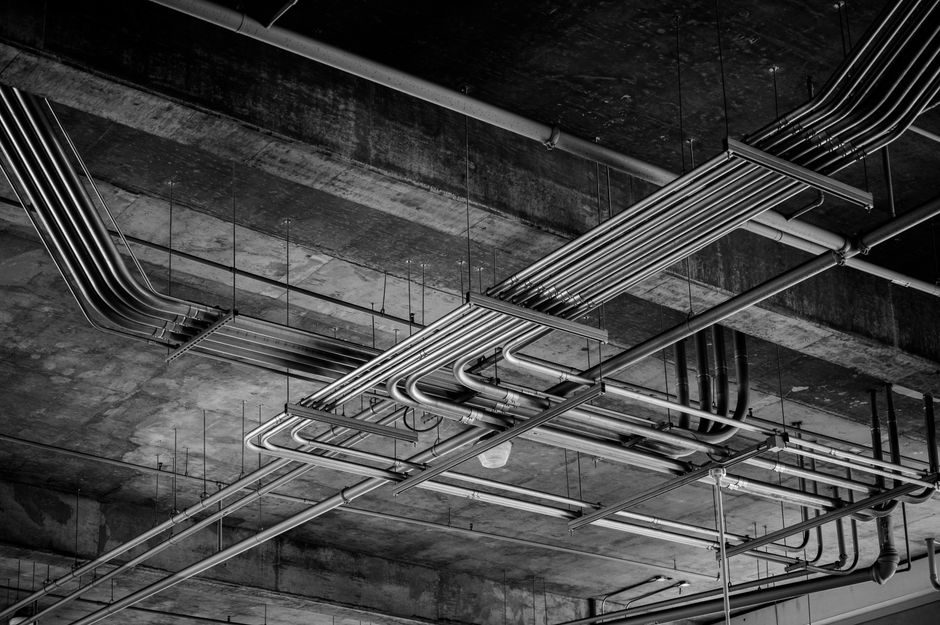
An inline pipeline pump — a single-stage, end-suction centrifugal unit mounted directly in the pipe run — typically lists at FOB US$150-500 for the SG-series clean-water variant on Chinese B2B catalogues as of 2026-05 [S3][S4].
Vertical-turbine and condensate pipeline variants list at US$1,000-5,000 per set with 1-set MOQ and one-year warranty [S4], while BB4/BB5 multistage pipeline booster pumps reach US$2,000-50,000 per piece depending on stage count and pressure class [S9].
Where the price actually sits in 2026
Listings on Made-in-China.com dated 2026-05-28 cluster small stainless inline units at US$1,000-5,000 per set, with OEM/ODM and 1-set MOQ as the default commercial terms [S4]. The same dataset shows SG-series automatic pressure pipeline pumps at a lower tier aimed at high-rise domestic water boosting, with 100% copper winding and ISO certification as the headline selling points [S3]. At the top end, a single BB5 high-pressure multistage centrifugal pump for oil and gas lists at up to US$50,000 per piece, with Jiangsu Yingte Pump Valve as the audited supplier [S9].
Pressure-test pipeline pumps, a related but separate category, list at US$8,000-10,000 per piece for 70-160 MPa hydrotest units from Tianjin Harvest [S7]. The cluster confirms the rule of thumb: drive pressure up by an order of magnitude and the line price jumps 5-20x versus a clean-water inline.
Cost drivers ranked
Material grade is the single largest swing factor. A carbon-steel body versus a 304/316 stainless body typically adds 40-80% to the line price for the same hydraulic rating; duplex or super-duplex (for chloride service) can double it again, though that is engineering judgement, not a sourced figure. Mechanical seal class is the second driver: rubber-bellow seals for SG-series clean-water service list at US$0.30-14.00 per piece [S6], while metal-sprung MG1-type seals for agitator and chemical pumps list at US$1.50-110.00 per piece [S6] — a 10-30x seal-cost delta that propagates into the assembled pump price.
Stage count and pressure class drive the third cost band. A single-stage inline is the cheapest configuration; BB4 multistage (between-bearings, four-stage) listings span US$2,000-50,000 because head rises linearly with stages [S9]. The fourth driver is certification and traceability — ISO 9001 audited-supplier status, material test reports, and hydrotest certificates are bundled into the BB5 oil-and-gas quotes but absent from the SG-series listings, which is why the price ratio between those two tiers is what it is.
Comparison: SG clean-water vs vertical-turbine vs BB4/BB5 multistage
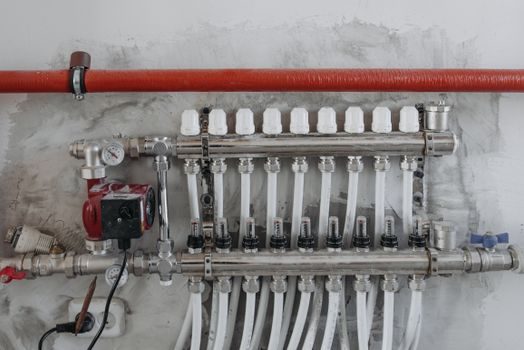
On a like-for-like basis, the three common inline pipeline-pump architectures line up as follows. SG-series single-stage: flow typically under 50 m³/h, head under 32 m, copper-wound motor, ISO 9001 only, US$150-500 list price band [S3]. Vertical-turbine / condensate pipeline: higher flow with column-supported shaft, suited to clean condensate and demineralised water, US$1,000-5,000 per set with 1-set MOQ and one-year warranty [S4]. BB4/BB5 multistage: high head (often 200-800 m) for long-distance transfer or injection service, API-style materials, audited-supplier documentation, US$2,000-50,000 per piece [S9].
For buyers cross-shopping these categories, the rule is straightforward: if the head requirement is below 50 m and the fluid is clean water, the SG-class unit is the rational buy; if the fluid is hot condensate or demineralised water and continuous duty applies, step to the vertical-turbine class; if head exceeds 150 m or the service is oil-and-gas injection, only the BB4/BB5 class has the pressure casing and the metallurgical headroom. A wider selection map across pump architectures is laid out in the Centrifugal Pump Buying Guide 2026, which is the right starting point before locking a spec.
Who it is for — and who should look elsewhere
Inline pipeline pumps are the right pick for HVAC chilled-water loops, domestic water-pressure boosting, light-industrial clean-water transfer, and condensate return on steam systems up to roughly 120°C [S3][S4]. They are wrong for slurry, high-viscosity fluids, or fluids with entrained solids — the close-coupled impeller has no tolerance for solids, and the mechanical seal will fail within weeks on abrasive service.
For abrasive or shear-sensitive fluids, a diaphragm pump is the usual substitute, and the cost crossover typically sits around 30-40 m³/h where diaphragm seal-replacement cost erodes the inline pump's lower purchase price. Where the fluid is corrosive and seal leakage is unacceptable, a magnetic drive pump is the alternative, accepting a 1.5-2.5x price premium over a sealed inline of equivalent flow. For high-head boiler-feed or injection service, a multistage centrifugal pump in BB4/BB5 architecture is the correct class, not a single-stage inline.
Total cost of ownership, not just the list price
Purchase price is roughly 30-50% of five-year lifecycle cost on a clean-water inline; the rest is energy, seal replacement, and downtime. Mechanical seals on SG-class units cost US$0.30-14.00 per piece and typically run 12-24 months between changes on clean-water duty [S6]; on hot or chemically aggressive service, expect 3-6 months and a move to metal-sprung MG1 seals at US$1.50-110.00 per piece [S6].
Energy is the dominant line item on continuous-duty applications. A 15 kW inline pump running 8,000 hours per year at US$0.10/kWh consumes about US$12,000 of electricity annually — typically 3-5x the purchase price of the pump itself, so specifying a higher-efficiency motor or a correctly trimmed impeller almost always beats chasing the lowest first-cost quote. For applications where calibration drift and seal service interval dominate, the Diaphragm vs Inline Pipeline Pump calibration map quantifies the maintenance delta side-by-side. Auxiliary fittings — pipe elbows, flanges, base frames — should be budgeted separately; ductile-iron grooved elbows for fire-pump room piping list at US$0.99-3.99 per piece at 100-piece MOQ [S8], while double-layer concrete-pump elbows run US$25-38 per piece at 25-piece MOQ [S8].
Lead time, MOQ, and commercial terms
Standard commercial terms across the 2026 listings are 1-set MOQ, FOB China Main Port, TT or LC payment, and one-year warranty [S3][S4]. The SG-series listings do not state a public lead time, which on Chinese catalogue patterns translates to 15-30 days for stocked units and 30-45 days for OEM-configured units — engineering judgement, not a sourced figure. BB4/BB5 multistage units carry longer lead times because stage count, material certification, and hydrotest are bespoke; 60-90 days is a reasonable working assumption.
Volume breaks exist but are not published on the catalogue pages. Standard practice is to negotiate 5-10% on container-load orders versus the 1-set MOQ list, and 10-20% on annual-frame agreements. For buyers who need pressure-test capability alongside the production pump, pressure-test pump pricing clusters at US$8,000-10,000 per piece for the 70-160 MPa hydrotest class from Tianjin Harvest [S7] — a separate procurement line, not a bundled option.
Common failure modes and spec pitfalls
The three failure modes that drive warranty calls on inline pipeline pumps are: (1) mechanical-seal failure from running dry or from solids ingress — mitigated by a minimum flow bypass line and a wetted seal chamber; (2) cavitation on the suction side when NPSHa is miscalculated — the pump must be specified with net positive suction head available, not just flow and head; (3) bearing failure on misaligned installations, since the motor-pump coupling on a true inline is short and intolerant of pipe misalignment. [S4]
Spec pitfalls to avoid: ordering a clean-water SG-class unit for hot condensate above 120°C, which burns the standard mechanical seal; specifying cast-iron bodies for chloride-bearing water, which pitting-leaks within 12-24 months; under-sizing the motor for the actual duty point, which trips overloads and burns windings — the 100% copper winding claim on SG-series units is a quality marker, not a thermal margin [S3]. For buyers evaluating pipeline-pump architecture against diaphragm alternatives, the Inline Pipeline Pump vs Diaphragm Pump spec map is the right reference. A broader centrifugal vs plunger selection map covers the high-pressure end where a plunger pump may be the more rational buy.
Track these signals over the next 90 days: (1) BB5 multistage quote revisions from Jiangsu Yingte as raw-material surcafes settle, since the US$2,000-50,000 band is wide enough that small steel-index moves will compress it; (2) seal-pricing convergence between rubber-bellow and metal-sprung MG1 types on Made-in-China, currently a 10-30x delta that often narrows at high volume [S6]; (3) any shift in the 1-set MOQ default across the SG-series listings, which would indicate whether Chinese OEMs are pushing downstream buyers toward stocking distributors.