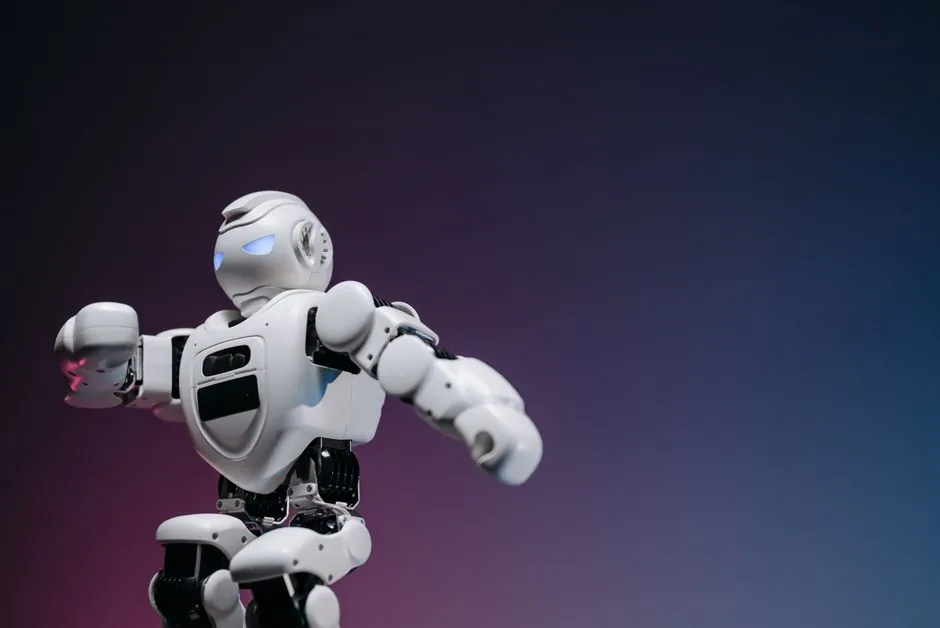
ISO 10218-1:2025 and ISO 10218-2:2025 superseded the 2011 editions in March 2025 after roughly eight years of drafting by subject-matter experts from more than 20 countries under ISO TC 299 WG 3 [S4]. Part 1 addresses manufacturers of industrial robots; Part 2 governs system integrators building robot applications and cells, a split that puts most of the new technical burden directly on the integrator [S4][S7].
For an integrator quoting a collaborative robot cell today, the changes are structural, not editorial: a new two-class taxonomy, a formally defined mobile platform, an embedded ISO/TS 15066, and a Part 2 Appendix C that maps every safety function to an EN ISO 13849 performance level [S3][S5]. Validation evidence that passed review in 2023 is no longer sufficient against the 2025 Annex H expectations [S5].
Two-Class Robot Taxonomy Resets Safety Targets
ISO 10218:2025 introduces Class 1 and Class 2 robot designations to make safety measures proportional to risk, replacing the implicit low-risk treatment scattered through the 2011 text [S3]. Class 1 covers light, slow robots with limited performance and carries reduced safety requirements; Class 2 includes all other industrial robots and inherits the full set of traditional functional-safety obligations [S3][S6]. The split is intended to give manufacturers of lower-power collaborative robot arms a proportionate compliance path while keeping high-payload industrial robot cells under the original rigour [S3].
Integrators cannot choose the class unilaterally, the robot's design parameters as built by the manufacturer set it, but the integrator's risk assessment must reference the class explicitly and tie every safeguard to it [S5][S6]. Where the 2011 document treated most collaborative cases as exceptions under ISO/TS 15066, the 2025 Part 2 absorbs the collaborative-operation requirements directly and pairs them with the new class framework [S3][S5]. A cell built around a small-payload cobot can no longer be justified by generic power-and-force-limiting text, the class must appear in the risk-assessment record.
Mobile Platforms Get Their First Formal Definition
For the first time, the revised standard defines "mobile platform" explicitly, extending the same assessment criteria used for automated guided vehicles to mobile robots and to hybrid or modular systems that move between workstations [S3]. The change closes a gap that mattered in practice, since 2011-era AMR robot deployments were evaluated against a patchwork of ISO 3691-4, vendor guidance, and integrator judgement [S3][S5].
The practical effect for integrators is that any AGV robot or mobile robot that also carries a manipulator arm now has a single normative anchor in ISO 10218-2:2025 for safety functions, rather than a stitched-together compliance file [S3]. Functional-safety requirements that used to be borrowed clause-by-clause from mobile-platform standards are now cited in Part 2, with PL assignments aligned to the same Appendix C table that covers stationary cells [S3][S5].
Appendix C and the EN ISO 13849 Performance-Level Map

Functional-safety requirements in the 2025 revision are reorganized into a structured Appendix C, where each safety function is tagged as mandatory, conditionally required, or optional, and each entry is assigned a specific performance level under EN ISO 13849-1 [S3]. The previous edition left many PL choices to the risk-assessment process; the 2025 structure pushes concrete values into the normative text [S3][S5].
Integrators used to writing a single PL d claim on a stop function now have to populate a matrix of PL values, with evidence of how each maps to the chosen category of stop (controlled, protective, or emergency), to the selected safeguarding device, and to the collaborative operation mode if any [S5]. Per Hartmann et al. (2026), the revision of Clauses 6 and 7 significantly increases the technical burden for integrators because validation now requires rigorous mapping against Annex H, the hazard and verification checklist that previously could be referenced in summary form [S5].
ISO/TS 15066 Is Now Inside Part 2
All collaborative-operation requirements that previously lived in ISO/TS 15066 have been incorporated into ISO 10218-2:2025, so integrators do not need to treat the TS as a separate document for typical cell compliance [S3][S5]. The TS remains valid as a reference in other standards, but for a cobot cell the relevant biomechanical limit values, the power-and-force-limiting calculation method, and the transition between collaborative and non-collaborative operation now sit in one normative file [S3].
Hartmann et al. (2026) describe the move as a "full normative assimilation" that also clarifies the relationship between collaborative-operation modes (power and force limiting, speed and separation monitoring, hand guiding, safety-rated monitored stop) and the new Class 1 designation [S5]. For integrators who quote SCARA robot cells or articulated robot cells that occasionally enter collaborative mode during a teaching step, this means the coexistence of "full-speed fenced" and "collaborative" zones in one cell is now regulated by a single document rather than by two parallel normative threads [S5][S7].
Cybersecurity Becomes a Normative Item, Not a Footnote
Part 2 of the 2025 revision adds explicit cybersecurity requirements covering protection against unauthorized access, manipulation, and data loss in networked robot systems [S3]. The 2011 documents predated the current generation of networked industrial robot fleets and addressed security only obliquely; the 2025 text makes it a normative item tied to the functional-safety review [S3][S5].
For an integrator, that means the validation file for a cell on a plant network must now include threat-model outputs, an access-control policy for teach pendants and controllers, and a record of firmware-update governance alongside the traditional mechanical and electrical-safety evidence [S3][S5]. For deeper cross-vendor review, integrators are also leaning on plain-English summaries of how many of the underlying control components remain on long lead times, as covered in analog and power management IC lead times 2026, because cybersecurity patch cadence is tied to the controller hardware lifecycle.
Integrator Workload Shift: Clauses 6, 7, and Annex H
The comparative review by Hartmann et al. (2026) flags the revision of Clauses 6 and 7 as the single largest workload increase for integrators, with validation now requiring rigorous mapping against Annex H on a per-hazard basis [S5]. Where a 2011-era risk assessment could group hazards by zone, the 2025 framework expects one-to-one traceability between each identified hazard, each selected safeguard, the PL value from Appendix C, and the verification method recorded in Annex H [S5].
Two practical consequences follow. First, the integrator's documentation template must be rewritten before the first 2025 cell goes out the door, or the validation step will repeatedly fail on missing traceability rather than on missing safeguards [S5]. Second, integrators running a mixed fleet of legacy 2011-compliant cells and new 2025-compliant cells will need parallel evidence trails, which has knock-on effects on PLC code conversion tools that translate between safety-controller generations and on the hydraulic EOL test stands used to verify motion envelopes before a cell ships. Both of these adjacent workstreams now need to log against the 2025 evidence template rather than the 2011 one [S5].
Scope Limits and Open Gaps in the 2025 Text
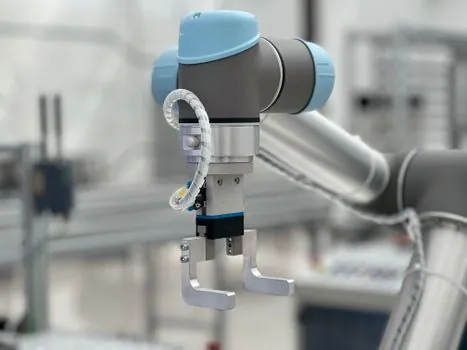
The 2025 revision does not yet regulate AI-driven behaviour, humanoid robots, or mobile manipulation in the same depth as traditional industrial arms; Hartmann et al. (2026) identify these as regulatory gaps that the next amendment cycle will need to close [S5]. Integrators bidding cutting-edge humanoids or AI-vision-guided mobile manipulators should treat ISO 10218-2:2025 as a baseline and add supplementary risk-assessment evidence, not as a complete specification [S5][S6].
Roberta Nelson Shea of Universal Robots, convenor of ISO TC 299 WG 3, framed the revision as bringing "much-needed clarity and structure, making it easier for companies to integrate robotics with confidence" [S4]. That framing is accurate for the bulk of stationary and AGV robot cells, but for humanoids, AI-vision cells, and large mobile manipulators the safety case still has to be built on top of the standard rather than from it [S4][S5]. Trackable signals over the next 6 to 12 months: ISO TC 299 WG 3 working-group meeting outputs on AI and humanoid annexes, the first notified-body interpretations of Appendix C in real audit reports, and the publication of any CEN ratifications of the 2025 EN ISO 10218 series [S3][S4][S5].