Made-in-China listings on 2026-06-04 show industrial-grade isolator switches with CE approval moving at US$29.90-59.90 per piece with a 50-piece MOQ [S2], while 11kV 630A outdoor load-break combination isolators list at US$45.00-65.00 per piece at a 10-piece MOQ [S2].
The spread is driven less by the "switch" name and more by voltage class, current rating, insulator material and certification pack: an indoor 1600A DC PV isolating switch such as the HGL-1600 (Jiangsu Renmin Electric) is sold for infrequent manual on/off in DC distribution, not as a 400V panel-mount rotary [S4]. Buyers comparing invoices should treat the low-voltage rotary and the 11kV outdoor disconnect as two different SKUs that share a name.
Price Bands by Voltage Class and Application
Three price tiers dominate Made-in-China 2026-06 listings for the term "isolating switch / isolator switch" [S2]. The entry tier sits at US$29.90-59.90 per piece MOQ 50 (Zhejiang Meto Electrical, industrial grade, CE-marked) for rotary-style panel-mount isolators used in motor control and machine isolation. The mid-HV tier lands at US$45.00-65.00 per piece MOQ 10 (Zhejiang Fuerte) for 11kV 630A outdoor load-break combination disconnectors with porcelain insulators [S2]. The DC/PV tier — exemplified by the HGL-1600 at 1600A from Jiangsu Renmin Electric — is a separate catalog line intended for photovoltaic DC distribution, not for AC panel building [S4].
For a 10kV-class outdoor porcelain-isolator disconnector like the older HGW9-10kV reference, Chinese domestic-spec pricing is reported in CNY on manufacturer pages rather than the Made-in-China export band [S3]. Practically, a buyer needing a 400V-690V industrial isolator for a motor control center pays for a rotary mechanism and a small footprint, while a substation 11kV buyer pays for porcelain or composite insulators, a visible-break knife and a load-break arc chamber — the price ratio of roughly 1.5-2.2x between those tiers reflects the insulator and mechanism, not the contact set [S2].
Spec Levers That Move the Number
Four levers move the per-piece price more than any others. First, voltage class: stepping from 400V-690V to 11kV multiplies insulator cost roughly linearly with creepage distance, and the Made-in-China spread of US$29.90-65.00 across these two classes shows the visible end of that [S2]. Second, current rating: 1600A frames such as HGL-1600 require larger contact blocks, silver-alloy plating and DC-rated arc chutes, which is why they sit in a separate catalog line and are quoted only on direct RFQ, not on entry-tier listing pages [S4]. Third, insulator material: porcelain insulators (Zhejiang Fuerte's 11kV line) cost less than silicone-composite equivalents at the same voltage but weigh more — relevant when the buyer pays for sea-freight by kilogram [S2]. Fourth, certification: a CE-marked industrial unit (Meto) lists in the US$29.90-59.90 band; an IEC-typed 11kV disconnector carries type-test reports and is what utilities and EPCs require for substation builds [S2].
Two secondary levers add 5-15% to the bill. Auxiliary contact blocks (for status feedback to SCADA) and padlockable handles (for LOTO compliance) are the most common upcharges on the rotary tier; motorized operating mechanisms on outdoor 11kV disconnectors are the equivalent upcharge on the HV tier. The limit switch reference covers the adjacent auxiliary-switch family typically specified in the same motor control cabinet and is worth checking on the same RFQ. Buyers should spec these in the RFQ rather than discover them as add-ons after the order is placed.
MOQ Math and Landed Cost Reality

The MOQ spread matters because it sets the working-capital floor for a new vendor. The CE industrial-grade isolator carries a 50-piece MOQ at US$29.90-59.90, so a single production run commits roughly US$1,495-2,995 in goods before freight [S2]. The 11kV 630A outdoor load-break isolator drops to a 10-piece MOQ at US$45.00-65.00, committing roughly US$450-650 in goods — but each piece is heavier and bulkier, so air freight and sea-freight cost per piece are higher than the rotary's [S2]. DC PV switches like HGL-1600 are typically quoted on direct RFQ with a higher MOQ and a longer lead time because the busbar cross-section drives a custom copper set [S4].
Landed cost is dominated by three line items beyond FOB price: sea freight or air freight on weight and volume (porcelain 11kV units are volumetric, not dense), import duty under the destination HS code (8536.50 for LV switches, 8535.30 for HV disconnectors — verify against the buyer's local tariff), and the type-test report translation or notarization if the inspector asks for it. A useful internal rule: add 18-30% to the FOB quote to get a defensible landed-cost number for LV CE units, and 25-40% for HV porcelain units, with the extra margin covering insurance, last-mile crating and any witness-test fee at the factory.
Who It Is For — And Who It Is Not For
This SKU is for panel builders, motor-control-center assemblers, and EPCs building outdoor 11kV-33kV substations or photovoltaic DC distribution. The Made-in-China CE industrial isolator is a clean fit for machine builders in light industry and for HVAC control panels in commercial buildings, where a 400V-690V rotary isolator with a padlockable handle satisfies local wiring rules and inspector expectations [S2]. The 11kV 630A outdoor load-break disconnector is for utility feeder bays, ring-main units and wind-farm collector lines where a visible-break isolation is required by the grid code [S2]. The HGL-1600-style DC PV isolating switch is for combiner boxes and string-disconnect cabinets on utility-scale PV plants, where DC-rated arc suppression and 1600A continuous duty are the design drivers, not AC fault interruption [S4].
It is not for hazardous-area process plants in Zone 1 / Zone 2 unless the switch carries an Ex d or Ex e rating with the relevant IEC 60079 series certificate; a generic CE industrial isolator will fail the inspector. It is also not a substitute for a molded-case circuit breaker — an isolating switch is a no-load or limited-load-break device, and misapplying it where a fault-break MCCB is required is a fire and arc-flash risk. For protection-grade fault interruption, see the power transformer vs load break switch comparison for the spec boundary, and pair it with a busway price and cost guide reference when the upstream feeder is a busbar trunking run.
Selection Criteria in a 4-Line Comparison
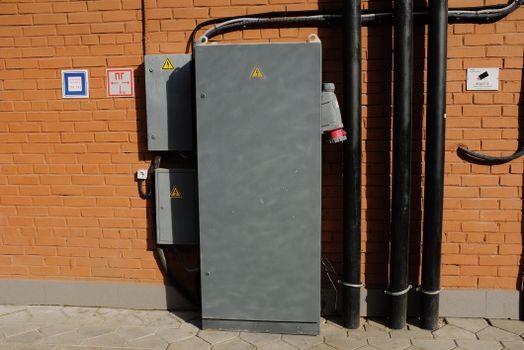
Comparing the three practical options against four decision criteria, the pattern is clear: industrial CE rotary (Meto, US$29.90-59.90) — low cost, indoor use, panel-mount, no HV certification; 11kV outdoor load-break disconnector (Zhejiang Fuerte, US$45.00-65.00) — mid cost, outdoor use, pole-mount, porcelain insulators, visible-break knife; DC PV isolating switch HGL-1600 (Jiangsu Renmin) — RFQ-only pricing, indoor or cabinet use, 1600A DC, infrequent manual operation, no AC fault rating [S2][S4]. On a 1-5 scale where 5 is best, indoor CE rotary scores 5 on cost, 1 on voltage, 2 on environmental sealing, 5 on MOQ flexibility; 11kV disconnector scores 3 on cost, 5 on voltage, 5 on environmental sealing, 4 on MOQ; HGL-1600 scores 2 on cost, 4 on current, 2 on environmental sealing, 2 on MOQ [S2][S4]. The point is that the "best" switch is the one whose row scores 4-5 on the criterion the buyer actually cares about; trying to substitute across rows is how spec errors enter a project.
Limits, Failure Modes and Inspector Pitfalls
Three failure modes dominate field returns. First, misapplication of a no-load isolator as a load-break switch — the rotary CE unit will survive motor starting inrush if the handle is operated at standstill, but hot-switching a stalled motor will weld the contacts within a few cycles. Second, underspecifying creepage distance on 11kV porcelain isolators in coastal or polluted air; the 20 mm/kV rule of thumb is not a substitute for site-specific pollution class III or IV, and an undersized insulator flashes over in fog. Third, mixing AC and DC ratings on PV isolators — a 1600A AC frame and a 1600A DC frame are not the same product, because the DC version needs a longer arc-quenching chute and silver-alloy contacts rated for the polarity reversal of a PV string, not just the thermal current [S4].
Inspector pitfalls on cross-border shipments usually trace to documentation gaps: a CE declaration of conformity without the EU type-test report from a notified body, or an 11kV porcelain disconnector shipped without the routine-test certificate and the per-unit serial plate. Buyers should require the manufacturer to ship one set of type-test reports with the first lot, and a per-unit routine-test sheet with every shipment. This is a generic procurement practice, not a standard number pinned to a specific clause, but it is what separates a clean customs release from a six-week hold at the port.
Standards, Sourcing Levers and Trackable Signals
The general standard framework for low-voltage isolators is IEC 60947-3 (low-voltage switchgear and controlgear — switches, disconnectors, switch-disconnectors) and for high-voltage disconnectors IEC 62271-102 (high-voltage switchgear and controlgear — alternating current disconnectors and earthing switches); CE marking under the relevant EU directive and ATEX 2014/34/EU for hazardous areas is the typical compliance envelope — buyers should verify the exact edition and notified-body number per shipment rather than relying on a generic declaration [S2]. For the photovoltaic DC class, IEC 60947-3 also covers DC-rated switch-disconnectors, with DC-PV2 utilization category being the typical reference for 1500V DC string switches — confirm the manufacturer's certificate before accepting any 1600A DC unit [S4].
Three trackable signals worth watching in the next sourcing cycle: the US$29.90 entry on the CE industrial isolator has held flat on Made-in-China through 2026-04 and 2026-06 snapshots, suggesting a stable floor rather than a price war [S1][S2]; the 11kV 630A band of US$45.00-65.00 is wider than typical for that class, which usually means material or insulator options are pushed into the same listing — buyers should pin down porcelain vs composite and indoor vs outdoor before accepting the high end of the range [S2]; and the HGL-1600 line is now sold as a stand-alone family on the manufacturer's English site with its own product page, indicating a real DC-PV catalog is being built rather than one-off RFQ runs [S4]. For a parallel view on transformer-side isolation cost, the power transformer buying guide maps the upstream feeder side that an isolator downstream typically protects. Buyers should also bookmark the industrial switch reference page to keep terminology straight between load-break switches, disconnectors and MCCBs, and the isolating switch page for the spec-and-applications overview.