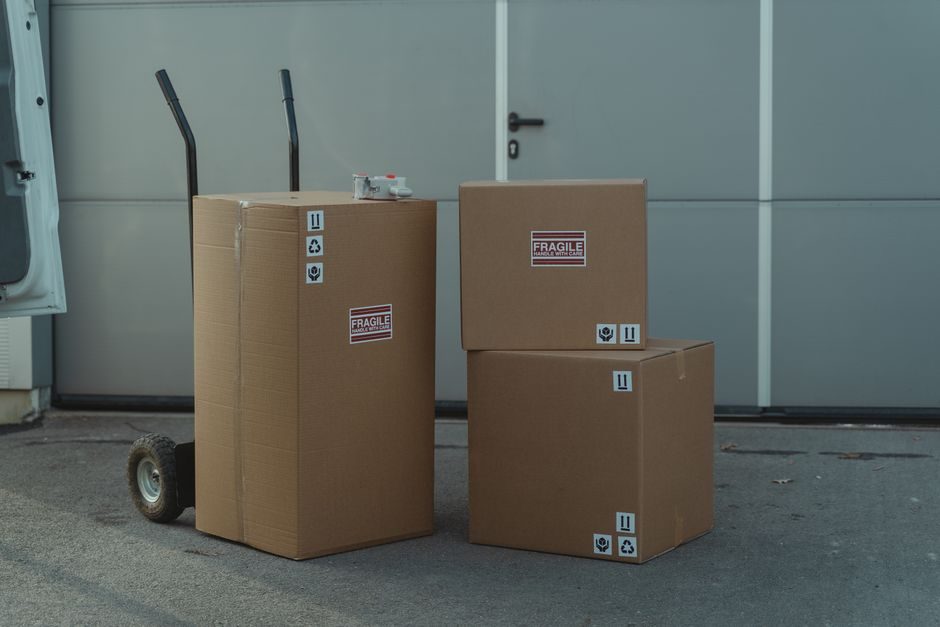
Dry-type transformers and power distribution cabinets sit on the same LV side of a 10/0.4 kV substation but perform fundamentally different duties: the dry-type transformer steps medium voltage down to usable LV and sets the short-circuit level, while the power distribution box splits that LV into feeders, applies overcurrent protection, and gives operators a switching point. Specifying one without thinking through the other is the single most common cause of nuisance-tripping and busbar retrofit rework on Chinese industrial sites.
Resin-insulated cast-resin units (SC9/SCB9, SC10/SCB10 series) dominate the 10 kV class offered by domestic OEMs, with 11 kV ratings spanning 500–2500 kVA in the FOB US$1,000–3,000 band [S1][S2]. Naturally air-cooled (AN) designs in this range typically top out near 2 MVA at 22 kV before forced-air (AF) or larger cores are needed [S4].
Scope and Core Function Split
The dry-type transformer is the equipment that performs electromagnetic voltage conversion between MV (commonly 6/10/11/22/35 kV) and LV (400/690 V), with no liquid dielectric, using epoxy resin or vacuum-pressure-impregnated (VPI) insulation systems [S3]. The power distribution cabinet sits downstream: enclosures, busbars, breakers, busways and terminals that partition the LV output into protected feeders. International equivalents of the relevant Chinese GB standard for dry-type transformers (Power transformers — Part 11: Dry-type transformers) are managed by TC44 and have been under active revision under plan 20202555-T-604 [S6].
Where the transformer changes system voltage and impedance, the distribution cabinet does not change voltage at all — its main jobs are fault interruption, isolation, metering, and the human-machine interface (isolators, indicator lights, pushbuttons). Conflating the two in a single line item is what drives the "why does my MCCB keep tripping at start-up?" calls.
Selection Criteria That Actually Matter
For a 10/0.4 kV dry-type transformer, the engineer-locked parameters are: rated power (kVA), primary/secondary voltage, vector group (Dyn11 is the workhorse for harmonic-rich LV loads), impedance voltage %IZ (typically 4% or 6% for 10 kV class), insulation class (F is the Chinese resin default, 155 °C), and temperature-rise limit (F-class resin transformers are usually specified at 100 K rise, K-class at 80/100 K). OEM catalogues confirm SCB-series 10 kV resin units in the 800–2500 kVA band are standard catalogue items [S2].
For the downstream power distribution box, the locked parameters are: rated current of the incoming busbar (e.g. 630 A, 1000 A, 1600 A), short-circuit withstand (Icw, typically 25 kA/1 s for 630 A frames, 35–50 kA for 1600 A), enclosure IP rating (IP54 indoor, IP65 outdoor), and form of internal separation (Form 1–4 per IEC 61439). These numbers are set by the transformer's secondary full-load current and its %IZ, which together determine the available short-circuit current at the cabinet terminals — choose the cabinet after the transformer, not before.
Comparison: Dry-Type Transformer vs Power Distribution Box
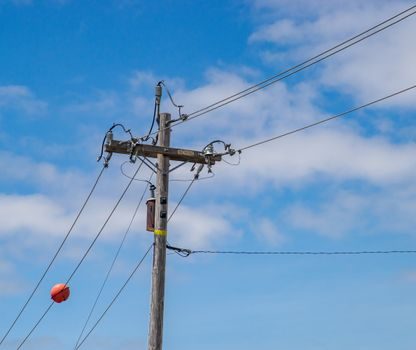
Side-by-side on the decision criteria a buyer actually uses: position in the one-line, primary function, what the kVA/A rating refers to, main purchasing standard, dominant protection device, and where physical installation lives. The transformer is the upstream MV/LV interface with its rating in kVA/MVA; the cabinet is the downstream LV splitter with rating in amperes. Standards diverge accordingly: dry-type transformer design falls under the GB/T 1094.11 / IEC 60076-11 family [S6], while distribution-box assemblies are governed by GB/T 7251 / IEC 61439 low-voltage switchgear standards.
The impedance of the transformer directly sets the cabinet's Icw requirement. A 1250 kVA 10/0.4 kV unit with 6% %IZ delivers roughly 30 kA at the LV terminals; the LV cabinet's busbar system and incoming breaker must be rated to withstand and break that level, otherwise the cabinet is the weak point of the installation.
Where Each Equipment Is the Right Choice
Dry-type transformers are the right call in fire-risk-rated indoor zones — high-rise building basements, hospitals, data centres, underground substations, chemical plants with flammable atmospheres — where any oil leak would be unacceptable [S3]. They also fit naturally where oil containment infrastructure is impractical (rooftop plant rooms, marine auxiliaries). 10 kV resin-insulated SCB units at 800–2500 kVA are the most quoted line items for these applications on Chinese OEM lists [S1][S2].
Power distribution boxes are the right call any time LV power needs to be split into multiple protected circuits — commercial building risers, industrial MCC feeders, small commercial sub-metering, outdoor lighting and EV charging hubs. The cabinet is the right call even where the upstream transformer is oil-immersed; the cabinet's job is downstream of the transformer's secondary, not a substitute for it.
Where a dry-type transformer is the wrong call: outdoor pad-mount installations exposed to weather, very high MVA ratings (above ~10 MVA) where resin cooling economics deteriorate, and sites where the transformer's no-load losses (typically 60–80% of the loss envelope for a 10 kV 1000 kVA unit) make total-cost-of-ownership unattractive versus oil-immersed alternatives. Where a distribution box is the wrong call: any point in the one-line where actual voltage conversion is needed — that's a transformer, not a cabinet.
Common Failure Modes and Engineering Constraints
Dry-type transformer failure modes cluster around three points: (1) resin-cracking from thermal cycling, mitigated by F-class 155 °C insulation systems and 100 K temperature-rise design; (2) partial discharge in cast coils, addressed by vacuum-pressure-impregnation and manufacturer PD testing; (3) fan failure on AF-rated units above 2 MVA, addressed by redundant forced-air banks and thermal sensor interlocks. Accessories on resin units include gas relays (Buchholz-equivalent) and bushing terminations, normally sourced as OEM-matched items [S5].
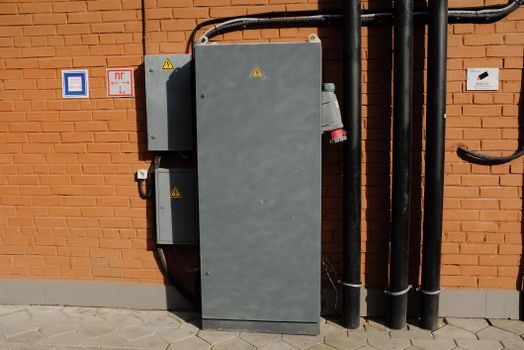
Power distribution box failure modes are different and well-known: undersized busbar (Icw rating lower than transformer's secondary short-circuit current), poor IP sealing on outdoor units leading to condensation trip-outs, and incompatibility between the cabinet's form of separation and the actual cable entry practice. Specifying the cabinet's Icw from the transformer's secondary kVA and %IZ — not from generic "use 35 kA" rules of thumb — eliminates the dominant root cause of LV switchgear burn-downs.
Sourcing, Standards and Cost Bands
FOB price band for 11 kV / 0.4 kV cast-resin dry-type transformers in the 500–2500 kVA range sits roughly between US$1,000 and US$3,000 per unit at 2026-06 listing levels on Chinese B2B platforms, with 11 kV 800/1250/1500/2500 kVA and 500 kVA all in active catalogue [S2]. This is the transformer cost only — distribution cabinets and busways are priced separately, and busway pricing in 2026 tracks copper content and IP rating rather than kVA.
Standards to lock in writing on the PO: GB/T 1094.11 (IEC 60076-11 equivalent) for the dry-type transformer, currently under TC44 revision under plan 20202555-T-604 with an intended effective date of six months after publication [S6]; GB/T 7251 series (IEC 61439) for the LV distribution cabinet. For projects with explosive-gas risk, explosion-proof distribution enclosures must be specified in addition to standard cabinets, and the relevant IECEx / ATEX category has to match the zoning. Pair the transformer vector group (typically Dyn11) with the cabinet's harmonic-mitigation plan — passive filters or active compensators — if the LV load includes large VFD or rectifier populations.
For the full transformer-side selection walk-through — CRDT vs VDT, insulation class, %IZ and short-circuit withstand — the engineering reference is the dry-type transformer selection guide; for the broader power transformer buying guide covering kVA, kV, %IZ, efficiency and sourcing, the kVA-class and short-circuit logic mirrors what applies to the resin-insulated line. Two trackable signals for spec updates: the formal publication date of the revised GB/T 1094.11 [S6], and any change in the IEC 61439 amendment chain that affects Icw labelling for 1600 A distribution-box frames.