Total cost of ownership (TCO) for piling equipment captures every spend from initial purchase through final disposal, with the formula expressed as P + Present Value of (O + T + M + W + E − S), where P is purchase, O is operating cost, T is training, M is maintenance, W is warranty/support, E is environmental/disposal, and S is salvage [S1].
For a pile driver on a contractor fleet, the acquisition line item typically understates the true lifecycle cost by a wide margin; the USPS supply-practice guidance frames this gap as "hidden costs easily overlooked during budget planning" and explicitly warns that preliminary TCO estimates are the least accurate because input data is thin at the quote stage [S1]. The same lifecycle model that drives fleet management for desktop PCs and lab information systems applies to heavy foundation equipment, where the capital hardware line often sits well below the operating and maintenance stack [S2].
Five TCO Lines and How They Behave on a Piling Spread
Operating cost (O) on a diesel hammer or hydraulic impact rig is dominated by fuel burn, hammer-cycle consumables, and crew hours; for an electrically driven equivalent the fuel line collapses to kWh draw but a new utility-feed or genset line appears. Training cost (T) is non-trivial on hydraulic rigs with PLC-controlled drop-height mapping, where mis-stroke programming drives both fuel waste and premature hammer-piston failure. [S3]
Maintenance cost (M) on a pile driver scales with the number of blows delivered and the soil class — driving through dense glacial till or rock socket grinds cushions, helmets, and pile caps at a rate that light sandy soils do not. The USPS model also folds warranty, environmental compliance, and end-of-life salvage into the net present value, and the workbook is updated as field data improves, not frozen at the RFP stage [S1].
Diesel vs Hydraulic vs Hydraulic Static: A TCO Comparison
Diesel hammer rigs have the lowest purchase price per kilojoule of rated energy but the highest fuel and consumable spend; hydraulic impact hammers sit in the middle on price and the middle on fuel burn, with far tighter blow-count repeatability; hydraulic static pushers (silent pilers) carry the highest sticker but near-zero per-cycle energy cost once installed. The TCO crossover between diesel and hydraulic typically falls in the 4,000–6,000 operating-hour band for urban foundation crews, where fuel, muffler swaps, and noise-shielding compliance under tighter municipal ordinances swing the math. [S3]
Across three product classes, four decision criteria frame the buy: (1) purchase price per kJ rated energy, (2) hourly fuel or kWh cost at the rated drop height, (3) blow-count-driven wear-part spend per 1,000 piles installed, and (4) noise/dust compliance cost under the project permit. Procurement teams that score only criterion 1 routinely overpay on operating cost lines, and the same pitfall shows up in fleet TCO studies on other heavy equipment classes such as the rotary drilling rig market [S3].
Cost Drivers That Move the TCO Curve

Four drivers move the lifecycle spend more than the others: hammer class (impact vs static), ground profile, duty cycle, and energy source. Hammer class fixes the per-blow consumable budget and the wear-parts SKUs the maintenance shop has to stock; ground profile sets blow counts per pile and is the single largest uncontrolled variable; duty cycle sets whether the spread runs 1-shift or 3-shift and compounds fuel, oil, and inspection cost roughly linearly; energy source (diesel, electric, hybrid) sets both the operating cost slope and the compliance cost for emissions zones in cities like London, Berlin, or Beijing. [S3]
A 3-shift continuous operation roughly triples the maintenance line and the consumables line versus single-shift, but only adds ~60% to the operating cost line because crew and supervision do not scale linearly with hour-meter time. Operator skill is a hidden line: a properly tuned hydraulic hammer on a bored pile can save 1–2 diesel litres per pile versus an untuned unit, and across a 10,000-pile bridge contract that swing is several hundred thousand euros of fuel and wear-parts cost.
Real Use Cases: Where TCO Math Tilts the Buy
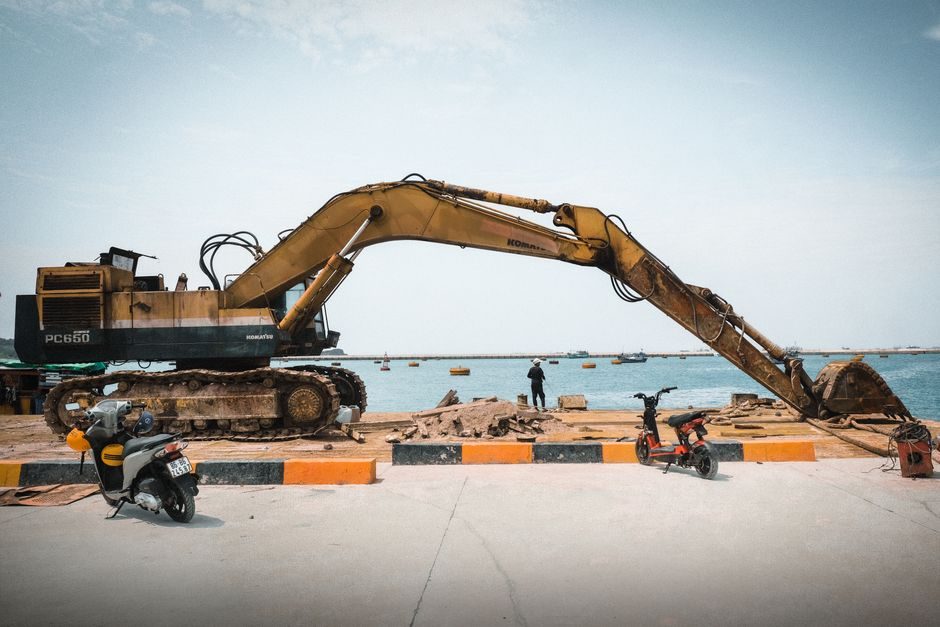
Urban high-rise foundation on noise-restricted sites: silent static pilers win despite a higher purchase price because the noise permit, the curfew hours, and the crew idle time on a diesel-hammer site are themselves a cost line. Coastal port wharf construction on driven precast concrete piles: diesel hammers retain the TCO lead because cycle time and consumable cost dominate. Solar-farm piling on access-restricted agricultural land: compact hydraulic rigs on tracked carriers win because mobilisation cost per site is the largest line, and the rig visits 30+ small sites per quarter. [S3]
Bridge-pier construction in tidal zones: hydraulic impact hammers win because the per-pile energy and the corrosion-resistant hammer-chamber material compound the wear-part spend of diesel units operating in salt spray. Comparing the rotary drilling rig market against the piling market shows the same pattern — rig class and ground condition dominate TCO more than the brand or the sticker price, and procurement frameworks that lock in a single vendor across all ground classes typically overpay in aggregate.
Limitations, Failure Modes, and Common Misreads
TCO analysis is only as good as the input data; the USPS framework explicitly states that the quality and detail of the input "have a significant bearing on the resultant quality of the TCO estimate" [S1]. A pre-bid TCO built on manufacturer-quoted blow counts and fuel curves will be optimistic if the actual site runs harder soil, longer piles, or more cycles per shift; the same misread pattern shows up in computing-fleet TCO, where Gartner's $44,250 five-year cost-per-PC figure sits well above naive depreciation-and-electricity arithmetic [S2].
Hidden costs that bite piling TCO: dropped-object rebuilds from hammer-cable failures, third-party noise-monitor hire, unscheduled mobilisation of a backup rig when the primary hammers out, and end-of-project site reinstatement. Salvage value (S) is also routinely over-stated for piling rigs because the undercarriage, hydraulic hoses, and pile-thread inserts carry very different resale values across regions, and a machine that is mid-life in Western Europe can be at-end-of-life in markets with weaker rebuild supply chains.
Standards, Sourcing, and the Sourcing Workflow
The procurement workflow that frames a defensible TCO is the USPS four-step supply process — Identify Needs, Evaluate Sources, Negotiate, and Award — with the TCO estimate iterated between Step 1 and Step 2 as data improves [S1]. Each step feeds the next: a tentative TCO is required at needs identification, then refined when source data is on the table, then locked against the funding objective before contract award. The same gate logic appears in equipment TCO models for vacuum pumps, where purchase price is "only a fraction of the total expenses incurred over its entire lifetime" and the process spec must be scored against lifetime energy, water, and service cost, not against the capital line.
For piling TCO specifically, the engineer-side checklist is short: (1) capture the rated energy and drop-height range of each hammer class, (2) record the per-blow consumable cost and blow-count budget per pile, (3) record the fuel or kWh per operating hour at rated load, (4) record the inspection, oil-change, and wear-parts interval from the OEM service manual, (5) record the residual-value assumption per region, and (6) refresh the TCO after the first 1,000 operating hours. The S1 framework also covers total cost of ownership for vacuum systems, and the model is essentially identical once the consumables and energy line are re-keyed for piling [S1].
Two signals to track in the next buying cycle: OEM-published "cost per metre driven" calculators, which are now being benchmarked against site as-built cost per metre, and the spread between diesel-hammer and hydraulic-hammer residual values on the 5–10 year-old used market. If the hydraulic residual-value premium widens, the TCO crossover hour count will fall and the buy case for hydraulic across more ground classes will strengthen on its own.
The underlying component specifications are covered under total station, and pressure transmitter.
Background reading: Measuring Instruments in Smart Manufacturing: 2026 Spec Landscape.