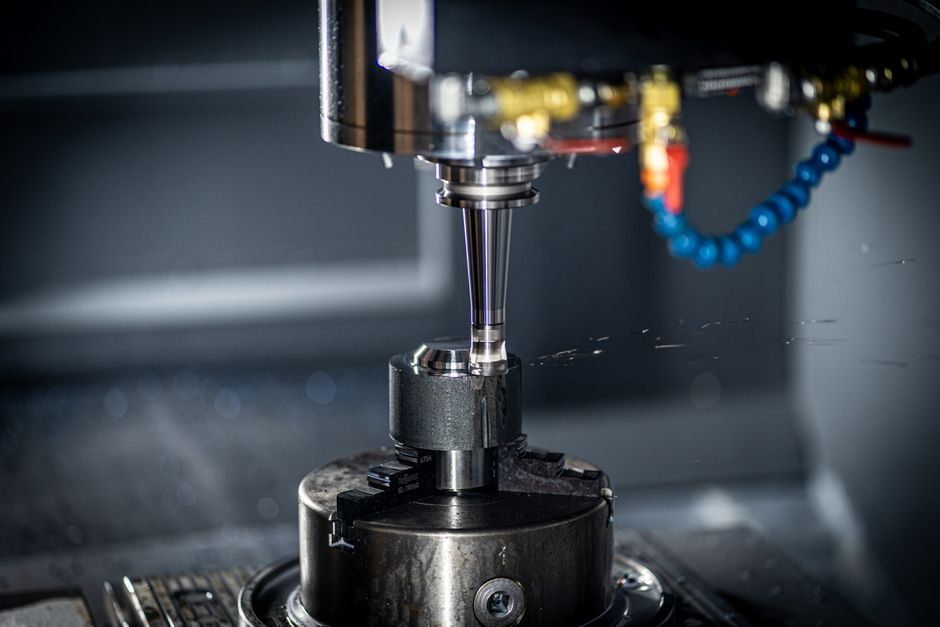
Lithium battery smart manufacturing now covers the full chain from electrode coating and stacking to module/PACK assembly, with end-to-end MES/ERP integration and machine-vision quality gates [S1][S2][S3].
Order flow in 2026 is dominated by Chinese turnkey integrators shipping large-format cell, module and PACK lines plus containerized assembly cells, while North American reshoring sites specify fully automated pack lines and on-site data traceability [S1][S3].
Scope and Definition of a Smart Li-Ion Line
A modern lithium battery smart factory is defined by closed-loop data flow between electrode process tools, cell formation/aging racks, and module/PACK assembly, with KPIs tracked in real time on MES dashboards [S2]. The 2026 baseline includes automated electrode coating/drying, high-speed stacking or winding, in-line laser tab welding, electrolyte vacuum filling, and formation/aging with per-cell voltage and impedance logging [S3].
Process-engineering scope also extends downstream to PACK EOL testing, where pack-level BMS communication verification, insulation withstand (typically specified per IEC 62133-2 for portable cells and IEC 62619 for industrial cells) and cycle burn-in are mandatory gates before shipment [S2]. Custom pack builders serving robotics, AGV, marine and energy-storage channels run a parallel but smaller-scale version of this flow, with one North American integrator advertising 97.5% on-time delivery for 12V–72V custom packs against an ISO-controlled shop floor [S6].
Cell-to-Pack Equipment Stack in 2026
The equipment stack for large-format cells splits into electrode (coating, calendering, slitting), cell assembly (stacking/winding, tab welding, encapsulation), formation & aging, and module/PACK integration [S3]. LEAD Intelligent positions itself across this whole value chain with industrial smart-manufacturing solutions for cell and module production [S2], while ATW Intelligent secured multiple orders in Q1 2026 covering large-format cell module & PACK production lines, containerized intelligent assembly lines, and turnkey energy-storage projects [S3].
ATW has also publicised an innovative copper-paste printing process that targets lower tab-connection resistance and reduced nickel-copper mass versus conventional laser-welded tabs, with internal release notes positioning it as a process step that integrates directly with inline vision inspection [S3]. For process engineers sourcing individual stations, the practical breakdown typically looks like:
- Electrode: comma coater / slot-die coater, calender, slitter — throughput driven by web width (typically 600–1300 mm) and coating speed.<br/>- Cell assembly: high-speed Z-stack or winding (around 200–400 PPM for prismatic), laser tab welder (fiber or QCW), vacuum pre-sealing.<br/>- Formation: temperature-controlled formation/aging chambers with per-channel data acquisition, capacity grading by dQ/dV or DCIR.<br/>- Module & PACK: laser cleaning, busbar welding, BMS EOL test rig, end-of-line pack cycler.
AI Vision, MES and Closed-Loop Quality

Inline machine-vision gates are now the single most visible difference between 2023 and 2026 lines, with AI classifiers deployed at coating surface inspection, electrode defect detection, tab alignment, and weld-bead scoring [S1][S2]. Frey Battery (North America) markets its lithium product family under the "Smart Innovation with Advanced Manufacturing" banner, with LiFePO4 packs for forklifts, mining, AGV, marine and aerial-lift applications all built on a platform that integrates cell monitoring, BMS telemetry and factory data capture [S4].
Closed-loop quality requires more than cameras: defect data has to land on the same MES instance that holds traceability IDs, electrolyte fill logs, formation curves and EOL results, so a single suspect cell can be traced from electrode reel to shipped pack [S2]. Where process measurement meets energy metrology, the same data fabric often shares infrastructure with the smart meter and metering gateways already installed on the plant floor.
Application Channels Driving the 2026 Order Book
The 2026 order book splits clearly into three downstream channels: energy-storage system (ESS) projects, EV traction cells, and industrial/specialty packs [S3][S4]. ATW's reported 2026 orders specifically call out turnkey ESS projects alongside cell-module-PACK lines, a signal that containerized battery-assembly cells are being procured at project level rather than as one-off lines [S3].
Industrial channels — forklifts, mining haul trucks, AGV/robotics, aerial lifts, marine and RV — are dominated by LiFePO4 packs in the 24V/48V/72V/96V class, and the supplier landscape is fragmented across North American, Chinese and European reshoring sites [S4]. On the pack-assembly side, custom pack builders are competing on short-run flexibility: 12V–72V custom packs, with one Guangzhou-based pack maker advertising a 12-engineer design team, ISO-controlled assembly, and 97.5% on-time delivery for non-standard configurations [S5][S6]. The 12V/24V/36V/72V ladder, by the way, is not arbitrary — it is a useful spec gate when comparing flow meter and process-instrument suppliers on DC power architecture for plant-side lithium backup skids.
Selection Criteria: Integration Depth vs Single-Station Sourcing
The first buying decision is integration depth: turnkey cell-module-PACK integrator (LEAD, ATW class) versus a build-your-own line using individual stations from coating, stacking, formation and PACK tooling vendors [S2][S3]. Turnkey delivery compresses ramp time — typically 12–18 months from PO to firstqualified pack at a greenfield site — but ties the buyer to one MES schema and one service network.
Key selection criteria for process engineers, in rough priority order:
1. **Traceability depth** — can the MES expose per-cell formation data, EOL test data, and material lot ID from a single query, and is that data exportable to a customer-side traceability chain (important for EV and ESS channels)?<br/>2. **Cycle time & PPM** — at the cell-assembly station, ask for PPM under sustained 8-hour run, not nameplate peak, and request the OEE for the last quarter.<br/>3. **Yield & internal reject rate** — track first-pass yield at cell level and at PACK level; a >2–3% reject at formation usually points to electrolyte or humidity control issues, not vision.<br/>4. **Service footprint** — Chinese turnkey integrators often have 24–72 hour on-site SLAs inside China but limited US/EU field-service coverage, which materially affects spares planning.<br/>5. **Data export & cybersecurity** — check for OPC UA, MQTT or REST interfaces to the factory historian, and confirm the equipment vendor's remote-access posture (jump-host, no persistent inbound VPN).
North American Reshoring and the Automation Premium
US reshoring is now framed explicitly as fully automated, not semi-automated, with new US battery plants specifying turnkey pack lines and traceability up front rather than retrofitting automation into manual cells [S1]. The pitch from US-based pack builders is no longer "low-cost labor plus automation" but "no labor, full automation, domestic content" — a meaningful shift from the 2020–2022 messaging [S1].
Cost premium is real: a 2026 US-built automated PACK line typically runs 20–40% above the all-in cost of a comparable Chinese line once land, power, controls and integration are totalled, but the offset is logistics (no 30-day ocean freight on finished packs), IRA-style domestic content, and lower geopolitical supply risk [S1]. For buyers weighing which side of that premium to sit on, the question is whether their end-market qualifies for domestic-content incentives and whether their annual pack volume justifies the engineering effort to qualify a US site. A related but useful comparison when evaluating automated cell-assembly lines is to look at the throughput and OEE data published for flow meter and pressure transmitter skids, since those plant-floor instrument lines have run end-to-end MES integration for years and the lessons transfer.
Standards, Sourcing Risks and Failure Modes
Cell-level safety typically routes through IEC 62133-2 (portable), IEC 62619 (industrial), and UN 38.3 (transport), while pack-level safety for industrial and stationary use tends to cite UL 1973, UL 9540 (for ESS) and IEC 62619; for EV traction the relevant baseline is GB 38031 in China, ECE R100 in Europe, and FMVSS 305 in the US [S4][S6]. Misalignment between the cell certificate and the pack certificate is one of the most common customs and field-failure triggers, so the pack builder's certificate matrix should be reviewed before the line is locked, not at the first shipment.
Top failure modes seen in 2025–2026 automated lines, from a process-engineer standpoint rather than a sales-deck standpoint: electrolyte moisture creep (cap on dry-room dew point typically -40 °C and tighter for high-nickel chemistries), tab-welding cold joints that pass vision but fail formation DCIR, formation channel imbalance that masks weak cells, and PACK-level BMS firmware drift across mixed-lot cells [S3]. For buyers evaluating an additive manufacturing material supplier for jigs and fixtures used inside a dry room, the moisture outgassing spec and ESD compliance matter as much as mechanical strength — a non-obvious but recurring field issue. Process-instrument spec sheets for pressure transmitter and smart valve positioner skids, by contrast, are well defined in vendor datasheets and easier to cross-check against ISA/IEC baselines.
Trackable signals over the next quarter: ATW's published 2026 order run-rate for containerized ESS assembly cells [S3], LEAD Intelligent's MES/SCADA release notes for closed-loop formation integration [S2], and any new US reshoring announcements from pack builders currently advertising "fully automated" lines [S1]. For sourcing teams benchmarking packaging and end-of-line throughput on these lines, the Capping and Sealing Machine Selection Criteria 2026 reference is a useful cross-check on cap torque, format changeover and CIP-compatible sealing stations. Buyers sourcing bulk modules should also watch the Filling Machine 2026 Price & Cost Guide for electrolyte-filling and PACK-fluid station cost bands, since electrolyte fill accuracy is one of the dominant yield levers on a 2026 line.