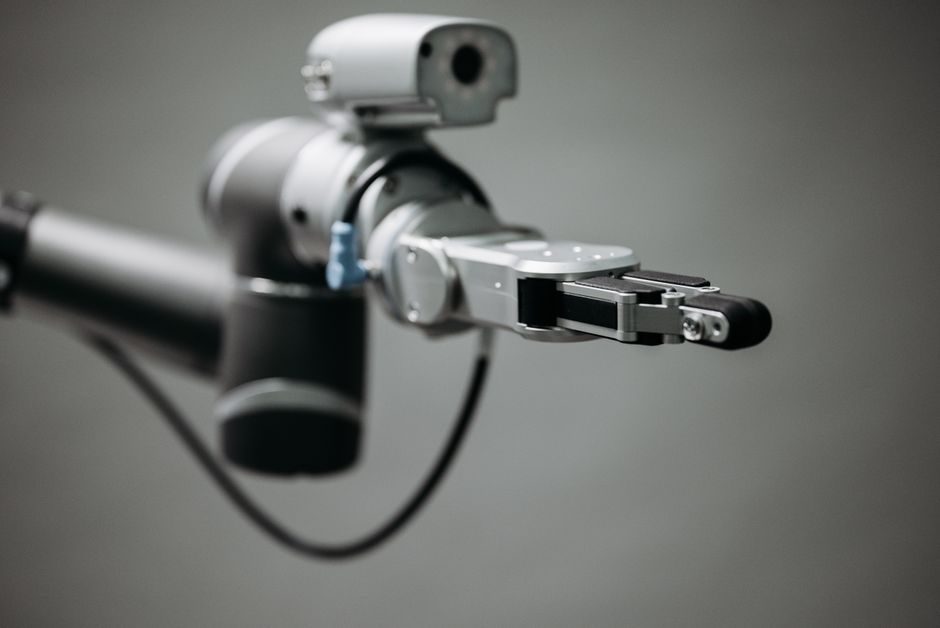
Lithium cell and pack plants built in 2026 are converging on a four-layer automation stack: ISA-95 hierarchy (IEC 62264), GEM300-style equipment telemetry, AI vision for coating/stacking defect detection, and dry-room robotic handling with dew-point control below -40 °C [S1][S2].
The 2026 implementation playbook no longer treats smart manufacturing as a single vendor MES rollout. It is a connectivity discipline that links electrode coating, calendaring, slitting, stacking and formation into a single data spine, with each sub-loop feeding back to lot-level genealogy rather than batch-level reporting [S4][S5].
Where the cell line actually breaks: electrode coating and calendaring
Electrode coating and the downstream calendaring press remain the highest-yield-loss stations in a Li-ion line; coating window is typically held to ±1.5 µm wet-film tolerance on copper foil (8-12 µm) and aluminum foil (12-20 µm), and the pressure transmitter on the calendar roll hydraulic cylinder is the spec that decides density spread [S1].
The 2024 IMTS Smart Manufacturing Experience show floor demonstrated that brownfield retrofits can hit those numbers without replacing the coater, provided the flow meter on the slurry feed loop and the line-scan camera on the dryer are both on the same OPC UA namespace [S2].
Dry-room robotics and dew-point control: the hidden capex line
Dry-room dew-point is held between -40 °C and -60 °C for Li-ion cell assembly to keep the SEI layer stable during formation, and every robotic transfer into the dry room must log chamber pressure differential, dwell time and gripper vacuum in the same lot record [S4].
Specifying a 2026 dry-room retrofit without a unified data spine is the most common engineering mistake. Robotic stacking cells from Japanese, Korean and Chinese OEMs all expose PROFINET, EtherCAT or EtherNet/IP on the robot controller, but the smart-manufacturing layer demands an additional ISA-95 model (defined by IEC 62264) so that each pouch or cylindrical cell can be traced back to coating line, calendar roll, electrolyte lot and formation cycle [S1][S5]. A 2026 retrofit that skips this layer ends up with islands of automation that look connected on a dashboard but cannot answer a customer audit on a single failed cell.
AI vision: coating, stacking and tab welding
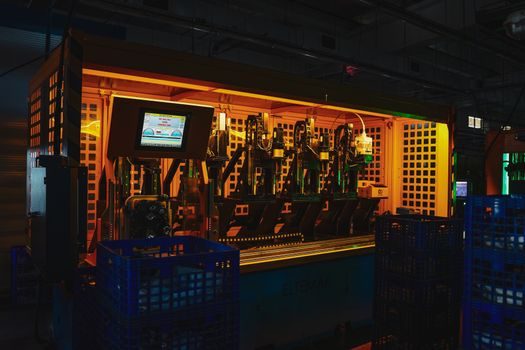
AI vision on a 2026 Li-ion line is no longer a single camera. It is at minimum a 12K line-scan on the coater for slurry streak detection, a 3D ToF camera on the stacking head for alignment verification, and a thermal camera on the laser tab-welding station for weld-bead porosity classification [S2][S4].
Detection thresholds that procurement teams should hard-code into the RFQ: coating streak detection at >0.3 mm width with false-reject rate below 1.5%, stacking alignment tolerance of ±0.3 mm for prismatic cells, and tab-weld porosity classification with at least 95% recall on the validation set. A 2026 vendor quoting a smart camera without quoting these three numbers in writing is not quoting a smart-manufacturing vision system, it is quoting a barcode reader [S1][S2].
ISA-95, GEM300 and the brownfield retrofit
The brownfield retrofit that defines 2026 is the GEM300-style SECS/GEM (SEMI E30, E37, E87, E90) handshake, originally built for semiconductor fabs, applied to Li-ion cell lines, with Level 3 (MES) handling recipe management, lot genealogy and dispatch, and Level 2 (BCS/EAP) handling equipment handshake and process-state telemetry [S1][S2].
On the brownfield side, the semiconductor smart manufacturing 2026 reference gives a useful template: brownfield retrofits in 2026 layer AI, GEM300 and OPC UA on top of existing PLCs, and the same playbook translates cleanly into Li-ion coating and stacking lines because the equipment-level handshake and the lot-genealogy requirements are nearly identical.
Connector-level data: PROFINET, EtherCAT and edge IIoT
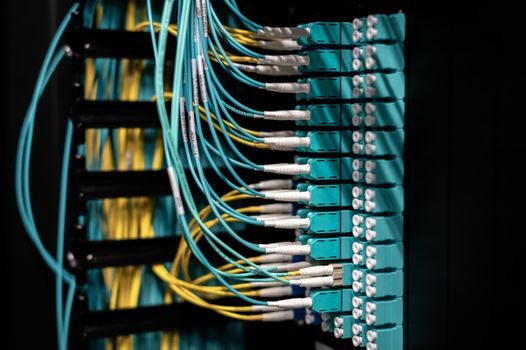
At the connector layer, a 2026 Li-ion cell line runs PROFINET or EtherCAT on the motion bus (sub-1 ms cycle) and OPC UA over TSN on the higher-level data bus, with the smart valve positioner on electrolyte dosing and the dry-room damper actuators both publishing on the same namespace as the line-scan cameras [S1].
The connector-side retrofit pattern is close to the connector smart manufacturing 2026 PROFINET and edge IIoT stack: PROFINET for the motion backplane, edge IIoT for the vision pre-processing, and a Renishaw-equivalent encoder on the calendar roll and winder as the master speed reference. Mis-wiring that reference is the most common cause of 0.5-1.0% electrode length-tolerance failures that show up only at the slitter.
Standards, sourcing and where the spec still goes wrong
The 2026 standards map for Li-ion smart manufacturing is built on IEC 62264 (ISA-95), SEMI E30/E37/E87/E90 for equipment handshake, IEC 62443 for industrial cybersecurity on the cell-line network, and UN 38.3 plus IEC 62660 for the cell-level safety data that the MES must export with every lot [S2][S5].
The audit-ready comparison that procurement should pin to a 2026 RFQ: brownfield MES + GEM300 retrofit (low capex, 4-9 month payback, ISA-95 only on the new islands), greenfield turnkey OEM line (high capex, 18-30 month build, full ISA-95 across Levels 0-3, single-vendor lock-in), and hybrid line-by-line upgrade (moderate capex, 8-14 month payback, ISA-95 bridged between old PLC and new EAP). Each option keeps the same standards spine; the difference is the depth of data-model coverage at Levels 2 and 3 [S1][S5].
Two trackable signals to watch before the next cell-line spec review: whether the vendor's additive manufacturing material supply chain for dry-room brackets and grippers is on the same MES lot record, and whether the formation cycling data is being exported at the cell level (per-cell voltage, impedance, temperature) rather than batch-averaged — a 2026 cell-line audit will not accept batch-averaged formation data as a smart-manufacturing deliverable.