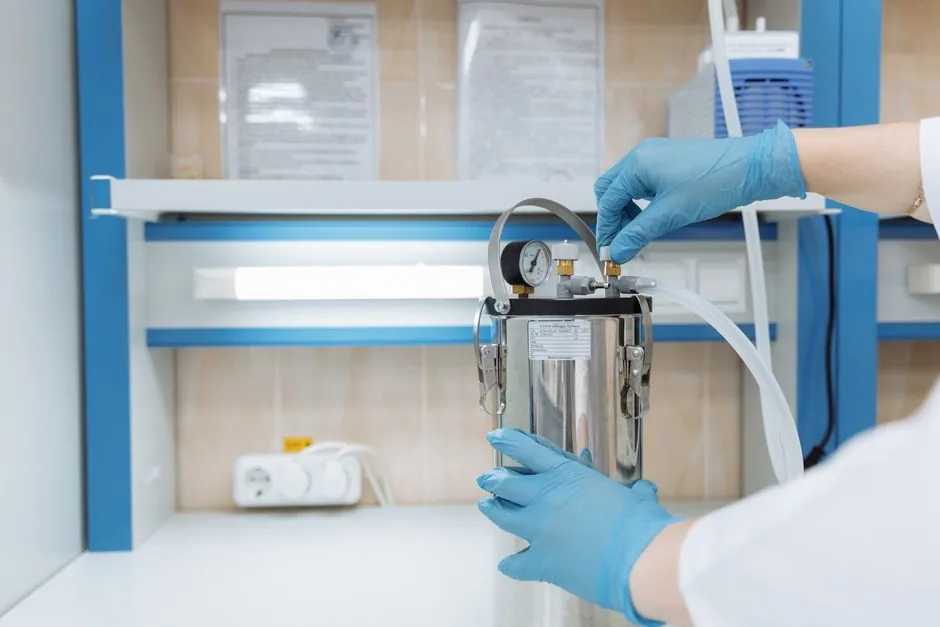
About 40.7 million tonnes per year of new LNG liquefaction capacity is scheduled to come online in 2026, the sharpest single-year jump in the current build cycle, with North America and the Middle East supplying the bulk of the molecules [S4].
That volume translates directly into orders for process control systems, field instrumentation, custody-transfer flow meters, burner-management gas cabinets, and analyser shelters; suppliers already positioned in the four flagship projects (Golden Pass, LNG Canada Phase 1, Costa Azul Phase 1, and the Qatari North Field expansion trains) are absorbing the bulk of the 2026 PO pipeline [S4].
Where the 2026 Capacity Lands and What It Means for I&C Sourcing
The 2026 nameplate sits roughly 30 percent above the 2024 commissioning total, but the supply-demand balance only flips from tight to loose because a comparable demand wedge from Europe and South Asia has been building in parallel; capacity tightness is therefore deferred to 2027-2028 rather than cleared in 2026 [S4].
For instrumentation buyers, the practical consequence is that lead times for integrated control-and-safety (ICSS) cabinets, multifunction process calibrator workloads during commissioning, and SIL-2/SIL-3 valve packages have lengthened by 8-14 months on the long-lead items, even as valve-actuator and pressure-transmitter spot prices softened in 1Q 2026 on destocking [S4].
Train sizes in the new wave cluster around 5-6 mtpa per train (LNG Canada), with mid-scale 2-3 mtpa modular designs (Costa Azul) and 7.5+ mtpa mega-trains (Qatari expansion) coexisting; each train architecture has a different I&C density per ton of LNG, so owners should not copy-paste a 2018-vintage instrument index onto a 2026 train [S4].
Instrumentation Selection Criteria for the Cryogenic, Hazardous, and SIL Layers
Cryogenic service (-162 °C LNG, -196 °C ethane/propane refrigerant compressors) drives a hard material split: austenitic 304L/316L stainless with low-carbon certification for cold-box piping, aluminum-bronze or 17-4PH trim for ESD valves, and Inconel 625 weld overlays on LNG-loading swivel joints where fatigue dominates [S1].
Hazardous-area classification on a modern FLNG or land-based LNG train still defaults to Zone 1 for compressor decks and LNG loading arms, Zone 2 for pipe racks and fin-fan cooler aisles, and Zone 0 inside the LNG storage tank roof; the corresponding instrument certificates should be ATEX 2014/34/EU for European-financed trains, IECEx for Qatar/Asia builds, and Class I Div 1/2 (UL 913 / ISA 12.13.01) for the US Gulf Coast plants [S1].
Functional-safety scope on the 2026 wave concentrates on the BOG (boil-off gas) recondenser shutdown logic, the ship/shore transfer ESD-1 chain, and the high-pressure pump seal-gas panel; buyers should expect TÜV-certified SIL-2 on the BOG control loop and SIL-3 on the transfer ESD, with proof-test intervals documented in the SRS, not in marketing collateral [S1].
Comparing the Main Control-System Architectures Specified in 2026
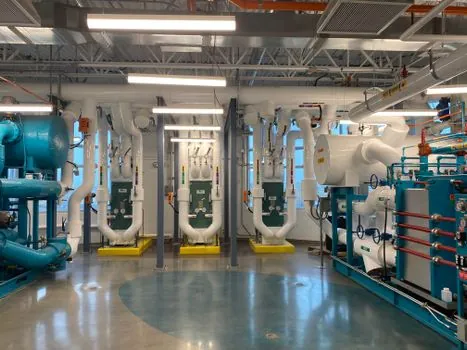
Most 2026 greenfield trains still run a paired DCS + Safety Instrumented System (SIS) topology, with the DCS handling dynamic regulation (level, temperature, flow, composition) and the SIS handling independent trip paths; brownfield revamps increasingly add a third layer, an OT-IT gateway or process lighting-equipment-and-electric-lamps-class edge node, to feed data historians and AI optimisation stacks without punching holes in the SIS [S1][S4].
On the fieldbus layer, FOUNDATION Fieldbus and PROFIBUS PA remain the default for new LNG trains because their digital, bus-powered, intrinsically safe segments cut home-run cabling on the cryogenic deck; HART remains the universal retrofit protocol for the installed base, and Ethernet-APL is now appearing in non-cryogenic, Zone 2 areas such as the power-generation and amine-treating auxiliary skids [S1].
For a structured comparison, the main control options land as: (a) classical paired DCS+SIS on FF/PA, highest installed base, longest spare-part tail, longest commissioning duration; (b) Open Process Automation (OPA) on next-gen edge controllers, lowest vendor lock-in, thin spare-part tail, not yet approved by most 2026 EPCs; (c) hybrid DCS+OPA gateway, balanced risk, higher integration engineering hours, suits operators with a multi-vendor policy [S1].
Analysers, Custody-Transfer Flow, and BOG Metering Specifics
Custody-transfer on the new trains uses ultrasonic fiscal meters on the loading lines (typically 16-24 in., dual-path, with redundant path diagnostics) and Coriolis on the bunker / truck-loading lines, with the LNG composition fed live from a process gas chromatograph into flow computer corrections per ISO 6976 or GPA 2172 [S1].
On the BOG side, process calibration of the tank level radar, temperature multi-point probes, and pressure transmitters has to be performed at cryogenic conditions, not at room temperature, because the dielectric constant of LNG shifts the radar zero and the density profile shifts the strapping table; the most common 2026 commissioning defect is a radar calibrated at 20 °C being handed over to operations, then drifting 30-80 mm within the first 72 hours of cooldown [S1].
Analyser shelters on the 2026 trains typically package a process GC, a H2S/CO2 tunable diode laser, and a moisture (H2O) analyser on a single hot-standby skid; shelter HVAC sizing has to reflect the GC's 60-80 °C oven heat load, not just ambient, and the trend on Qatari and US Gulf trains is to move analyser sample-handling inside the analyser room rather than at the tap, to cut response lag [S1].
Who the 2026 I&C Stack Is For, and Who It Is Not For
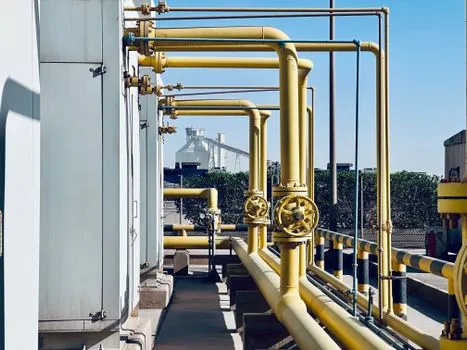
The full ICSS-plus-cryogenic-analyser specification is built for owners running multi-train baseload export (5+ mtpa per train, 25-year horizon, FOB or DES offtake) where SIL-3 transfer ESDs and fiscal-grade metering are non-negotiable [S4].
It is the wrong fit for: small-scale LNG (typically < 0.5 mtpa) using standardized skid packages, where a packaged PLC and a single analyser skid is sufficient; LNG bunkering barges, where the EU-IG edition of the IGC Code drives a leaner ESD and a more conservative gas-detection layout; and floating LNG (FLNG) where the dynamic positioning interface overrides the land-based ESD architecture [S1].
Owners operating a single mid-scale train with a 10-year offtake window should push the EPC to expose SIL-2 modular I/O and pre-engineered analyser shelters, not a fully customised DCS, because the spare-part economics of a full custom stack are unfavourable under 5 mtpa throughput [S1].
Commissioning, Calibration, and the Workforce Constraint
Calibration throughput on a 5 mtpa train routinely runs 6,000-9,000 instruments, with a v-process line-style staged loop-check sequence that has to be finished 4-6 weeks before first gas-in; the bottleneck in 2026 is not instruments but commissioning technicians, and EPCs on the 2026 wave are pre-booking loop-check crews 9-12 months out [S1].
Yokogawa Canada's stated positioning for the Canada LNG corridor, with field-instrumentation, process-control, and information-system supply into the LNG and other process industries, is the most directly relevant vendor signal in the research for North American operators scoping a 2026 train [S1].
Field-instrument loop-test documentation on 2026 projects is increasingly required in ISA 5.1-2023 compliant symbology with the calibration record signed at the instrument, not at the control room; the audit trend is for the SIS proof-test report to be filed in the same loop folder, so the SIL claim survives the next PH&ME audit [S1].
Constraints, Failure Modes, and Standards Watch
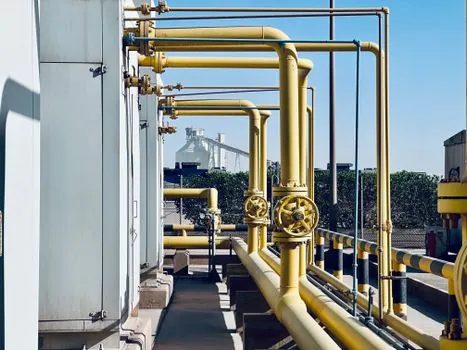
The dominant commissioning-to-operation failure modes recorded on recent LNG trains are: (1) cryogenic radar drift after cooldown, (2) ultrasonic flow-meter path degradation on dirty feed-gas, (3) BOG compressor surge in transient modes, and (4) spurious ESD-1 trips on lighting-induced transients when the access control grounding plan was not integrated with the instrument-earth plan [S1].
Standards that materially govern a 2026 I&C spec include IEC 60079 (hazardous areas), IEC 61508/61511 (functional safety), API 6D (pipeline valves), NFPA 59A (LNG facilities), ISO 5167 (differential flow), API MPMS ch. 9 (custody), and the IGC Code plus EU-IG edition for LNG bunkering; revision dates and effective dates of these standards should be re-confirmed against the current revision at the time of bid, not carried forward from a 2018 or 2022 reference set [S1].
Operators and EPCs tracking the 2026 wave should monitor: (a) whether the 2026 capacity lands on schedule or slips into 1H 2027, which would re-tighten process control cabinet lead times, and (b) whether OPA stacks get their first non-pilot train on a 2026 brownfield, which would shift the fieldbus roadmap for 2027+ trains [S4]. Crawler crane selection for pipeline construction: 2026 spec gates and field data is a relevant adjacent reference for the construction-side lifts that precede the instrumentation hookup window.