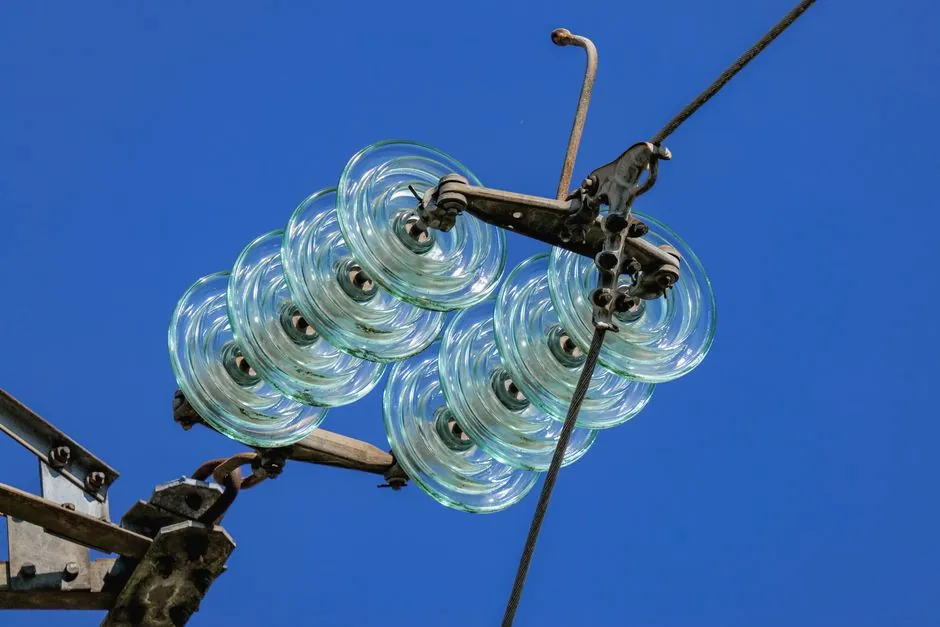
A transformer primary disconnect must be specified as a true load break switch (LBS) when operators need to open the circuit under load, not a plain isolator that only works on a de-energized line [S4].
The choice is driven by three constraints: voltage class (LV vs MV), system topology (radial feed vs loop feed), and whether the device doubles as the NEC service disconnect under 230.205/230.208, which frequently pushes designers toward a padmount switch plus a tank-mounted LBS rather than one or the other [S2][S1].
Load Break Switch vs Disconnect Switch: The Core Functional Split
An LBS is a mechanical switching device that connects, carries, and safely interrupts load current, using built-in arc-quenching to suppress the arc that forms when contacts part under load [S4]. A disconnect switch (isolator) is limited to opening on a de-energized or near-zero current circuit; it cannot interrupt load current and has no arc-quenching media, so it is used only to establish a visible air gap for lockout-tagout and maintenance isolation [S4].
Operationally the two diverge on six axes: functionality, interrupting capability, arc extinguishing, contact design, operating mechanism, and application envelope [S4]. For a transformer primary where the operator must open under load, an LBS is the only correct device; specifying a plain isolator on a hot primary will sustain an arc across the blade and fail the duty [S4]. The same logic is why a load switch is not a substitute for a power transformer primary protection device either; protection still requires fuses or a breaker upstream of the switch.
2-Position vs 4-Position Rotary LBOR Switches on the Transformer Tank
The two-position LBOR (load break oil-resistant, in pad-mount parlance) switch has only On and Off positions and is the standard fit for radial-feed systems where one source feeds one transformer [S1][S3]. The four-position LBOR switch is built for loop-feed pad-mount transformers with six primary bushings (three A-side, three B-side) and uses either a T-blade or V-blade rotor to give four states: A and B to Coil, B to Coil, A to B (open or feed-through), and A to Coil [S1].
Blade geometry sets the open-state behaviour in Position 3: a T-blade (three-armed) gives a true A-to-B feed-through path that keeps the loop alive while isolating the transformer coil; a V-blade (two-armed) leaves Position 3 open, so the loop is broken at the transformer [S1]. For looped MV distribution this is the single most consequential spec: T-blade preserves service to downstream customers during a transformer outage, V-blade does not [S1].
When the LBS Is, and Is Not, the Service Disconnect
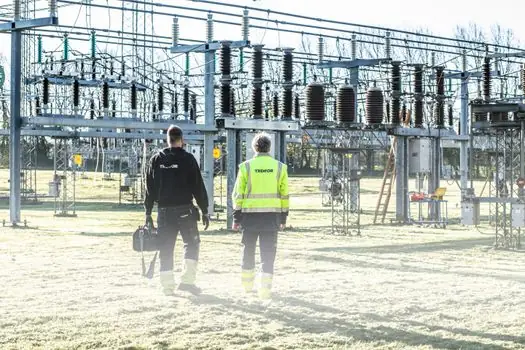
For customer-owned MV transformers with primary metering, NEC 230.205 and 230.208 govern the service disconnect and overcurrent protection on the supply side of the transformer, and the optional factory LBS and fusing on the transformer are generally not listed as service-rated equipment [S2]. The practical resolution on most projects is a separate padmount switchgear assembly upstream of the transformer, and the tank-mounted LBOR switch then becomes a local maintenance disconnect rather than the service disconnect [S2].
If the utility owns the transformer and only the secondary is customer side, the LBOR is typically operated by utility line crews with a hot stick under utility work rules, not by the customer's electricians, and the customer-side service disconnect lives on the secondary [S1][S2]. The 2014 Mike Holt forum thread captures the exact ambiguity that still drives spec notes in 2026: optional load break switches and fusing from the xfmr manufacturer are not a substitute for separately listed service equipment at the MV service point [S2].
Selection Criteria for a 2026 Primary Disconnect Spec
Five criteria drive the right LBS pick: voltage class, continuous current rating, short-time withstand, blade configuration, and operator interface. Pad-mount LBOR switches are commonly applied at 15 kV, 25 kV, and 35 kV classes with continuous current in the 200 A to 630 A range for the switch itself, with internal fuses selected to clear transformer inrush and secondary faults [S1][S3]. For LV machine isolation, a lockable rotary load break disconnect switch rated for three-phase systems, similar in form to the Trilar LD-BRK-SWITCH industrial SKU, is a fair reference point for the rotary handle and lockable interface [S5].
Arc-quenching medium separates the categories: an SF6 gas rotary LBS, a vacuum LBS, and an air-break LBS are the three common types, and choice depends on the MV class, indoor vs outdoor pad-mount, and the utility's familiarity with the interrupting medium [S4][S6]. For a loop-feed pad-mount, the T-blade vs V-blade choice is decided by whether the customer can tolerate a loop break at the transformer during a fault [S1]. Operators should also verify visible-break isolation (a true air gap) and lockable handle, both of which are baseline OSHA lockout-tagout requirements regardless of arc-quenching capability [S4][S5].
Limitations, Failure Modes, and What an LBS Does Not Do
Three failure modes recur in service. First, opening an LBS beyond its rated load or interrupting current causes contact erosion and eventually welding, so transformer magnetising inrush and downstream motor starting current must be inside the switch's make-and-break rating, not just the continuous rating [S1][S4]. Second, a disconnect switch used in place of an LBS will sustain an arc on the primary because it has no arc-quenching, and the result is typically a phase-to-phase or phase-to-ground fault inside the tank [S4].
Third, the LBOR on a pad-mount is not a protective device on its own; it does not clear a transformer secondary short, so bayonet fuses or current-limiting fuses in series with the LBS are mandatory on most MV pad-mount builds, and the LBS only isolates after the fuse has done its job [S3][S1]. For dry-type transformers the upstream protection typically sits in the dry-type transformer feeder panel, but the same fused-switch principle applies when the primary disconnect is remote from the transformer.
Sourcing Notes: Vendors, Pricing Anchors, and 2026 Lead Times
For LV machine isolation, a heavy-duty three-phase load break disconnect switch with lockable rotary handle sits in the low-hundreds USD price band, with the Trilar LD-BRK-SWITCH listed at $130 as a representative SKU for that class [S5]. MV pad-mount LBOR switches are quoted per project through transformer OEMs and padmount switchgear builders, with lead times sensitive to SF6 versus vacuum interrupters and to the T-blade versus V-blade configuration [S1][S3].
For facility-side MV service, the cleanest 2026 sourcing path is a padmount switchgear assembly (often a single-sided or double-sided MVSG) upstream of the transformer, paired with a tank-mounted LBS or LBOR for local isolation, rather than relying on the transformer-mounted switch as the service disconnect [S2]. When the LBS is selected for an electronic load test bay or a transformer test cell, the same arc-quenching and visible-break rules apply, but the continuous current is set by the test source rather than the service feed.
Standards and Compliance Anchors
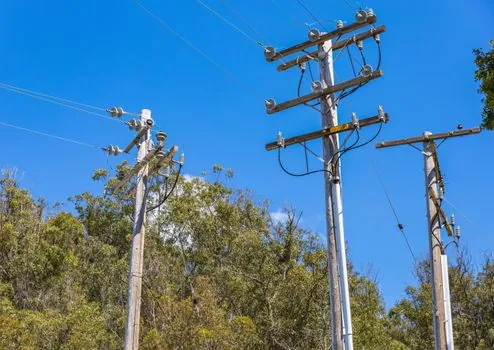
IEEE C37.20 series and IEEE C37.30 govern the application of LV switchgear and high-voltage air switches, while IEEE C37.20.7 covers arc resistance, and IEEE 1584 guides the arc-flash calculations that drive the PPE category on the operator standing in front of the LBS handle. For pad-mounted gear, IEEE C37.74 covers the requirements for switchgear up to 38 kV, which is the document most pad-mount LBOR vendors cite on their data sheets. NEC Article 230 Part V (230.205, 230.208) covers service disconnect and overcurrent protection for voltages over 600 V, and Article 240 covers overcurrent protection where the fuses live in the same tank as the LBS [S2].
Utility acceptance typically also requires the switch to meet the utility's distribution construction standard (e.g. a hot-stick operable handle with a clear position indicator, padlock provisions on the Off position, and a minimum visible-break distance in the open state) and to be operated only by qualified personnel with appropriate PPE [S1]. None of those utility-level requirements are visible in the OEM catalog data; they have to be confirmed against the serving utility's distribution standard before the LBS is ordered.
For related coverage, see Copper Busbar Supply for High-Density Racks: 2026 Spec and Sourcing Field Guide.