
The global machine tools market is sized at USD 117.2B in 2025 and projected at USD 123.7B in 2026, expanding to USD 183.5B by 2033 at a 5.8% CAGR over 2026-2033 [S1]. A second forecast pegs the 2026 base at USD 105.69B rising to USD 133.15B by 2030 at a 5.9% CAGR, with Amada Co. named as a major player [S7].
Within that envelope, CNC machine tools are tracked separately at USD 29.07B in 2025, USD 30.38B in 2026, and USD 37.27B by 2030 at a 5.2% CAGR, with Asia-Pacific as the largest 2025 region [S4]. For a deeper dive into the CNC side, see the spec-led piece on CNC machine demand 2026-2030 sizing, segments, spec levers. Industrial-technology demand overall is projected to keep growing at about 6% annually through 2030 [S6].
Global Market Sizing: Three Forecasts, One Direction
Three independent 2026-published estimates converge on direction, with differing bases. Grand View Research puts 2025 at USD 117.2B and 2026 at USD 123.7B, with a 5.8% CAGR through 2033 reaching USD 183.5B [S1]. The Business Research Company reports 2026 at USD 105.69B and 2030 at USD 133.15B, a 5.9% CAGR, citing Amada Co. as a major player [S7]. BCG's industrial-tech outlook frames machinery demand at a robust 6% annual pace through 2030 [S6].
The spread between USD 105.69B and USD 123.7B for 2026 reflects methodology differences (scope of metal cutting vs metal forming, inclusion of services, regional weighting), not contradiction. Both signals point to mid-single-digit nominal growth, with CNC carrying the higher sub-segment rate. Material-handling adjacencies that feed machine tool installations, like conveyor sorting line selection for warehouse automation in 2026, are tracking the same capex cycle.
CNC Sub-Segment: 5.2% CAGR, 4-Axis and 5-Axis Leading
The CNC machine tools market grew from USD 29.07B in 2025 to USD 30.38B in 2026 at a 4.5% near-term CAGR, and is forecast to reach USD 37.27B by 2030 at a 5.2% CAGR [S4]. Asia-Pacific was the largest region in 2025. Forecast-period growth drivers are smart factory adoption, EV production expansion, customized component demand, and AI-driven machining analytics [S4].
Forecast-period trends are multi-axis CNC machines, high-precision machining, IoT-enabled CNC systems, automated tool change/monitoring, and energy-efficient machining [S4]. Application split covers automotive, general machinery, precision engineering, and transport machinery. Material workholding is dominated by aluminum, stainless steel, and titanium cuts [S4]. For context on a parallel heavy-machinery segment, mining equipment 2026 tier map, model codes, and rebuild pricing tracks similar capex and rebuild economics for adjacent industrial users.
India Outlier: 11.7% CAGR, USD 3.47B Incremental Through 2030
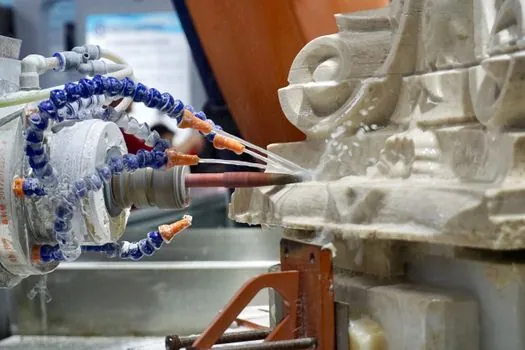
India is the standout geography, with the machine tool market projected to grow by USD 3.47B (USD 3,465.8M) over 2025-2030 at an 11.7% CAGR, more than double the global rate [S3]. In 2024, the CNC machine tools sub-segment was valued at USD 3.69B, and metal cutting machines held the largest revenue share by type [S3].
Incremental market opportunity is reported at USD 5.30B against a USD 3.47B forecast increment, with automotive and ancillary manufacturing named as the primary demand engines [S3]. The report cites a 25%+ defect-rate reduction when automated inspection is integrated with CNC machines in automotive supply chains, and flags five-axis and hybrid machining centers as the high-performance growth axis [S3]. Adjacent process tools used in India's automotive and heavy engineering plants, such as pillow block bearing selection for steel mills, see similar specification upgrades alongside these CNC deployments.
Tariff Drag and Reshoring: Who Pays, Who Gains
Tariffs on imported spindles, servo motors, linear guides, controllers, and high-precision mechanical components are inflating CNC machine prices in 2026, with manufacturing hubs in Asia-Pacific (China, Japan, South Korea) and Europe most exposed [S4]. The mechanism: cross-border supply chains raise input costs, capital investment decisions are delayed, and small and medium manufacturers are hit hardest. Same source notes tariffs are simultaneously accelerating domestic CNC component production as a countermeasure [S4].
Practical procurement impact: lead times on premium Asian and European CNC platforms extend, and total cost of ownership for new installations rises. The counter-pressure is local controller and spindle sourcing, which shortens some lead times but does not yet match premium Japanese or German accuracy grades. For facility owners weighing adjacent capex under the same tariff regime, overhead bridge crane selection for quarrying in 2026 shows how a separate heavy-machinery segment handles similar cost pass-throughs.
Demand Drivers: EVs, Smart Factories, AI Analytics
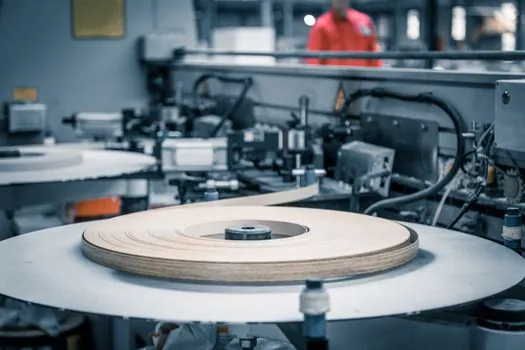
Four growth vectors repeat across the 2026-vintage forecasts: smart factory adoption, EV production expansion, demand for customized components, and AI-driven machining analytics [S4]. On the supply side, multi-axis CNC machines, IoT-enabled CNC systems, automated tool change and monitoring, and energy-efficient machining are the named 2026-2030 trends [S4]. BCG frames machinery and industrial-tech demand as growing at about 6% per year through 2030 on this combination [S6].
India's 11.7% CAGR adds a fifth vector, domestic substitution under regulatory frameworks, with metal cutting as the largest type slice and CNC as the largest technology slice in 2024 [S3]. A separate ScienceDirect machine-learning study forecasts global wind energy capacity and generation through 2030, a downstream demand signal for large-diameter, heavy-tolerance metal cutting and forming work that machine tool suppliers are positioning for [S5].
Options Comparison: CNC vs Conventional, by Selection Criteria
For buyers specifying between machine tool classes, four decision criteria carry the most weight through 2030. First, tolerance and repeatability, where 5-axis CNC and hybrid systems beat conventional equipment for complex contours, at a higher unit cost. Second, throughput and lights-out operation, where fully automatic CNC with automated tool change (named 2026-2030 trend) outperforms semi-automatic conventional [S3][S4].
Third, application fit: automotive and aerospace/defense favor CNC, with electronics and heavy engineering tolerating conventional for simpler work [S3]. Fourth, tariff-adjusted TCO: domestic CNC builds shorten lead times and dodge import duties but may not match premium imported spindle accuracy, a trade-off documented in 2026 CNC tariff analysis [S4]. Steel-mill buyers evaluating a parallel choice on rotating equipment can compare criteria in pillow block bearing selection for steel mills, which applies the same cost, tolerance, and lead-time logic.
Field Reality: Service Network and Installed-Base Constraints

Independent service providers (ISPs) are a real constraint on the 2026-2030 install base. One US Inland Northwest example, MTS-NW, covers Eastern Washington, Idaho, and Montana from Spokane and works across Fanuc, Haas, Siemens, Mitsubishi, Heidenhain, Fagor, Allen-Bradley, GE, and Yasnac controls, including older relay logic [S2]. Their scope, electrical/electronic/hydraulic maintenance, PLC/HMI alarms, servo tuning, encoder/feedback, and preventive maintenance on lubrication, filters, spindle health, backlash/ball-screw, and coolant, illustrates the installed-base complexity any 2026-2030 buyer inherits [S2].
Practical effect: a CNC platform decision is also a multi-decade service-contract decision. Lockout/Tagout, JHA, and documented procedures are baseline; fully insured status with COI on request is the procurement norm [S2]. Buyers scaling India-style 11.7% CAGR installations should weight regional ISP coverage as heavily as the machine spec sheet, since the fastest-growing geography tends to be the most under-served on after-sales density. The comparison is starker in heavy industries where mining equipment 2026 rebuild pricing shows the rebuild-vs-replace cost curve that 10-20-year CNC fleets will follow.
Trackable signals through the next 12 months: (1) Q4 2026 CNC tariff pass-through data from US and EU customs releases, which will sharpen the 5.2% CNC CAGR base case [S4]; (2) India's PLI scheme disbursement reports for FY2026-27, which move the 11.7% CAGR toward or away from plan [S3]; (3) BCG's annual industrial-tech update, last printing 6% annual growth through 2030 [S6].
For the relevant spec sheets and selection criteria, see concrete tool, pneumatic tool, and power tool.