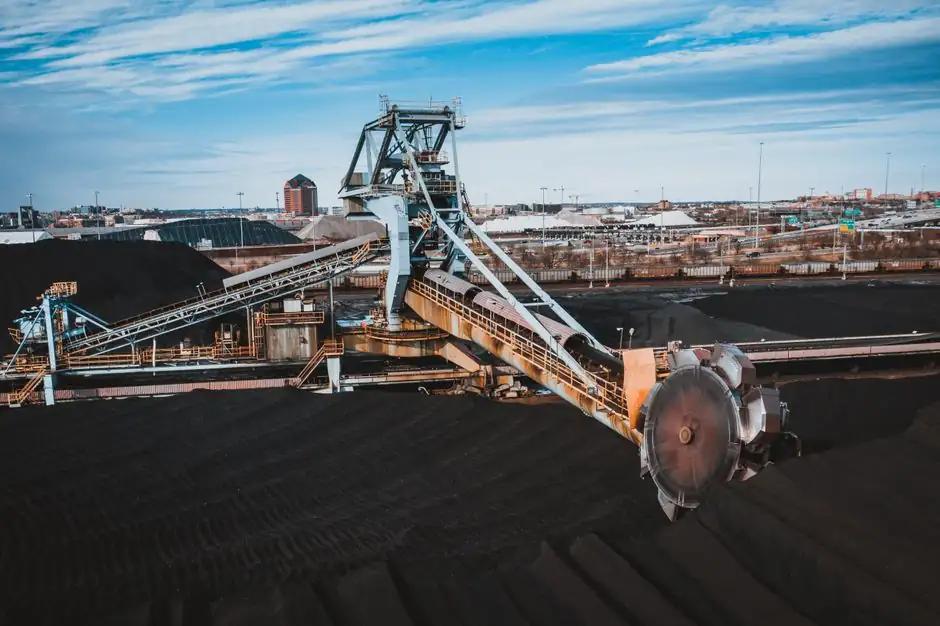
South Africa, Gabon, and Australia together account for the bulk of seaborne high-grade manganese ore in 2026, with the company-level supplier base split between six integrated miners and a long tail of mid-tier traders feeding Chinese processing hubs [S2].
Verified 2026 data places the global manganese ore market at USD 17.0 billion, up from USD 16.5 billion in 2025, with a projected CAGR of 8.4% to USD 34.0 billion by 2034, anchored by steel and alloying demand rather than battery-grade pull alone [S7].
Top Six Producers and Their 2026 Footprint
South32 leads the publicly listed stack through its Australian GEMCO operations and South African Mamatwan/Wessels assets, holding a structurally large share of the Kalahari Basin high-grade lumpy flow [S2]. Eramet, via its Gabonese Comilog subsidiary, runs the Moanda district and supplies roughly a quarter of seaborne high-grade ore at Mn 44-48%, making it the single largest non-South African origin for premium lump [S2].
Anglo American retains exposure through Hotazel Manganese Mines in South Africa, though parts of that asset are under divestment, and OM Holdings layers Australian mine output (Bootu Creek) onto a Malaysian ferro-alloy conversion chain that captures margin downstream of the ore [S2]. Jupiter Mines holds approximately 33% of the Tshipi Borwa joint venture in South Africa, a mid-grade contributor to the southern African export stream, while Vale operates the Urucum complex in Mato Grosso do Sul, Brazil, which moves through the Barcarena, Pará load port at Mn 42-52% under offers like the Svb Construtora listing at USD 180/t FOB/CIF with a 5,000 t MOQ and 150,000 t/yr capacity [S2].
Grade Bands That Decide Who Wins a Contract
Seaborne metallurgical ore is priced across three structural bands: high-grade lumpy at Mn 44% and above with low Fe and low P, medium-grade at Mn 35-43%, and low-grade fines at Mn 28-35% that feed silicomanganese and ferro-manganese smelters [S2]. The 26 January 2026 China spot reference for South African lumpy 28-30% Mn sits firmly in the low-grade band, trading at a structural discount to Gabonese high-grade lumpy that typically clears 44-48% Mn [S2].
Buyers comparing two offers should not stop at the headline Mn number; the Brazilian Svb Construtora spec lists Fe ≤ 8%, SiO2 ≤ 10%, Al2O3 ≤ 8%, K2O ≤ 4%, CaO ≤ 0.20%, MgO ≤ 0.15%, granulometry minimum 10 mm with 10% below 100 mm and 90% in-range, and moisture 2-12% seasonally, a penalty matrix that typically moves 1.4 t of dead weight per 100 t shipped for every 1% moisture swing [S2]. The Chinese certified reference material GBW07262 reports Mn 36.99 ± 0.07 mass fraction (×10⁻²), MnO2 54.38 ± 0.20, SiO2 22.24 ± 0.10, P 0.081 ± 0.002, and S 0.013 ± 0.001, giving procurement a mid-grade metallurgical benchmark against which new tonnage can be qualified [S1].
Country Output and Reserve Concentration
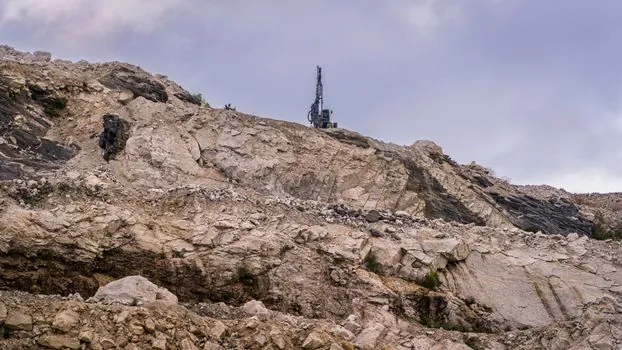
South Africa holds the largest share of global manganese ore reserves and hosts the bulk of Kalahari Basin production, while Gabon ranks second by mine production on the strength of the Moanda district, and Australia rounds out the top three through GEMCO and Bootu Creek [S2]. MOIL Ltd., the Indian state miner headquartered in Nagpur, recorded manganese ore production of 18.02 lakh tonnes in FY25, a 2.7% year-on-year increase, with sales of 15.87 lakh tonnes up 3.3% YoY and ferro manganese output of 12,000 tonnes up 18% YoY [S1].
Exploratory core drilling of 1,07,530 metres at MOIL, up 22% on the prior fiscal year, underwrites forward reserve pipeline, and the October-December 2024 quarter was MOIL's best-ever third quarter with 4.6 lakh tonnes produced and sales up 13% on the same quarter a year earlier [S1]. For buyers, this kind of drilling footage is the load-bearing forward-supply signal, because mid-grade concentrates typically fall in the 35-48% Mn range and new tonnage has to clear the GBW07262-style penalty envelope before it trades at premium [S1].
Silicomanganese Alloy Pull and the China Sink
The silicomanganese ore market reached USD 21.57 billion in 2025 and is projected to hit USD 30.21 billion by 2032 at a 4.93% CAGR, with high-grade ore accounting for 55.3% of the 2025 mix and carbon steel production consuming 65.1% [S4]. Asia Pacific dominated at USD 12.21 billion of the 2025 value, followed by Middle East and Africa at USD 4.34 billion, Europe at USD 2.62 billion, Latin America at USD 1.30 billion, and North America at USD 1.09 billion [S4].
China remains the largest single importer of seaborne manganese ore and the preeminent processing hub, accounting for over 50% of global silicomanganese alloy production, while South Africa and Gabon remain the dominant suppliers of high-grade feed for those furnaces [S4]. U.S. antidumping duty orders on silicomanganese imports from India, Kazakhstan, and Venezuela continued through the December 2024 Federal Register action, a trade-flow constraint that redirects Asian volumes and tightens the seaborne pool for non-sanctioned origins [S4]. For context on the broader battery-manganese chain that competes with the steel pull, the cobalt sulfate EV cathode signal is covered separately in the cobalt sulfate demand 2026-2030 spec map, and the parallel lithium hydroxide cathode pull sits in the lithium hydroxide 2026 to 2030 outlook.
Comparison: How the Six Major Producers Stack Up
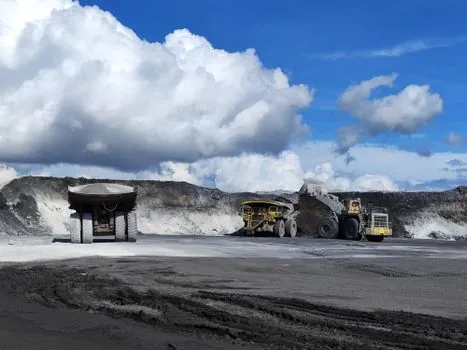
South32, Eramet/Comilog, Anglo American, OM Holdings, Jupiter Mines, and Vale differ on grade, geography, and downstream integration rather than on headline ore tonnage alone [S2]. South32 and Anglo American sit in the high-volume South African Kalahari cluster, Eramet/Comilog owns the premium Gabonese lump franchise, OM Holdings adds Malaysian ferro-alloy conversion margin, Jupiter Mines concentrates exposure at Tshipi Borwa, and Vale delivers Brazilian origin with Barcarena port access at Mn 42-52% [S2].
On the four procurement decision criteria that matter, the ranking shifts: for raw tonnage and reserve depth, South32 and Anglo American lead; for premium grade (Mn 44-48%), Eramet/Comilog leads; for downstream alloy margin capture, OM Holdings leads; for low-P, low-Fe penalty control at mid-grade, the Brazilian Vale and trader offers (Svb Construtora at Fe ≤ 8%, SiO2 ≤ 10%, P 0.081% band per GBW07262) score highest [S1][S2]. Buyers who need direct-charge SiMn feed without sintering should default to the high-grade lumpy band; buyers running ferro-manganese or battery-manganese sulfate lines can absorb medium and low grades, which is the same logic that the Chinese port-level price differential between high-grade lumpy and sintering fines reflects [S2].
Supply Risk, Capex, and the Consolidation Floor
Manganese is treated as both a steel alloying element and a battery-grade precursor, which exposes a single ore flow to two very different downstream shocks, and that dual exposure is the structural reason the 2026 mid-grade envelope keeps widening on the high side [S1]. Kazakhstan's ERG Aktobe has piloted biogas in sintering furnaces, cutting coal dependency by 15% as a route to compliance with regulations like the EU's Ecodesign for Sustainable Products Regulation, which requires a 50% reduction in industrial waste by 2030, but the capex bill exceeds USD 200 million for mid-sized facilities and forces consolidation toward financially robust producers [S4].
The MOIL drilling jump, the persistence of South African and Gabonese high-grade dominance, and the projected doubling of the global manganese ore market to USD 34.0 billion by 2034 collectively point to a 2026 market in which the six-firm oligopoly deepens rather than fragments, with mid-tier traders and Chinese processors absorbing the marginal tonnage at grade discounts [S1][S7]. For the steel and SiMn procurement desk, the actionable spec is therefore: anchor contracts on Mn 44-48% lumpy where SiMn direct-charge economics require it, qualify mid-grade 35-43% for FeMn and battery-manganese sulfate routes, and treat any offer below Mn 28% as sintering feed rather than prime ore [S2].
Trackable signals for the next procurement cycle: weekly CBCIE port inventory at Tianjin, Caofeidian, Lianyungang, and Fangchenggang (last refreshed 19 June 2026); MOIL's quarterly production and sales prints against the FY25 base of 18.02 lakh tonnes; and the Eramet/Comilog Moanda grade-band disclosures that anchor the high-grade lumpy benchmark [S1][S2].
Spec-level background on the components involved: pressure transmitter, flow meter, and industrial valve.