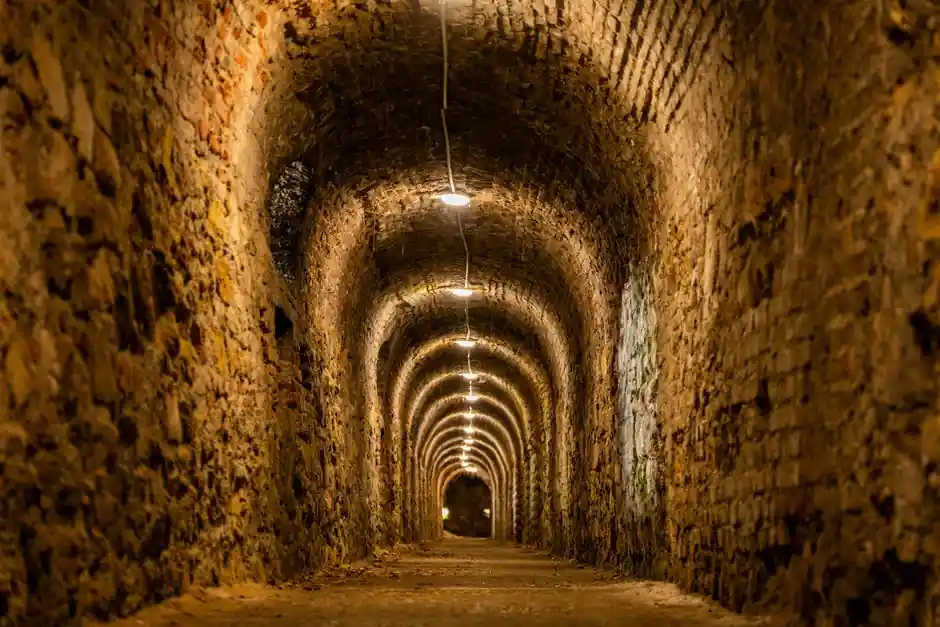
Underground mine motor control centers must meet NEMA Type 12 minimum, often paired with NEMA 4 or 4X sealing when washdown or corrosive groundwater exposure is present, per the latest design guidance for low-voltage MCCs [S2].
Available short-circuit bracing on standard low-voltage MCCs reaches 100,000 A rms symmetrical at 600 V, 50/60 Hz, with bus rated 600-2000 A horizontal and 300-600 A vertical; underground sections should be specified to that upper bracing limit because mine supply transformers are typically stiff [S2][S3].
NEMA enclosure tiers mapped to mine area classification
NEMA Type 1 enclosures suit only clean indoor spaces, which rules them out for any mine area where coal dust, silica, or diesel particulate can accumulate, as confirmed by industry casework on legacy dust-handling facilities [S3][S4].
Type 2 drip-proof adds protection against falling noncorrosive liquids but still leaves dust paths open, so it is acceptable only in surface crusher MCC rooms and dry switchgear buildings, not in active working faces [S3].
Type 12 (gasketed, dust-tight, drip-tight) is the practical floor for underground gate-end boxes and section MCCs, and Type 13 (oil-tight, dust-tight) is the next step up where cutting fluids or lube mist is present, even though mines do not normally use soluble oils [S3].
Type 3R walk-in and Type 4 (water-tight, dust-tight) are specified for surface-to-underground transfer stations where rain ingress and hosedown are routine, while Type 4X (corrosion-resistant, typically 304 or 316 stainless) is reserved for shaft-bottom installations with high chloride or acidic water exposure [S2][S3].
For comparison on the most common mine-duty options, the table below lines up the four practical tiers against the three criteria that drive underground selection:
NEMA 12 (gasketed steel) is widely used for dry underground sections; ingress protection is dust-tight and drip-tight from above, corrosion resistance is limited to mild atmospheres, and cost is the lowest of the sealed options. NEMA 4 (steel, gasketed) is widely used for transfer stations and pump rooms; it adds protection against hosedown and splashing water, corrosion resistance remains limited, and cost is moderate. NEMA 4X (304 or 316 stainless) is widely used for shaft bottoms and brine-exposed faces; it matches NEMA 4 sealing and adds chloride resistance, while cost is the highest. NEMA 7/9 (explosion-proof, cast) is specified only where NEC Class I Group D methane or Class II Group F coal-dust atmospheres are formally classified; sealing is flame-path rather than gasket, and weight per unit is several times that of a gasketed steel section [S2][S3][S4].
Ingress, dust, and IEC IP cross-reference for global tenders
European and Australian mine tenders usually call out IP54 as the equivalent of NEMA 12, with IP65 matching NEMA 4 and IP66 matching NEMA 4X for hosedown and temporary submersion resistance [S3].
IP54 demands dust-protected (not dust-tight) enclosures that resist splashing water from any direction, which is why most IEC-spec gate-end boxes pair IP54 with a supplementary enclosure room pressurization scheme in working headings [S3][S4].
For longwall face MCC skids, IP65 is becoming the norm because the enclosure must survive both dust ingress and the periodic low-pressure wash used to clear sticky coal fines from the panel face.
Readers cross-referencing broader enclosure decisions can review the control cabinet entry for general IP-to-NEMA selection logic, which applies to mining sections once area classification is fixed.
Arc-flash containment and short-circuit bracing on 600 V mine MCCs

Arc-resistant low-voltage MCCs tested to IEEE C37.20.7 guidance are now listed by major OEMs at 600 V with 100 kA bracing and horizontal bus to 3200 A, a rating that lets a single section feed a full longwall cluster without paralleling structures [S1][S2].
Standard NEMA limits bus temperature rise to 65 °C over a 40 °C ambient, for a 105 °C maximum, while UL 845 limits the rise to 50 °C over 40 °C, for a 90 °C maximum; UL-listed MCCs must meet or exceed the tighter 50 °C limit, and Siemens literature confirms their TIASTAR bus is tested to that 50 °C rise figure [S3].
Underground rooms frequently run above 40 °C because of limited ventilation, so derating the bus by one frame (e.g. 1200 A instead of 1600 A) is common engineering practice, and an active PLC control ventilation interlock tied to compartment temperature is the cleanest way to keep the section inside its nameplate ambient.
Arc-resistant construction adds internal venting and a reinforced front, but it does not substitute for proper enclosure sealing; an IP54 arc-resistant section still needs gasketed gland plates at every cable entry to keep combustible methane or coal dust from reaching the bus [S1][S4].
MSHA, NEC Class II, and combustible-dust constraints underground
MSHA 30 CFR 75 governs underground coal mine electrical installations, and NEC Article 502 (Class II locations) covers dust-ignitionproof enclosure requirements in parallel, with Section 502.10(A)(3) being the basic Class II, Division 1 enclosure rule that engineers repeatedly cite when specifying gate-end equipment [S4].
For Class II, Division 2, the practical interpretation across U.S. code panels is that a dust-tight enclosure (Type 12) is sufficient, because Division 2 assumes dust is not normally in suspension; that is why many sugar, grain, and coal-prep MCC retrofits move to Type 12 once a proper hazard assessment clears the area to Division 2 [S4].
Hard-rock mines without methane liberation are usually unclassified electrically, but they still default to Type 12 because the diesel particulate and drilling mist create dust-ignition risk equivalent to a Class II environment in practice.
Engineers who need a quick refresher on how Class II dust is defined (combustible particles 500 µm or smaller that pass a U.S. No. 35 sieve per ASTM E11) can pull that definition directly into a project specification [S4].
Layout, ventilation, and ambient control for MCC rooms underground
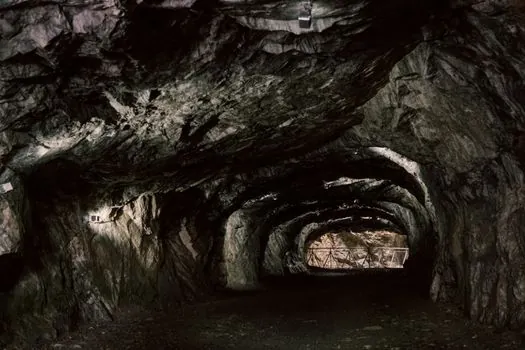
Design standards for MCC rooms call for a well-ventilated, humidity-controlled, dust-free area held between 0 °C (32 °F) and 40 °C (104 °F), which in an underground crusher chamber typically means a dedicated refuge with filtered intake and exhaust on a separate ventilation split [S6].
Heat loss from a fully loaded 1600 A section is on the order of several hundred watts per vertical section, and a 4-section lineup can therefore require 1-2 kW of dedicated cooling; forced-air heat exchangers or water-cooled cabinets are commonly used because mine airways cannot be relied on to dump that load passively [S2].
Cabinet access doors should swing outward, and a minimum 1 m (39 in) clear aisle is needed in front of any plug-in bucket so that a 100 kg unit can be cranked out with a standard ratchet handle, an issue covered in detail in the MCC section width vs starter bucket count reference.
Planning spare buckets and space-only units at the specification stage, rather than as a change order, typically saves 8-12 weeks of lead time on longwall upgrades; this is covered in Specifying MCC Spare and Space Units for Future Starters.
Comparison of enclosure options for underground MCC service
Four enclosure families cover the vast majority of underground MCC bids, and the right call comes down to area class, washdown exposure, and corrosion load: [S4]
NEMA 12 / IP54 (gasketed steel) costs the least and is widely used for dry gate-end and section MCCs in hard-rock and coal mines; ingress is dust-tight and drip-tight, corrosion resistance is limited, and arc-resistant options are available up to 100 kA at 600 V [S2][S3].
NEMA 4 / IP65 (gasketed steel, hose-down) costs 10-20% more than Type 12 and is widely used for pump rooms, transfer stations, and longwall face skids; ingress adds protection against splashing and hosedown water, while corrosion resistance remains limited and the same 100 kA arc-resistant rating applies [S1][S3].
NEMA 4X / IP66 (304 or 316 stainless) costs roughly 1.8-2.5x a Type 12 section and is widely used for shaft bottoms, brine-exposed workings, and any heading with pH below 5 in the mine water; ingress matches NEMA 4 with full temporary-submersion tolerance, corrosion resistance is high, and 316 grade is preferred where chlorides exceed 200 mg/L [S2][S3].
NEMA 7/9 (cast explosion-proof) costs 3-4x a Type 12 section and is specified only for NEC Class I Group D (methane) or Class II Group F (coal dust) classified areas; ingress is via flame path rather than gasket, weight is several times higher, and bus ratings are typically capped at 800 A because of thermal limits in cast enclosures [S2][S4].
Cable entry, grounding, and interconnects on underground sections
Gland plates must be gasketed and bonded to the cabinet body so the enclosure maintains its tested IP or NEMA rating at the cable entry, a detail that is often missed on retrofit builds where armored cable glands are added after the factory fit-out. [S2]
For trailing-cable gate-end boxes fed by mining dump truck supply skids via a control cable reel, the cable entry should be a full-radius BNC-style gland that takes the torsional load off the gasket, otherwise dust paths open up within a few months of service.
High-resistance grounding (HRG) with a ground-fault relay is the dominant ground-fault scheme on U.S. and Australian underground MCCs, because it limits arcing-ground fault current to 5 A or less and lets operations ride through a single fault long enough to re-route production; the engineering rationale is laid out in Mining MCC High-Resistance Grounding with Ground-Fault Relays.
For starters above 75 kW, a soft-starter or VFD bucket is preferred across a control valve and pump skid, and that choice is best locked in once the access control and PLC logic for trip, restart, and remote reset are agreed, otherwise the bucket gets pulled back to direct-on-line at the panel-review stage.
Trackable next signals for specifiers: confirm the 2025 UL 845 listing on any new vendor's 100 kA arc-resistant section, and verify the MSHA approval number on every explosion-proof bucket slated for a Class I, Group D heading before the purchase order is cut.