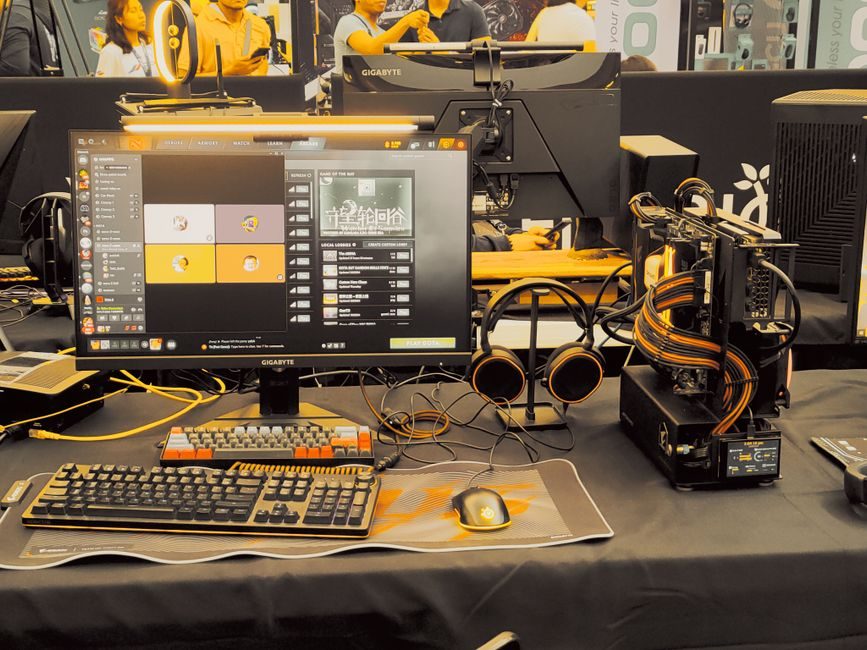
An industrial PC (IPC) is a fanless or short-burst-cooled x86 or ARM computer built for 24/7 DIN-rail, panel or wall-mount duty inside a control cabinet, with operational temperature windows wider than commercial desktops. Spec sheets for 2026 lines from rugged-edge vendors like Premio publicly separate "Semi-Rugged" and "Extremely Rugged" tiers under one EDGEBoost Technology [S6].
Budget guides for 2026 gaming and productivity PCs continue to frame the consumer market around GPU tiers, while the industrial line is defined by the cabinet's worst-case ambient, the I/O that must be wired in, and the certifications the EH&S team will not waive [S1][S5].
CPU and Platform: From Atom-class to Xeon-Edge
Premio's 2026 buying-guide content lists discrete NVIDIA Rugged Edge AI and Intel Rugged Edge AI product lines as the default references for new edge-AI retrofits, alongside smaller-form-factor Intel and ARM lines for SCADA-only duty [S6]. Modern x86 industrial boards are typically specified around Intel Atom, Core i3/i5/i7 U-series, or Xeon-class embedded SKUs, with ARM (NXP i.MX8, Rockchip RK3588) used where deterministic latency and low power matter more than raw cores.
Buyers should anchor the CPU choice to three measurable limits: (1) TDP envelope, because that decides whether a fully sealed aluminium chassis will hold spec at 60 °C ambient; (2) memory ceiling (commonly 8 / 16 / 32 / 64 GB DDR4 or DDR5 SODIMM, with ECC on Xeon lines); (3) long-life SKU availability, which on industrial motherboards is usually a 7–10 year supply window versus 18 months on consumer boards.
For PLC-rich cells where the IPC sits next to a Programmable Logic Controller Buying Guide 2026: Form-Factor, Protocol and Safety Spec selection, an Atom or Core i3 is usually enough; vision lines and edge-AI inferencing push the spec to Core i7 / Xeon or an embedded Jetson module.
Thermal Design: Fanless vs Forced-Air vs Hybrid
Premio's "Semi-Rugged" and "Extremely Rugged" tags map to fanless sealed chassis and fan-assisted rugged chassis respectively, with EDGEBoost Technology positioned as a modular thermal/IO subsystem that lets the same board scale across the two tiers [S6]. A sealed aluminium extrusion with no moving parts is the default for dusty or vibration-heavy cells (food, foundry, mobile equipment) because there is no fan to choke.
Forced-air industrial PCs add a smart PWM fan and dust-filtered intake; they accept higher TDP (35–65 W class CPUs) but introduce a maintenance item and a sealed-bearing MTTF figure (commonly 50,000 h at 40 °C) that must be tracked in the CMMS. Hybrid designs use a heat-pipe or vapour chamber plus a small fan that only ramps above a board sensor threshold, and are common in vision workstations where the CPU and a discrete GPU both need sustained thermal headroom.
Operating-temperature claims should be read with the test conditions: a vendor "−20 °C to +70 °C" line is typically qualified with industrial-grade SSD, wide-temp SO-DIMM, and 0.5 m/s airflow across the fins, not in still air inside a closed cabinet at 100 % CPU load.
Ingress, Vibration and Mechanical Mounting
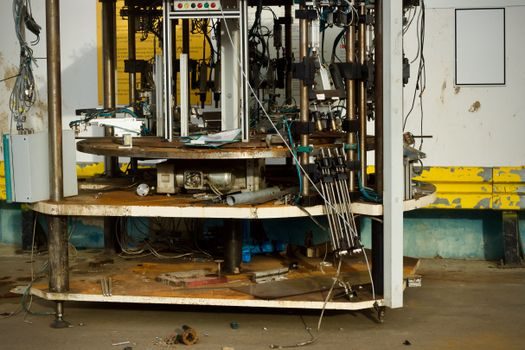
IP rating is the first thing the maintenance lead will check: IP65 (dust-tight + low-pressure water jets) and IP67 (temporary immersion to 1 m for 30 min) cover most washdown cells, while IP20 fanless units are confined to sealed cabinets. Vibration specs follow the IEC 60068-2-6 family for sinusoidal and IEC 60068-2-64 for random vibration, with M.2 storage physically locked (not just screw-fitted) if the platform is going onto a vehicle, AGV or vibrating press. [S1]
Mechanical format falls into three camps: DIN-rail (small, Atom/ARM class), wall/panel mount with VESA 75/100 pattern, and 19" rack (1U/2U/4U) for control-room or server-room aggregation. The 19" rack format is the only one that cleanly supports multi-slot PCIe backplanes, and the backplane choice (PICMG 1.3, proprietary PCIe Gen 4/5) is a separate spec item from the chassis itself. Premio's 2026 portfolio shows "Scalable Sizes" as a design pillar, indicating that the same compute module ships in compact, mid and rack footprints [S6].
For a deeper read on how the IPC sits next to a PLC rack, the PLC Selection Criteria: I/O, Scan Time, Memory and Protocol Fit for Industrial Buyers piece lines up scan-time and protocol budgets that an IPC has to absorb on the same Ethernet segment.
I/O, Expansion and Protocol Stacks
An industrial PC is a connectivity appliance first. The 2026 baseline most buyers will end up specifying looks like: 2–4× 2.5 GbE (one often shared with iAMT/Intel vPro for out-of-band management), 1–2× RS-232/422/485 with auto-direction, 4–8× USB 3.2 (with at least one keyed/locked pair on the front), isolated digital I/O (8 or 16 channels, 24 V tolerant), and at least one display output (HDMI 2.0 or DP 1.4). Wireless (Wi-Fi 6E/7, 5G Sub-6, Bluetooth 5.x) is moving from M.2 cards to soldered modules for vibration reasons, with antenna feeds on IP-rated SMA bulkheads rather than internal pads. [S2]
Fieldbus and industrial-Ethernet protocol support is no longer a question of "does the stack run" — almost every x86 IPC can carry PROFINET, EtherNet/IP, EtherCAT, Modbus TCP and OPC UA Pub/Sub. The spec that actually matters is: (a) the cycle time the OS can sustain without jitter (a real-time Linux PREEMPT_RT or a vendor's RTX-style extension on top of Windows IoT is the differentiator); (b) the number of simultaneous class-3 PROFINET connections the NIC will hold; (c) whether TSN is supported on the silicon or only via a firmware shim.
Storage should be specified as industrial-grade M.2 NVMe with PLP (power-loss protection) capacitors and a published TBW (Terabytes Written) rating; a consumer NVMe will silently lose data on a brownout. RAID 1 across two M.2 slots is the cheapest insurance for any IPC that holds recipe or batch data, and is standard on the Xeon-class lines.
Certifications and Codes Buyers Cannot Skip
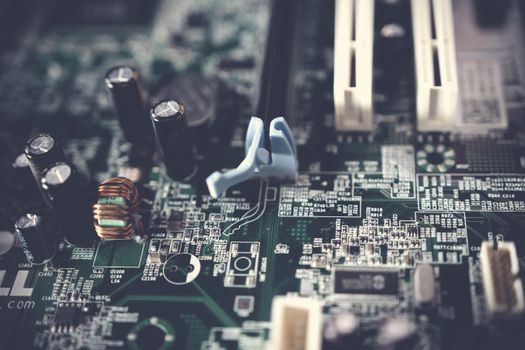
Certification language on an IPC datasheet is a short list of codes that each lock the unit to a region, a zone, or a buyer: CE / FCC / UKCA for EMI, UL 60950-1 or IEC 62368-1 for electrical safety, IEC 60068-2-xx for shock and vibration, and for hazardous-area use, ATEX 2014/34/EU for the EU plus IECEx for the rest of the world. An IPC installed inside a cabinet in Zone 2 may only need a manufacturer self-declaration; the same IPC on the floor in Zone 1 needs a properly certified enclosure. [S3]
UL 508A is the panel-builder standard that applies to the cabinet the IPC goes into, not to the IPC itself, but it constrains the IPC's creepage/clearance markings and its component-level temperature ratings. For shipboard, rail and rolling-stock deployments, buyers must add the relevant IEC 60945, EN 50155 (TX/WT) or E-mark/UN ECE R10 codes; these usually rule out consumer-grade boards even if the spec on paper looks acceptable.
Premio's buying-guide content explicitly positions EDGEBoost as a modular subsystem behind both the Semi-Rugged and Extremely Rugged SKUs, which is the language buyers should look for: a single platform, a published certification matrix, and a clear split between I/O-rich and thermally-hardened variants [S6].
Decision Matrix: Which IPC Architecture Fits Which Plant
Using a 4-axis comparison, the four common 2026 architectures line up against cost, ambient, I/O and certification demands: [S4]
Atom / ARM fanless DIN-rail: lowest cost, ambient −20 °C to +60 °C typical, fixed I/O only, CE/UL/IEC 60068. Best for SCADA remote terminals, light PLC gateway duty, and the kind of line covered in the Industrial Pump Smart Manufacturing 2026: Spec Levers, IIoT Integration, Sourcing Signals discussion of pump skid telemetry.
Core i5/i7 fanless panel/wall-mount: mid cost, −20 °C to +70 °C with derating, modular M.2 I/O plus isolated DIO, CE/UL/IEC 60068 plus optional IECEx. Best for HMI, machine vision pre-processing, and edge inferencing on the same node.
Semi-Rugged Core/Xeon with hybrid cooling: mid-to-high cost, sustained 35–65 W CPU loads, full PCIe and 2.5 GbE count, CE/UL/IEC 60068 plus EN 50155 or IEC 60945 if specified. Best for line-side control rooms, mobile equipment, and on-vehicle data aggregation [S6].
Extremely Rugged Xeon / GPU edge-AI: highest cost, −40 °C to +75 °C, IP65/IP67 chassis, EDGEBoost modular I/O, ATEX/IECEx options, NVIDIA-validated SKUs for vision and LLM inferencing. Best for greenfield lines where the IPC is the AI inferencing node as well as the SCADA node [S6].
Lifecycle, Sourcing and 2026 Buy Signals
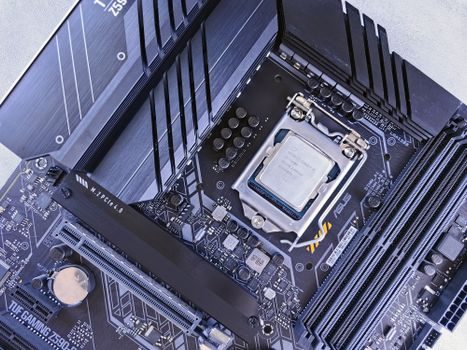
Two verifiable signals make 2026 a different buy year from 2024. First, rugged-edge vendors are publishing long-life SKUs and component-bill-of-materials (CBoM) lock-in as a contractual item; the 2026 Premio buying-guide material treats EDGEBoost Technology and Scalable Sizes as platform-level commitments rather than per-product features [S6]. Second, the broader PC market coverage in 2026 is concentrating around Prime Day-style deal events on consumer lines, which is the clearest signal that consumer desktop demand is squeezing channel inventory and pushing buyers of consumer-grade "white-box" units into shorter support windows [S5].
Industrial procurement teams should treat any IPC that does not publish a published End-of-Life (EOL) and Last-Time-Buy (LTB) policy, a 7–10 year component-availability window, and a signed CBoM as a consumer product with a different label. For the sourcing workflow itself, the Industrial Pump Manufacturing Process: 2026 Shop-Floor Walkthrough piece is a useful reference on how shop-floor integration and IPC commissioning intersect.
Trackable signals through the rest of 2026: (1) Premio's EDGEBoost product tree expansion and any IECEx-certified fanless SKUs entering the catalogue; (2) Intel's embedded-SKU roadmap transitions (typically a 12–18 month cross-purchase window at the end of a family); (3) NVIDIA's embedded Jetson cadence, which sets the floor for AI-edge IPC pricing. Buyers who need to ship 2026-Q3 retrofits should pin the IPC SKU and the long-life variant at the same time, not in separate purchase orders.
For component-level specifications, see industrial pc, linear guide, and crossed roller guide.