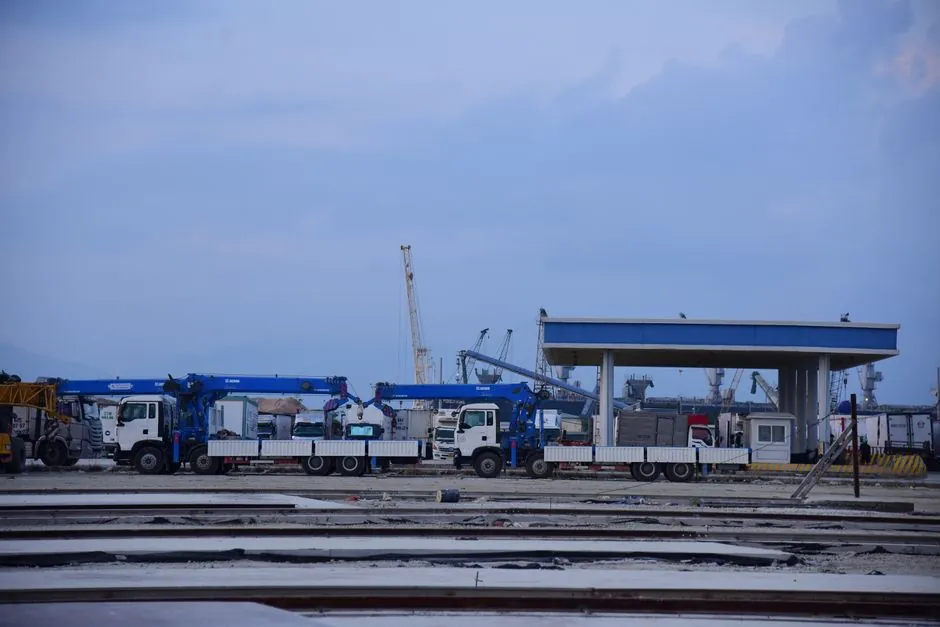
A mini concrete mixer truck in the 2-4 cubic meter class measures roughly 5,770-7,168 mm long, 2,160-2,491 mm wide (excluding mirrors), and 2,650-4,000 mm tall depending on cab and drum choice, with a wheelbase around 3,350 mm and full payload weight of 13.5-18 tonnes [S1][S3][S4][S5].
This size band covers the "small" or "mini" category widely used on UK residential drives, rural farms, and confined inner-city plots, where a full-size concrete mixer truck cannot physically reach the pour point [S2].
2 m³ vs 3 m³ vs 4 m³: A Side-by-Side Dimension Comparison
Published OEM dimension tables show clear scaling: a 4 m³ UK Minimix-style mixer comes in at 7,168 mm overall length, 2,491 mm body width, and 2,923 mm mirror-to-mirror width, against a 2-3 m³ Chinese-built mini (4x2, 6-wheel) at 5,770 x 2,160 x 2,650 mm on a 3,350 mm wheelbase [S1][S4].
Aggregate weight scales with capacity: the 4 m³ class typically runs 18 tonnes GVW, while a 3 m³ 4x2 chassis sits near 13.5-15.8 tonnes, which directly determines the truck class licence (C1 in the UK covers 3.5-7.5 t, class C covers above 7.5 t) and the reinforced slab or roadway rating required at the pour point [S3][S5].
Note the UK 4 m³ "concrete2you" truck is quoted at 3,000 mm wide and 4,000 mm tall, versus the narrower Holcim/Aggregate Industries 4 m³ body at 2,491 mm wide; the difference is cab width and chute stowage, both of which have to be measured on the actual delivery vehicle, not assumed from a brochure [S1][S3].
Drum Geometry, Barrel Thickness, and Why 4 m³ Is the Practical Mini Ceiling
For a 4-6 m³ mini mixer, the drum shell is typically 6-8 mm thick and the mixing blades ride inside a 4-6 mm barrel, geometry that gives the 2-4 m³ mini class its rated mixing volume without pushing the centre of gravity above the rear axle [S4].
Rated drum capacity is not the same as usable payload: a 10 yd³ (7.6 m³) drum has roughly 14 yd³ of physical void, so the operator loading rule is "fill to rated, never to the brim" to leave mixing space, prevent spillage on inclines, and keep the agitator from choking [S2].
In practice, that is why the "mini" label stops around 4 m³ on most UK and EU roads: a 4 m³ truck on an 18 t chassis is the largest payload that still fits within a standard 7.5-18 t two-axle configuration without a third steering or lift axle, which would push overall length past 7,500 mm and into UK height-restricted urban zones [S1][S3][S5].
Chute Reach, Discharge Height, and Site Access Geometry

Holcim's 4 m³ Minimix truck gives 1,906 mm from the first chute pivot to the end of the second chute and 2,669 mm to the end of the third chute, which is the working reach a screeder has from the back of the truck to the far edge of a standard 2.4 m domestic slab [S1].
Discharge height is governed by drum tilt and chute angle, and the 4,000 mm overall height of a typical mini mixer is the constraint that rules out low-clearance sites such as shop soffits, basement ramps, and indoor agricultural buildings where door headers commonly sit at 2.8-3.2 m [S3].
On a 6 m³ truck the equivalent chute figures shift to 2,440 mm and 1,830 mm, while the 8 m³ version extends the third chute to 2,694 mm, showing that as capacity grows the operator gains reach but loses the tight turning radius the 2-4 m³ class was specified for in the first place [S1].
How Mini Mixers Differ From Concrete Pump Trucks
A concrete pump truck or truck-mounted concrete pump places concrete via a hydraulic boom or pipeline, with measured output rates typically 30-160 m³/h depending on boom length and piston diameter, whereas a mini mixer's output is limited by drum tilt and chute flow, usually 1-2 m³ per minute of free discharge [S2].
The pump route wins on horizontal reach (a 36 m boom covers a 30 m radius from the truck's parking point) but costs more per cubic metre for short pours, so a 2-4 m³ mini is still the right tool when the pour is small, the site is reachable, and discharge time under 10 minutes is acceptable [S2].
For jobs that combine volume and reach, such as a 15 m³ foundation pour 20 m from the only legal truck parking spot, the practical answer is a 4 m³ mini running shuttle trips to a small line pump, not a single full-sized mixer that cannot get through the gate [S1][S2].
Selection Criteria: When 2 m³, 3 m³, and 4 m³ Are the Right Pick
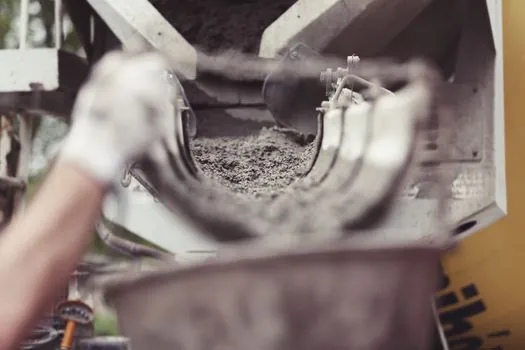
Pick a 2 m³ mini when the site is gated below 2.5 m, the access lane is below 2.2 m wide, and the pour is a single shed base or fence post strip under 2 m³; the 5,770 mm length and 2,160 mm body width fit most domestic drives in the UK and EU [S4][S5].
Pick a 3 m³ mini when the pour sits between 2 and 3 m³ (a small extension foundation or a single-car garage slab at 100-150 mm thickness), and you still need to keep GVW under 15.8 t for a C1-licence operator or a weight-restricted bridge approach [S5].
Pick a 4 m³ mini when the order is 3-4 m³ and the site can accept a 7,168 mm length and 2,923 mm mirror-to-mirror width, which means no sharp 90° reverses into a sub-3 m lane and no overhead cables below 4.0 m; this is the most common "small load" specification called out by UK readymix suppliers [S1][S3].
Limitations and Failure Modes Engineers Hit on Mini Mixers
Overloading beyond rated drum capacity drops concrete out of the charging hopper during transit, and chronic overloading warps the 4-6 mm barrel skin, a failure mode that starts as a 2-3 mm bulge at the rear and progresses to weld cracking at the blade-to-shell joint [S4].
Mixer truck payload also depends on water-to-cement ratio and aggregate moisture: a 4 m³ drum at a 0.55 w/c with saturated aggregate weighs roughly 9.6 t of concrete plus the 8-9 t chassis, which is why the rated 18 t GVW figure assumes the supplier is not also topping the water tank to full before each trip [S2][S3].
Standards, Testing, and What Buyers Should Verify

For any mixer truck, the relevant chassis and drum standards are typically the ECE R29 cab strength, ECE R55 coupling, and the drum balancing grade per ISO 1940 G16 to G40 depending on drum speed; the drum shell thickness itself is generally a manufacturer-internal QA value rather than a published standard threshold, with 6-8 mm being the working range for a 4-6 m³ class [S4].
For quality control on the concrete itself, suppliers test to EN 206 (the European concrete standard) and its UK national annex BS 8500, with slump measured on delivery, typically 75-100 mm for a standard GEN1 mix, and this is the metric a buyer should request on the delivery ticket rather than just trusting the drum rating [S2].
If a project is governed by electronic test and measurement on the batching side, the in-cab flow meter and slump sensor on a modern mini mixer are calibrated to roughly ±2% over the load range, a number worth confirming with the supplier before signing a high-volume frame contract [S2].
Track these signals before the next order: (1) the concrete2you 4 m³ "3 m wide, 4 m tall" envelope is the worst-case to plan against, not the narrower Holcim 2,491 mm body; (2) check the third-chute reach figure on the actual delivery truck, since 1,830 mm versus 2,694 mm changes how close the truck parks to the slab edge; (3) confirm the GVW printed on the chassis plate, not the marketing nameplate, before specifying a bridge or culvert load class [S1][S3][S5].
See also our earlier report, Raman PAT for Bioprocess Monitoring: Probes, Models, Control Loops.