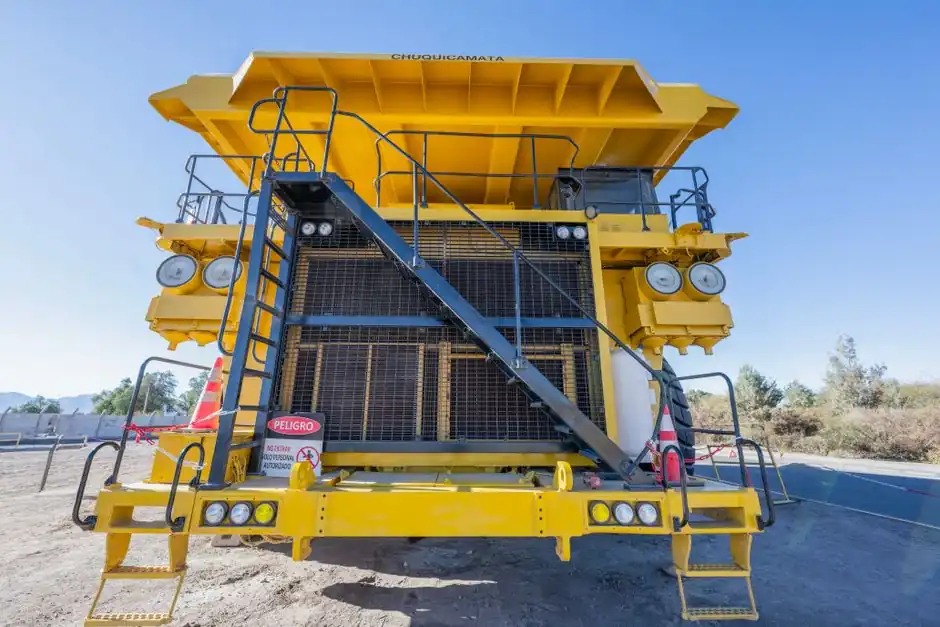
Mining check valves protect pumps and pipelines from reverse flow, with selection governed by slurry concentration, pressure, temperature, corrosion, and allowable pressure surge.
The principal duties are dewatering, slurry transport, process water, hydrocyclone feeds, tailings, and pumping stations, each with different solids, chemical, and installation requirements [S1][S2][S4].
Check Valve Types for Mining Service
A swing check valve is appropriate where gravity closure is acceptable, flow capacity is the priority, and water hammer can be controlled by system design; it is less suitable where rapid closure is required to limit reverse flow. [S1]
An axial flow check valve uses a spring-assisted disc that begins closing as forward flow falls, reducing the risk that a gravity-operated swing valve closes after flow reversal has already started. DFT identifies dewatering and slurry transport as mining applications where this controlled closing behavior is useful [S1].
A dual-plate check valve provides compact, spring-assisted closure and is commonly considered where installation space and short shutoff response matter. A ball check valve is better suited to clean or lightly contaminated service because particles can damage the ball and seat [S3][S6].
Piston and poppet designs can provide positive, spring-loaded seating for higher-pressure duties. Poppet-type valves can accommodate viscous fluids and particulate matter, while piston designs are associated with positive sealing in high-pressure systems [S3]. These distinctions are functional, not universal service ratings: the final selection still requires the manufacturer to review the actual installation and duty.
Selection Criteria for Slurry and Water
Begin with the complete process data: fluid, solids concentration, particle size and abrasiveness, maximum and minimum flow, inlet and outlet pressure, operating temperature, suction conditions, corrosion chemistry, piping layout, and pump-stop sequence [S5]. For a pump-discharge check valve, also record the available reverse head, pump operating mode, discharge-loop elevation, and whether water hammer must be limited by valve closure, controlled piping, or both.
Cracking pressure is the minimum upstream differential pressure needed to open the valve and should be selected against the required opening margin, not treated as an arbitrary low setting.
For slurry lines, solids concentration, particle size, and abrasive wear are decisive. Metal bodies, liners, coatings, or hardfacing may be required, and material selection must be checked against the actual process chemistry [S2][S4]. A ball check valve should not be selected merely because it has low cracking pressure if the service contains enough solids to obstruct or erode its sealing elements.
Water Hammer and Pump Protection
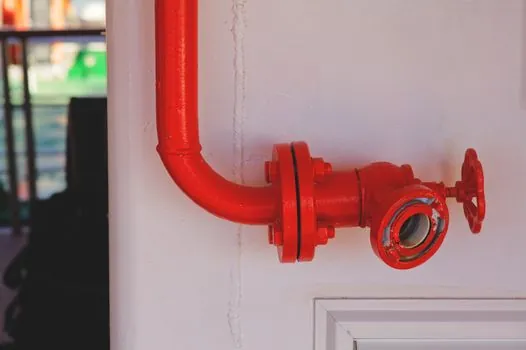
Axial-flow spring closure can reduce hydraulic shock by stopping the valve before forward flow has fully collapsed, rather than allowing gravity to close the disc only after flow stops.
Removing the spring does not disable an axial-flow check valve, because reverse flow can still close the disc, but it removes the intended surge-reduction benefit and limits installation-orientation flexibility [S1]. For a conventional swing valve, gravity closure after forward flow has stopped can create a repeated water-hammer condition [S1]. This makes closure behavior, allowable surge, and actual reverse-flow volume part of the equipment sizing calculation, not secondary mechanical details.
Spring-loaded piston check valve and dual-plate designs can close quickly, but rapid closure can transmit higher surge to the pump and piping. The check valve must therefore be coordinated with pump shutoff control, surge analysis, and discharge-system response. If surge protection depends on slow, controlled closure, confirm the specified closing characteristic with the manufacturer rather than relying on generic “non-slam” terminology.
Materials, Temperature, and Orientation
Corrosion compatibility requires more than a general “stainless” designation. Chloride-bearing process water, acidic leach solutions, and aggressive tailings service can attack ordinary stainless springs, while 316/316L, PVC/CPVC, engineered polymers, and specialty alloys each cover different chemistry and temperature regimes [S2][S3][S5]. The Hayward WCV Series provides a documented example of material differentiation: DN50–200, or 2–8 inch, sizes in PVC/CPVC rated 150 psi or 10 bar at 70°F, with an optional 316 stainless steel or Hastelloy disc spring [S5].
Temperature affects seals, springs, and dimensional stability. These are guide-level material limits, not automatic project ratings. Verify the selected valve's pressure-temperature table, fluid-compatibility data, and certification marking for the actual service.
Orientation can change the selection. Vertical upward flow can improve gravity-assisted closure but may increase water-hammer exposure. Vertical downward flow requires evaluation of disc and stem weight, spring force, static head that must be retained, and the possibility of reverse flow; DFT specifically requires factory consultation for vertical-down installation [S1]. For ball, wafer, and tilting-disc alternatives, confirm whether the manufacturer's listed orientation includes the proposed installation.
Comparison of Main Mining Options
Application Fit and Exclusions
For high-density tailings, paste backfill, or abrasive slurry, select a check valve only after confirming that the flow passage, seat, disc, stem, spring, and body have appropriate erosion and solids-handling characteristics. Abrasion-resistant alloys, metal linings, and coatings are used in mining slurry systems, but their suitability depends on the specific mineral, particle distribution, velocity, and chemistry [S2].
Do not use a ball check valve as the default for dirty slurry or hydrocyclone service. Do not use a swing check valve as the default for a fast pump stop where damaging reverse flow is credible. Do not assign a spring-loaded axial valve to a vertical-down installation without reviewing static head and closure behavior [S1]. Do not specify a generic polymer or metal-seated option from a temperature figure alone; pressure class, chemical exposure, and seal compatibility must agree [S3][S5].
Where isolation valves are also being selected, the duties are different. Gate Valve Selection for Mining Service Duties addresses shutoff and isolation hardware rather than automatic backflow prevention, so the two specifications should be developed together but not treated as interchangeable.
Specification and Sourcing Requirements
A purchase specification should state the fluid and solids data, maximum design pressure and temperature, normal operating flow, minimum forward flow, allowable pressure drop, required cracking pressure, permitted installation orientation, maximum reverse flow, acceptable closure rate, water-hammer target, corrosion environment, and the referenced piping or pump standard. It should also identify whether certification to API 6D or another governing standard is required; API 6D applies only where it is the specified purchase and certification basis, and it does not replace project-specific surge analysis. [S1]
Confirm manufacturer data for the exact model, size, material, spring, and trim. The Hayward WCV data show why a family name is insufficient: size, pressure, temperature, body material, and disc-spring material all affect the selection [S5]. Request model-specific drawings, pressure-temperature ratings, flow coefficient data at the design flow, cracking-pressure limits, installation instructions, and warranty conditions.
Final factory review is justified when the duty is vertical-down, the service has a low cracking-pressure requirement, static head must be retained, or the model is not published for the proposed slurry [S1]. For pump systems, obtain a transient-surge assessment before approval, then verify the selected valve's closure behavior under the pump's stop sequence.
The shortlist is straightforward: use a spring-loaded axial-flow design for controlled closure, a swing design for clean service and low-surge layouts, a dual-plate or piston design for compact or positive-seating duties, and a ball design only when contamination is low. Submit the full fluid, solids, pressure, temperature, and installation data with the shortlist, then close the selection with a model-specific factory review and surge check.