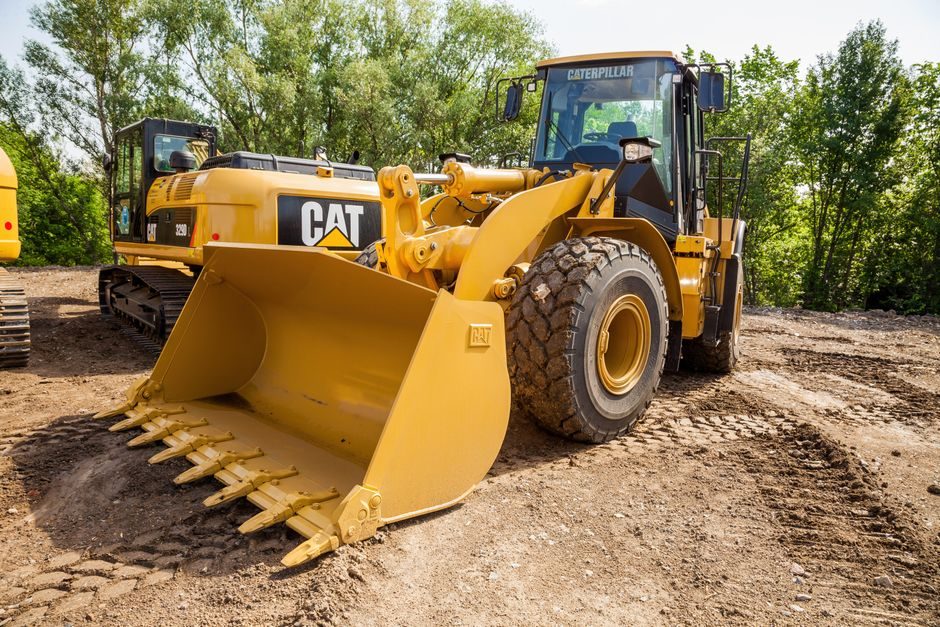
Modern mining equipment production is a multi-stage process that pairs heavy-duty mechanical engineering (drill strings, slurry pumps, mill liners) with embedded electronics (ATEX/IECEx-rated sensors, automation stacks) and ends with EPCM turnkey delivery; the 2026 supply chain is dominated by Chinese OEMs and integrators running ISO 9001:2008 quality systems, with European majors such as Sandvik and Epiroc setting the digital benchmark [S5][S7][S8].
The market today mixes four product families: rock-drilling tools (DTH hammers, drifters, wagon drills) [S1], comminution and separation hardware (slurry pumps, hydrocyclones, screens, composite/rubber mill liners) [S2][S5], process plant reactors and filter presses for chemical side-streams [S6], and intrinsically safe underground electronics such as methane-alarm miner lamps and explosion-proof lighting [S4]. For buyers sizing a new operation, the practical decision is which category of equipment to source as a packaged EPCM scope versus line-by-line procurement.
Rock-drilling production: from steel bar to drift rounds
Underground rock-drill production covers pneumatic drifters, DTH (down-the-hole) hammers, slim drills for narrow-vein work, and wagon drills in both top-hammer and DTH versions, all of which are catalog items at global suppliers such as Miningequipment.in and the Atlas Copco / Chicago Pneumatic lines it distributes [S1]. For surface operations, automated decline development and rock-support installation are the headline trends driving OEM design at Sandvik, whose product stack targets efficiency and operator safety through software-monitored fleets [S8][S9].
Selection criteria for a 2026 drill rig are hole diameter range, drifter impact energy (typically 15-30 kJ class for hard rock), air consumption in L/s, and the depth rating of the feed; Sandvik's decline-development equipment is engineered as part of an integrated automation stack that reports machine health, while most Chinese wagon-drill exports still ship as standalone hydraulic packages [S1][S9]. A buyer working a hard-rock narrow vein will end up cross-shopping the same drill for mining dump truck matched haul cycles, since drill penetration rate sets the truck-fill cadence on the bench.
Comminution, pumping and screening: the wear-material layer
Comminution and slurry-handling equipment is the volume category: heavy-duty slurry pumps, mill-circuit pumps, high-head variants, vertical froth pumps, composite and rubber mill liners, trommels, and polyurethane screen media are the standard product lines at Chinese suppliers such as Naipu Mining [S2]. JinPeng Mining adds the precision-machining lens, advertising CNC automatic cutting machines and CNC machining centers inside an ISO 9001:2008-certified shop producing screens and related ore-dressing equipment [S5].
The engineering point that matters on this layer is material selection. Rubber and composite mill liners trade impact wear life against grinding efficiency (rubber is quieter and lighter, composite gives higher throughput at the cost of replacement price), and screen media is graded by aperture, open area percentage, and polyurethane versus woven-wire construction [S2]. For process control on a grinding line, modern plants are increasingly pairing liner and pump condition monitoring with a flow meter network on the slurry side, because flow deviation is the first measurable signal of liner wear or hydrocyclone roping.
Underground electronics and explosion-proof requirements
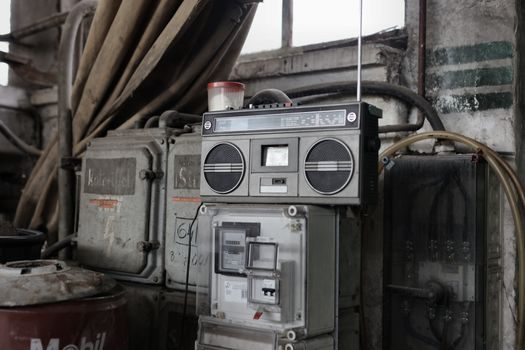
Underground electronics are governed by explosion-proof (Ex) certification regimes: ATEX in Europe, IECEx globally, and China's GB 3836 series domestically, and the production technology for items such as miner cap lamps, alarm methane detectors, and underground lighting must build the flameproof enclosure and intrinsically safe circuitry into the assembly from the start, not as a retrofit [S4]. Yueqing Mingda Mining Equipment is representative of this niche, producing KS-series helmets, Ni-MH battery single/dual-filament cap lamps, automatic voltage-regulator charger racks, and coal-drilling 7KK-1 switches, all of which carry Ex-rated housings [S4].
On the controls side, a modern underground production face runs a layered instrumentation stack: methane sensors tied into the pressure transmitter network on the ventilation line, pressure sensor arrays on the hydraulic legs of the drill rig, and anti-static equipment on every conveyor transfer point to control frictional discharge. The certification paperwork (ATEX category, IECEx certificate of conformity, GB 3836 rating) is therefore the real differentiator between two seemingly identical miners' lamps, and it must be cross-referenced to the mine's hazard-zoning map before procurement.
EPCM and turnkey project delivery as production technology
Production technology is no longer just the machine; it is the delivery model. Shandong Xinhai Mining Technology & Equipment structures its offer as EPCM+O: Engineering (consulting, experimental research, mine design), Procurement (equipment manufacturing and procurement, packaging, shipping), Construction (installation, commissioning, delivery), Mine Construction Management, and Operations [S7]. This model absorbs the integration risk that historically sank mid-tier Chinese mine builds, and it is the format that mid-cap Chinese suppliers use to compete with European OEMs on African and Latin American tenders.
Jiangsu New Hongda Group extends the same logic into the chemical and filtration side, with parent and subsidiary entities covering mixing equipment, filter presses, filter media, and stainless-steel fabrication; the group claims 200+ authorized patents and 50+ export destinations, which is the operational footprint of a turnkey supplier rather than a piece-goods vendor [S6]. For a 2026 feasibility study, the decision tree is straightforward: if the ore body is simple and the plant scope is clear, line-item procurement is faster; if it is polymetallic, remote, or tied to a offtake finance package, an EPCM integrator reduces schedule risk at the cost of higher unit pricing [S7][S8].
Sandvik, Epiroc and the digital layer on top of the production line
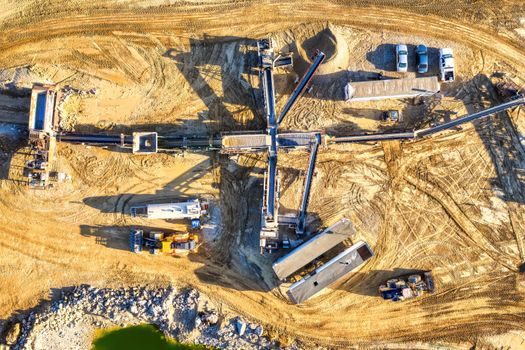
European OEMs Sandvik (Rock Technology) and Epiroc (via CR Mining) define the 2026 digital-production layer: Sandvik markets automation software that "monitor[s] your machines, giving you a full overview of your fleet," and Epiroc markets digital solutions for surface and underground equipment, fixed plant, and wear parts under a "Mine Smarter" banner [S8][S9][S10]. Both companies frame efficiency, safety, and sustainability as non-optional outcomes of their automation stack, which is essentially a fleet-management OS bolted onto the same hydraulic and pneumatic drivetrains Chinese suppliers also build [S8][S9][S10].
The practical procurement consequence is a two-tier equipment market: tier-one assets (decline drills, long-hole production drills, autonomous haul fleets) are dominated by the European majors with closed automation stacks, while tier-two assets (slurry pumps, hydrocyclones, screen media, mill liners, filter presses, Ex-rated lighting) are sourced from Chinese OEM catalogs such as Naipu, JinPeng, New Hongda, and Xinhai, often inside an EPCM wrapper [S2][S5][S6][S7]. Buyers should match the digital stack to the asset class: a Chinese slurry pump will not natively appear on a Sandvik OptiMine dashboard without a gateway, and that integration cost belongs in the capex model.
Specification comparison: four equipment categories on four decision criteria
For a 2026 procurement shortlist, the four main production equipment categories line up against four decision criteria as follows. Rock drills: criterion 1 is drifter class (kJ impact), criterion 2 is automation-stack maturity, criterion 3 is consumables cost per metre, criterion 4 is global service-network coverage; Sandvik and Epiroc lead criteria 2 and 4, while Chinese wagon-drill exports win on criteria 1 and 3 [S1][S8][S10]. Slurry pumps and mill liners: criterion 1 is wear-material grade (high-chrome white iron vs rubber vs composite), criterion 2 is throughput in m³/h, criterion 3 is OEM lead time, criterion 4 is ISO certification; Naipu, JinPeng, and New Hongda all publish ISO 9001:2008 systems with CNC-verified machining [S2][S5][S6].
Underground Ex-rated electronics: criterion 1 is certification scope (ATEX + IECEx + GB 3836), criterion 2 is battery cycle life on the cap lamp, criterion 3 is methane-alarm response time, criterion 4 is helmet weight with lamp mounted; Mingda is a representative Chinese supplier on this axis [S4]. EPCM turnkey scope: criterion 1 is engineering consultancy depth, criterion 2 is owned-manufacturing content, criterion 3 is installation crew availability, criterion 4 is post-commissioning O&M offering; Xinhai's five-phase EPCM+O model and New Hongda's 200+ patent portfolio are the relevant benchmarks [S6][S7]. A useful sanity-check is to ask each bidder to map their offer against the industrial valve and instrument list on the P&ID; the supplier that can name the valve body, trim material, and actuator protocol without checking has usually built the plant before.
Limits, failure modes and sourcing pitfalls in 2026
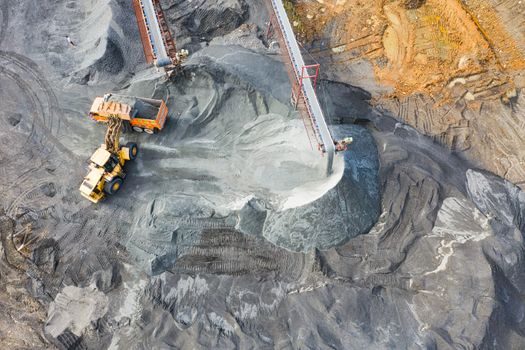
Three failure modes dominate 2026 mining equipment production. First, ISO 9001:2008 is the most commonly cited certification in Chinese supplier marketing, but buyers should verify the certificate scope, accreditation body, and expiry, because "ISO 9001" stamped on a homepage is not by itself proof of certified manufacture [S5]. Second, explosion-proof underground electronics must be ordered against the mine's specific hazard-zone classification; specifying the wrong ATEX category or IECEx marking against a methane zone voids the install and forces a re-purchase [S4]. Third, the EPCM wrapper is only as good as its installation crew: a Chinese integrator with a strong procurement arm but a thin field crew will slip the commissioning schedule on a remote African or South American site [S7].
Buyers sourcing individual line items rather than a full EPCM package should still demand three documents: the ISO certificate with scope statement, the Ex certificate with the exact marking code, and a documented material test report (MTR) for any wear-component. Cross-referencing these three documents against the P&ID and the mine's hazard-zone map is the cheapest insurance against the most common 2026 sourcing failures, and it is the same checklist that EPCM integrators such as Xinhai run internally before they release a purchase order to their own vendors [S5][S7].
Trackable signals for the next planning window: the rollout of autonomy-ready interfaces on tier-two Chinese equipment (Naipu and JinPeng are the names to watch for pump-and-screen automation), and the publication of updated IEC 60079 and GB 3836 alignment guidance that will determine which Ex-rated underground electronics remain procurable after 2026. For cross-equipment comparison on the process-control side, see the Petrochemical Production Technology: Process Flow, Control and 2026 Spec Levers reference, which uses the same EPCM and instrumentation lens applied to downstream chemical assets; the Plasma Cutter Selection Criteria: 6 Spec Gates Buyers Should Lock First guide is the closest analogue on the fabrication-shop side of a mine maintenance workshop.